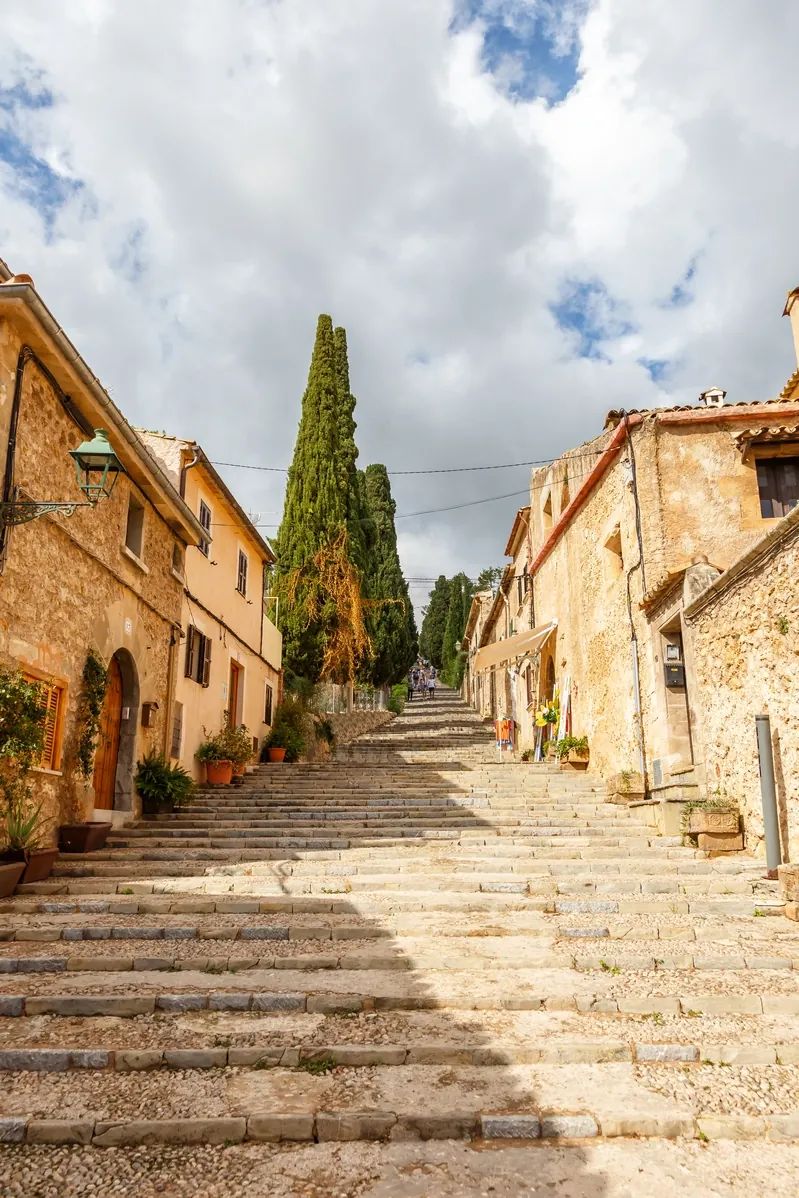
11North · Town and bay
Pollença
Pollença climbs 365 steps to its Calvari chapel; Port de Pollença spreads along a calm, shallow bay. Two halves of the north's most rounded base.
25 min from Alcúdia
50 min from the airport
A walled medieval town, a Roman city at its gates and a long, shallow bay

Drives outside peak traffic. Markets from the official 2026 list; seasonal evening markets on the market days page.
Alcúdia has been a town for a very long time. The Romans built their city of Pollentia on this neck of land between two bays, and medieval kings later ringed the old town with walls that still stand. Beyond them lies one of the longest beaches on the island, a gentle curve of sand and shallow water running south past Platja de Muro, with the reed beds and lagoons of S'Albufera behind. History and an easy beach day sit side by side here.
Alcúdia sits on the neck of land that separates the Bay of Pollença from the larger Bay of Alcúdia, a position that explains its long history: whoever held it watched over both anchorages. The old town is compact and largely pedestrian, with sandstone houses, carved doorways and small squares, enclosed by medieval walls that were later strengthened with bastions. Port d'Alcúdia, a couple of kilometres away on the bay, is a separate, newer world of marina, ferry terminal and holiday apartments, with ferries to Menorca.
Parts of the walls can be walked, and two main gates frame the old streets: the Porta del Moll, facing the harbour, and the Porta de Mallorca, facing inland. Just inside the wall line stands the parish church of Sant Jaume, rebuilt in the nineteenth century. Around 25 July the town celebrates its patron, Sant Jaume, with music, processions and fireworks; the guide to festivals and traditions explains the island calendar.
Just outside the walls lie the remains of Pollentia, the Roman city founded after the conquest of the Balearics in the second century BC. Paths lead through excavated streets, the outlines of houses and the forum, and on to a small theatre cut into the rock, close to the road towards the port. It is an open, quiet site, best early in the day or late in the afternoon, when the stones take on colour and the heat eases.
Finds from the excavations, from coins and pottery to sculpture and everyday objects, are shown in the small Pollentia museum inside the old town. Together, site and museum give a vivid sense of a busy provincial Roman town, and of how much of Mallorca's past lies just under the soil.
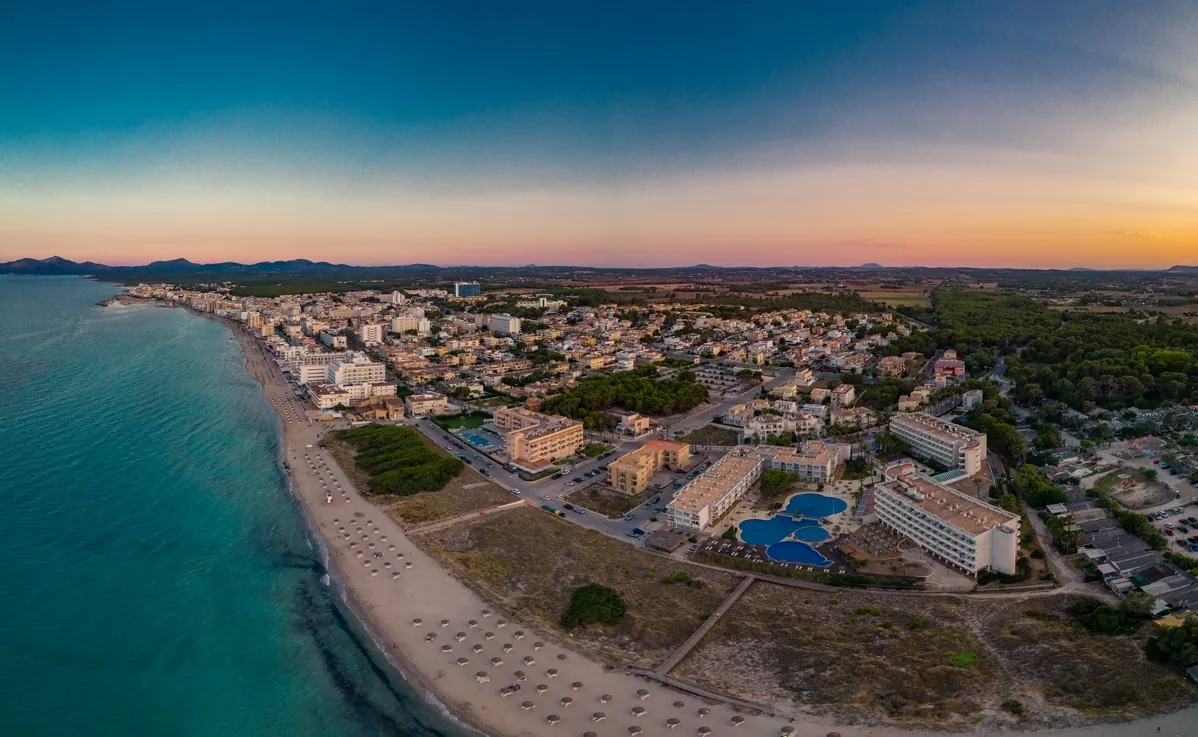
The Bay of Alcúdia is the place for easy swimming: a long, gently shelving beach of pale sand that runs from Port d'Alcúdia past Platja de Muro, where the dunes and pines are protected and the mood is quieter. Children can wade out a long way. The bay opens to the east, so winds from that side bring waves; on most summer days it is calm. For more, see the guide to north coast beaches.
Behind the beach lies S'Albufera, the largest wetland in the Balearics and a natural park. Leave the car near the entrance on the coast road and walk or cycle in along level tracks between canals and reed beds, with hides looking over the lagoons. Herons, egrets, marsh harriers and, with luck, ospreys are part of the scene; spring and autumn migration bring the greatest variety.
North-east of the town, the Victoria peninsula is wilder country of pine, rock and sea views. A road climbs to the hermitage of La Victòria, a sanctuary church above the Bay of Pollença, where marked paths begin. The best known leads up to Penya Rotja, a rocky crest with an old lookout and views to Formentor; the last stretch is narrow and exposed, not for anyone uneasy with heights. Elsewhere on the peninsula, a forest track and a steep walk down lead to Coll Baix, a pebbly cove under steep, pine-covered slopes, wild and lovely on a calm day.
Alcúdia's market is one of the busiest in the north, held on Tuesday and Sunday mornings in the streets around the walls. Alongside the produce stalls there are cheeses, sobrassada, olives, local honey, baskets and a good deal of clothing. Go early, before the crowds, and combine it with a walk on the walls. The market days tool lists the other markets of the week.
Food here follows the island seasons: tumbet and frit mallorquí inland, fish and rice dishes by the port, ensaïmades and cocas from the bakeries of the old town. In the evening, the small squares inside the walls are the pleasant place to eat, calmer than the busy front at the port.
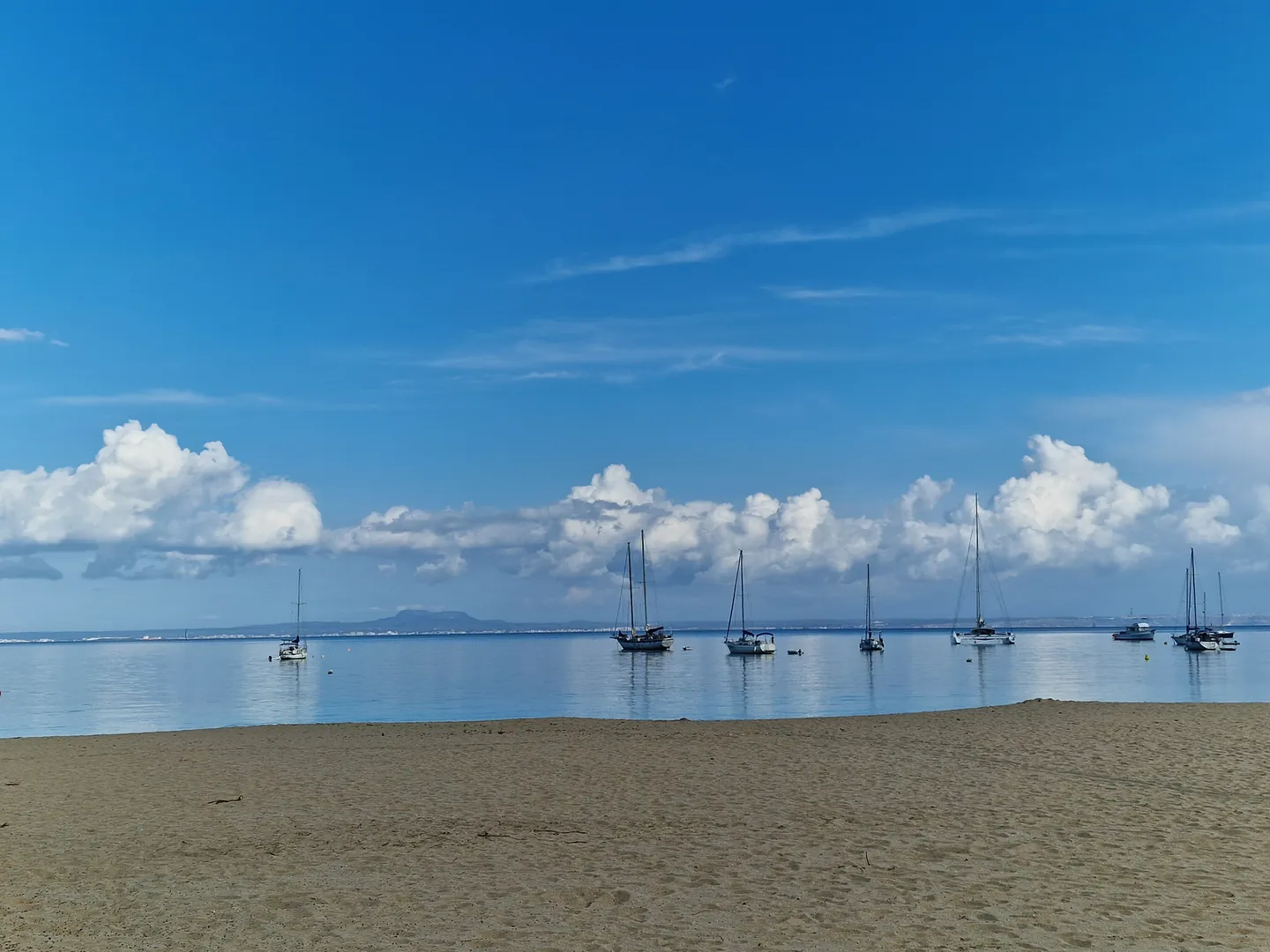
Alcúdia is about 45 minutes from Palma airport by the motorway, outside peak traffic, and the motorway runs almost to the edge of town. Large car parks lie just outside the walls; the old town itself is best on foot. On market days they fill early, so arrive in good time. Buses run along the bay to Platja de Muro and Can Picafort, and to Pollença and Palma; check the current timetable.
Pollença is a short drive across the neck of the bay, and from its port the road to Cap de Formentor begins. Going the other way, the coast road runs south past S'Albufera to Can Picafort and on towards Artà and the wild Llevant. Inland, the old market town of Sineu makes an easy half-day trip on a Wednesday, its market day.
Families who want shallow, sandy water with a town of real history close by; birdwatchers, who come for S'Albufera in spring and autumn; and walkers drawn to the Victoria peninsula. Cyclists like the flat roads around the bay. Travellers seeking seclusion should stay in the old town or look elsewhere, as the port is busy in high summer.
April to June and September to October are best: mild for the walls and Pollentia, good for birds at S'Albufera, with the sea warm enough from June. July and August bring crowds to the port and the beach. See the Roman site early or late in the day, and the Tuesday or Sunday market before mid-morning.
Yes, parts of the medieval walls can be walked, with steps up near the gates and views over the roofs towards both bays. The old town inside is compact and easy to explore on foot, and a circuit of the walls links naturally with the Tuesday or Sunday market and the remains of Pollentia just outside.
The excavated remains of the Roman city: streets, house foundations, the forum area and a small theatre cut into the rock. It is an open-air site with little shade, so go early or late in summer. Finds from the excavations are displayed in the small Pollentia museum in the old town.
Very. The Bay of Alcúdia has fine sand and water that stays shallow a long way out, so small children can paddle in calm conditions. Platja de Muro, further along, is quieter and backed by protected dunes. Watch the flags on windy days, when waves can build quickly along the shore.
Leave the car near the entrance on the coast road between Port d'Alcúdia and Can Picafort, then walk or cycle in on flat tracks to the visitor centre and the hides. Early morning and late afternoon are best for birds. Check the current access arrangements before you go, as they can change.
Pollença climbs 365 steps to its Calvari chapel; Port de Pollença spreads along a calm, shallow bay. Two halves of the north's most rounded base.
25 min from Alcúdia
50 min from the airport
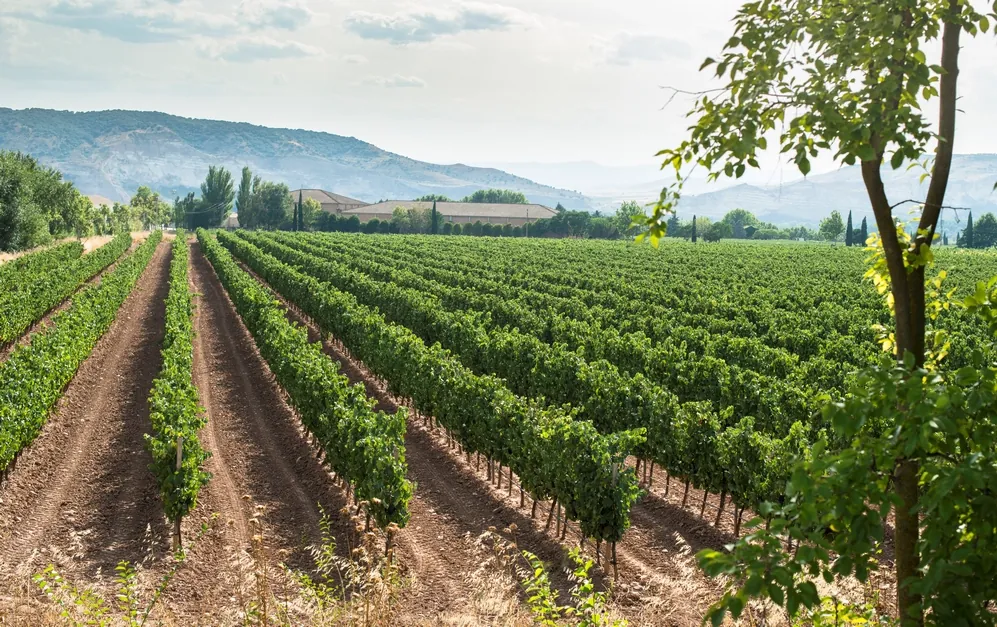
Home of one of Mallorca's two wine denominations, Binissalem pairs Manto Negro reds with stone manor houses, a Friday market and a lively harvest festival.
35 min from Alcúdia
25 min from the airport
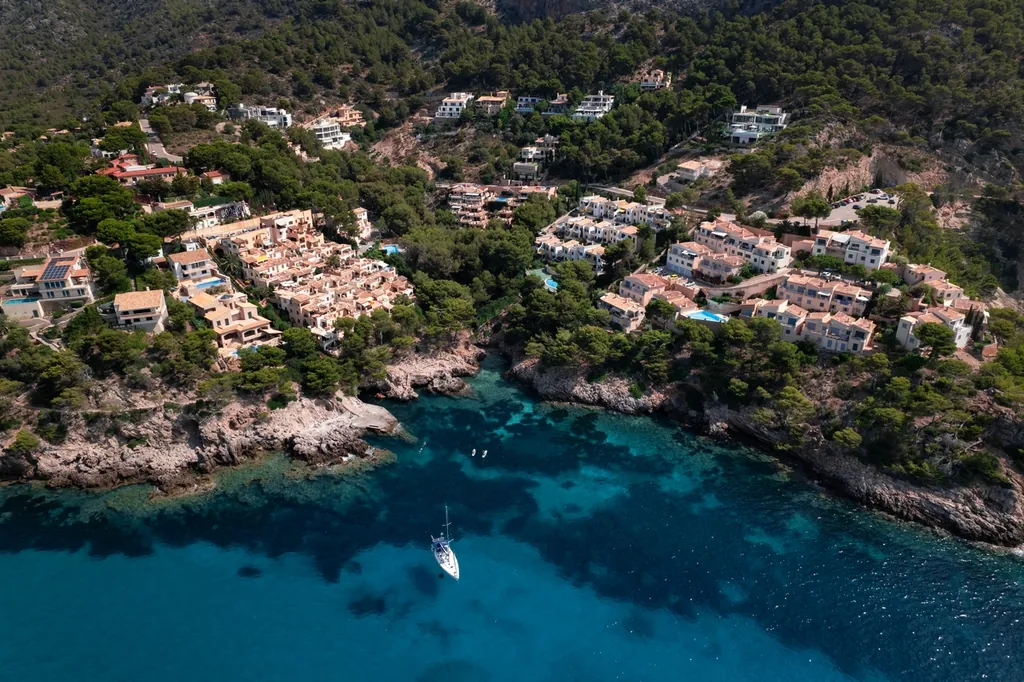
Climb to the walled sanctuary of Sant Salvador, walk among Talaiotic stones at Ses Païsses, then head into the empty hills and coves of the Llevant.
40 min from Alcúdia
60 min from the airport
Choose how long you stay, where you sleep and what you love. The planner suggests a day-by-day route with drive times, market days and the beaches the wind allows. Keep it, print it or send it to yourself.