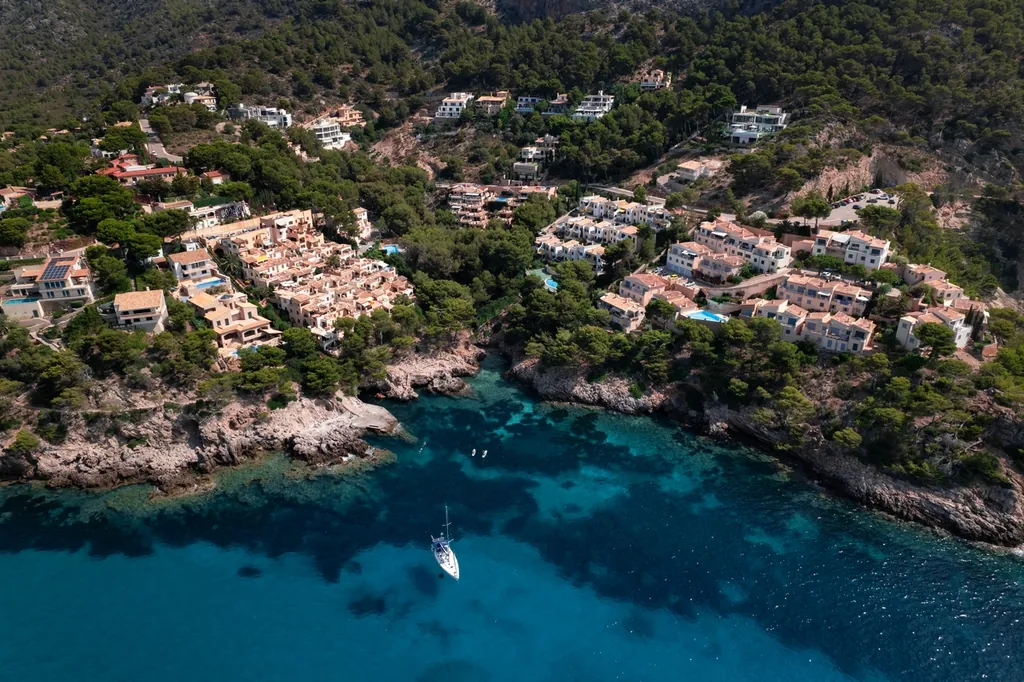
14East · Hill town
Artà
Climb to the walled sanctuary of Sant Salvador, walk among Talaiotic stones at Ses Païsses, then head into the empty hills and coves of the Llevant.
15 min from Cala Ratjada
60 min from the airport
A hilltop castle, a lighthouse at the island's eastern tip and a fishing harbour

Drives outside peak traffic. Markets from the official 2026 list; seasonal evening markets on the market days page.
At the eastern tip of Mallorca, two places share one headland. Capdepera is the old town, gathered beneath a medieval castle on its hill. Cala Ratjada is its fishing harbour turned resort, with a promenade, sandy coves and pine-covered headlands on either side. Out at the very end stands the Cap de Capdepera lighthouse, the island's easternmost point, where the sun comes up first and, on clear days, Menorca lies along the horizon.
Capdepera and Cala Ratjada sit a few kilometres apart in the same municipality, yet they feel very different. Capdepera is a quiet hill town of narrow lanes and stone houses, built inland, like so many Mallorcan towns, for safety from the sea. Cala Ratjada grew around its small fishing harbour and became a resort in the twentieth century. In high summer it is busy and young, with lively nights; in spring and autumn it settles back into a calmer seaside rhythm.
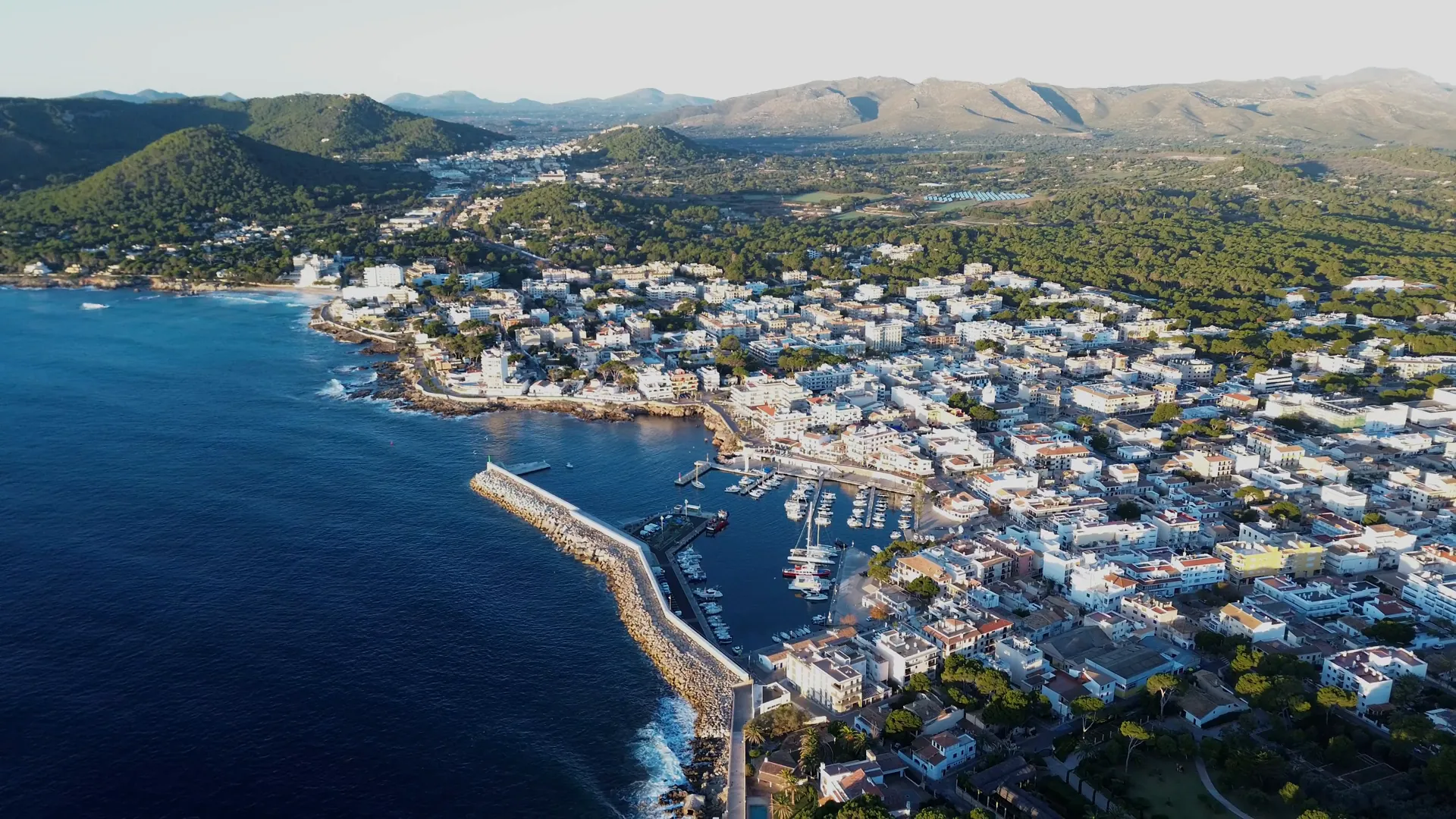
The harbour is still the heart of the place. Fishing boats tie up beside pleasure craft, and a promenade runs along the waterfront and round the rocks towards Cala Gat, a small cove under the pines. In summer, fast ferries cross the channel to Ciutadella on Menorca; check the current timetable.
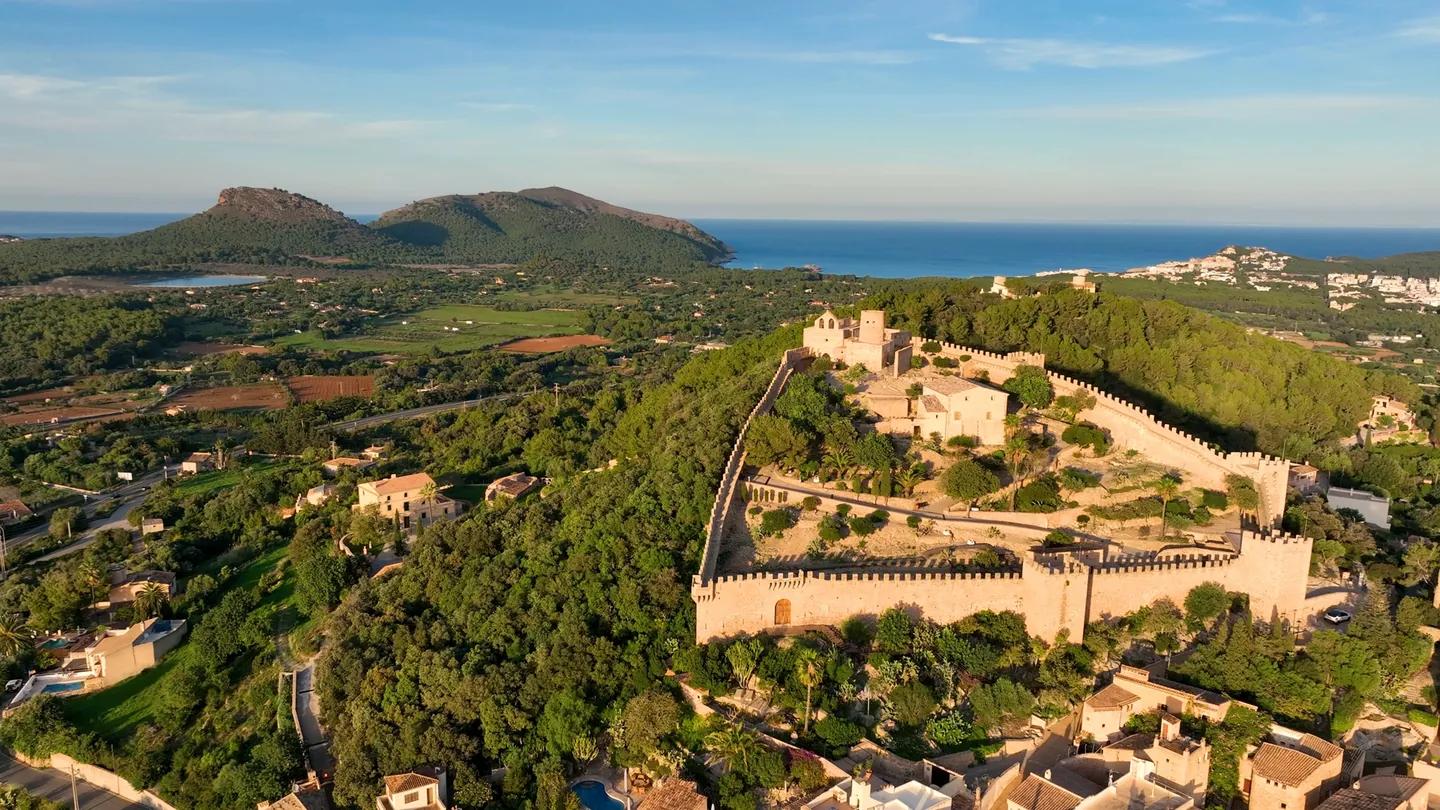
Capdepera castle crowns the hill above the town: a long ring of medieval walls and towers enclosing terraces, gardens and the small church of the Mare de Déu de l'Esperança. It was raised in the fourteenth century as a refuge for the people of the area against raids from the sea. Walk up through the old streets and the steps below the walls; from the battlements the view runs over the rooftops to the sea and the bays on either side.
Down in Cala Ratjada, the garden of Sa Torre Cega spreads over a pine-covered slope above the harbour. Once a private estate and now run by a foundation, it shows modern sculpture among terraces and trees, with the sea beyond. Visits are by guided tour only, so check the current arrangements well in advance.

A road winds through pines from Cala Ratjada to the Cap de Capdepera lighthouse, on a rocky point at the very eastern tip of Mallorca. Across the channel, Menorca appears on clear days as a long, low shape on the horizon. Come at dawn: this is the first place on the island to see the sun rise, straight out of the sea. For the other end of the day, the sunset spots tool shows where the sun sets into the water elsewhere on the island.
North of the town, Cala Agulla is a broad, curving beach of pale sand backed by pines and dunes, with paths into the woods behind. From there a walk over the wooded hills leads towards Cala Mesquida, a wide beach on the north coast backed by protected dunes, which can also be reached by road from Capdepera. Both open to the north and east, so they are calmest in southerly or westerly winds and lively when the Tramuntana or Gregal blows; the wind and beach finder shows the better side of the island on the day. For more coves, see the best calas of Mallorca.
Capdepera holds its market on Wednesday morning and Cala Ratjada on Saturday, both good for fruit, cheese, olives, sobrassada and the palm-leaf baskets made in this corner of the island. The market days tool shows the rest of the week.
Cala Ratjada's harbour means fish: grilled catch of the day, fish soups and rice dishes along the waterfront. Inland, Capdepera's kitchens lean on the island staples, from frit mallorquí to tumbet, and the bakeries sell ensaïmades and cocas. The quieter streets behind the promenade often reward a look before you settle on a table by the water.
Cala Ratjada is about 70 minutes from Palma airport outside peak traffic, by the fast road to Manacor and on through Artà and Capdepera. In summer, parking near the harbour and Cala Agulla fills early; use the larger car parks on the edge of town and walk. Capdepera's old streets are steep and narrow, best explored on foot below the castle.
Choose the season with care. In July and August the town is crowded and loud at night, though the coves are lovely early in the morning. In spring and autumn it becomes a different place: quiet streets, beaches with room to spare midweek and clear air for the walk to the lighthouse.
Artà, a short drive inland, has the walled sanctuary of Sant Salvador, the Talaiotic village of Ses Païsses and the tracks of the Llevant natural park. To the north-west, Cala Torta and the other undeveloped coves of the Llevant are reached on rougher roads. For a longer day, Alcúdia with its walls and Roman ruins lies along the coast road around the Bay of Alcúdia.
Beach lovers who like sand and pines, early risers chasing the first sunrise on the island, and walkers who want coastal paths with a castle thrown in. Young groups enjoy the summer nightlife. Couples and families seeking calm are happier here in May, June, September or October, or base themselves in Capdepera rather than by the harbour.
May, June, September and early October offer warm water, quiet streets and long light. High summer is busy, especially at night around the harbour. For sunrise at the lighthouse, check the time the day before and set off early. Avoid the north-facing beaches when a strong Tramuntana blows, and visit the castle in the cool of morning or late afternoon.
It is the Spanish spelling of the name. The official Catalan form is Cala Ratjada, which this guide uses, but both appear on signs, maps and timetables. The town belongs to the municipality of Capdepera, whose old centre and castle stand on a hill a few kilometres inland.
On clear days, yes. From the Cap de Capdepera lighthouse and the higher ground around it, Menorca appears as a long, low line across the channel to the north-east. The view is sharpest in dry, clear weather, often early in the morning, and is often lost in summer haze.
The Cap de Capdepera lighthouse, at the easternmost point of Mallorca, looks east across open water, so the sun rises from the sea in front of you. Arrive before first light to find a spot on the rocks, and bring a layer, as the point is often breezy at dawn.
Yes, if you like quiet. Many hotels and restaurants close from late autumn to spring, but the harbour, the castle, the lighthouse and the coastal paths are all there, and the low winter light can be beautiful. Walking and cycling are pleasant, and Capdepera keeps its everyday life and its Wednesday market.
Climb to the walled sanctuary of Sant Salvador, walk among Talaiotic stones at Ses Païsses, then head into the empty hills and coves of the Llevant.
15 min from Cala Ratjada
60 min from the airport
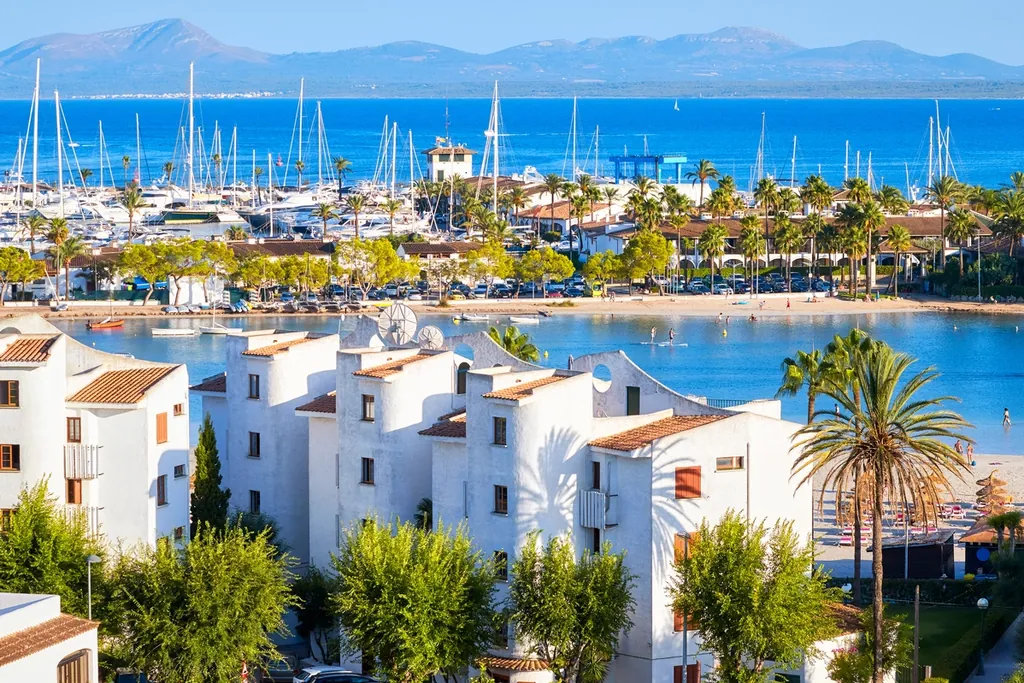
Walk Alcúdia's medieval walls and the streets of Roman Pollentia, watch herons at S'Albufera, then wade out into the long, shallow bay.
55 min from Cala Ratjada
45 min from the airport

Since the early fourteenth century, Sineu has held a market every Wednesday. Come early for livestock and produce, then stay on for the quiet town and the plains.
60 min from Cala Ratjada
35 min from the airport
Choose how long you stay, where you sleep and what you love. The planner suggests a day-by-day route with drive times, market days and the beaches the wind allows. Keep it, print it or send it to yourself.