07Tramuntana · Village
Deià
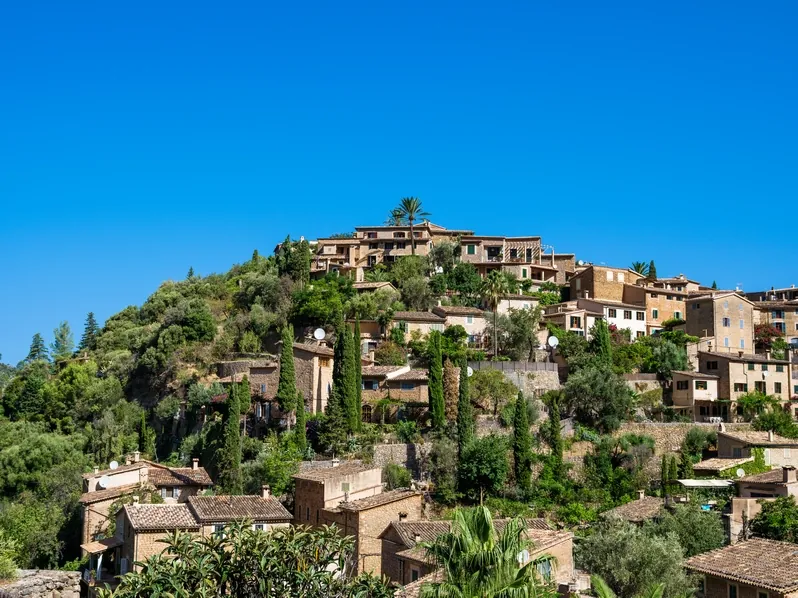
Robert Graves, a churchyard above the sea and a stony path down to a rocky cove. Deià is small and steep, and best taken slowly.
15 min from Valldemossa
45 min from the airport
A Carthusian village in the Tramuntana, where Chopin spent one damp, productive winter

Drives outside peak traffic. Markets from the official 2026 list; seasonal evening markets on the market days page.
Valldemossa sits in a high green valley of the Serra de Tramuntana, a cluster of honey-coloured stone gathered around the tower of a former monastery. A king of Mallorca built a palace here, Carthusian monks inherited it, and in the winter of 1838 to 1839 Frédéric Chopin and George Sand rented rooms in the empty cells. The village has lived with that story ever since. It also has its own saint, a famous potato bun and one of the finest stretches of coast road on the island.
Valldemossa grew up beside the Carthusian monastery, and the monastery still decides its shape. The old village climbs away from the monastery square in narrow lanes of stone, potted geraniums and green shutters, with terraces of olives and almonds falling away below. Mountains close in around the valley, and the air up here is noticeably cooler than in Palma, half an hour below.
Most day visitors come for Chopin: they see the monastery, buy a pastry and leave. Stay longer and the place changes. The lanes around the parish church of Sant Bartomeu empty out, the gardens below the monastery come into view, and the village returns to its own unhurried business.
The Real Cartuja began as a royal residence and was handed to Carthusian monks at the end of the fourteenth century. They stayed until the 1830s, when the Spanish state confiscated church property and the cells were let to private tenants. Among the first were Chopin and George Sand, who arrived with her two children for the winter. The weather was wet, Chopin was ill, and the islanders distrusted the unmarried couple. Even so, he worked on his Preludes here, and Sand later wrote A Winter in Majorca, a sharp and not always fair portrait of the island.
Each cell has its own small walled garden, and from their parapets the view drops straight down the valley over terraces of olives. Inside, look for:

Valldemossa is also the birthplace of Santa Catalina Thomàs, Mallorca’s own saint, who was born here in the sixteenth century and is known locally as the Beata. Walk the lanes and you will see small painted tiles beside almost every front door, each showing a scene from her life and asking for her protection over the house. The house where she was born, in the old part of the village, is kept as a modest oratory.
Her feast in late July brings a procession and a decorated float, and the whole village turns out. On ordinary days the best plan is simply to wander: up towards the parish church, down the stepped lanes towards the gardens, and out to the edge of the village where the terraces begin.
Beyond the village the Ma-10 runs along the cliffs towards Deià, through land that the Austrian Archduke Ludwig Salvator bought up piece by piece in the late nineteenth century. He came to study the Balearics, stayed for decades and kept this coast free of felling and building at a time when few people thought of doing so. His estates include Miramar, where Ramon Llull had founded a school for missionaries to learn Arabic in the thirteenth century. The paths and stone viewpoints the Archduke laid out still frame the sea.
The Camí de s’Arxiduc, a ridge path he built above Valldemossa, is one of the classic walks of the Tramuntana, with long views over the sea; it needs a full morning, good shoes and settled weather. For something gentler, follow the GR 221 out of the village through holm oak woods.
Port de Valldemossa lies far below, reached by a narrow road of tight bends that drops through pines to a pebbly cove and a handful of houses. It is steep, slow and not for nervous drivers, but the water at the bottom is clear and often refreshingly cool.

Valldemossa’s gift to the island table is the coca de patata, a light, round bun made with potato in the dough and dusted with sugar. Bakeries along the main street sell them warm in the morning, and locals eat them with a cup of hot chocolate. Look out too for local olive oil and for ensaïmadas, the spiral pastries found all over the island.
The weekly market fills the streets on Sunday morning with produce, cheese, sobrassada and crafts. It is small and pleasant but adds to the Sunday crowds; our market days tool will help if you would rather pair a quiet weekday visit with a market elsewhere.
Valldemossa is about 30 minutes’ drive from Palma airport outside peak traffic, up the Ma-1110 through olive groves; drive times gives the alternatives. Public buses run from Palma, so check the current timetable. The car parks at the entrance to the village fill by late morning, especially on Sundays and in high season, when coaches arrive from the resorts.
The village pairs naturally with the rest of the coast road. Deià is a short drive on, and Sóller lies beyond it; together they make a full and rewarding day. For Chopin, Sand and the painters and poets who followed them, see our guide to artists and writers.
Travellers who like their history at walking pace: music lovers, readers of George Sand, walkers heading into the Tramuntana and anyone based in Palma who wants an easy half day in the hills. It suits families too, as distances are short, though pushchairs struggle on the steeper lanes. Those after beaches should treat it as a stop on the way to the coast.
Spring and autumn are ideal, when the terraces are green and the lanes cool enough for walking. Arrive before ten in the morning, or come in the late afternoon once the coaches have gone. Sunday brings the market and the biggest crowds. In high summer avoid the middle of the day, and in winter expect mist and rain, which suits the monastery story rather well.
Yes. Chopin and George Sand rented rooms in the former cells for the winter of 1838 to 1839, after the monks had left. The stay was short and damp, and Chopin was unwell, but he worked on his Preludes there. Which cell they actually occupied has been debated for years; the visit shows the rooms associated with them.
Half a day covers the monastery, the lanes and a coffee with coca de patata. Add the coast road to Miramar and Deià and it becomes a full day. Walkers can easily spend longer, using the village as a base for the Camí de s’Arxiduc and stages of the GR 221.
Yes. Public buses run from Palma, and some continue along the coast road to Deià and Sóller. Check the current timetable before you travel, as frequencies change with the season. In summer a bus is often less stressful than a car, since parking is the main problem in the village.
The weekly market is held on Sunday morning. It is a small village market with fruit and vegetables, cheese, sobrassada and some crafts. It adds to the Sunday crowds, so if you prefer a quieter visit, come on a weekday and find a market elsewhere on the island.
Robert Graves, a churchyard above the sea and a stony path down to a rocky cove. Deià is small and steep, and best taken slowly.
15 min from Valldemossa
45 min from the airport

A village on the Tramuntana coast where dry-stone terraces fall in steps to the cliffs, watered by old channels and planted again with Malvasia vines.
20 min from Valldemossa
40 min from the airport
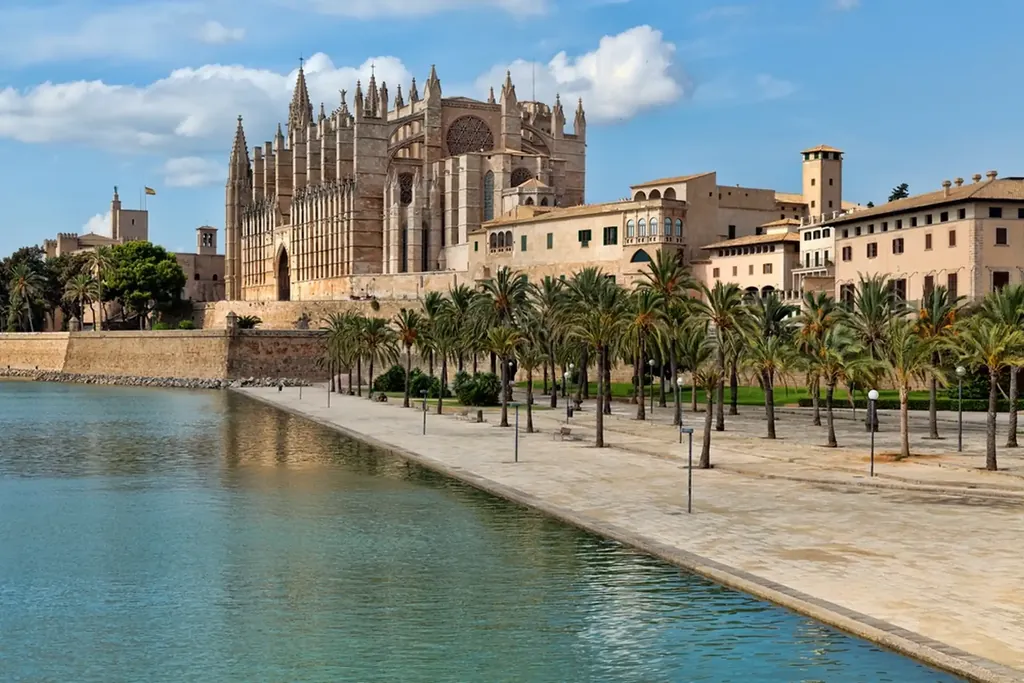
A cathedral city on a wide bay, with courtyards, covered markets and a long seafront path. Palma rewards slow walking and stays awake all year.
25 min from Valldemossa
15 min from the airport

Choose how long you stay, where you sleep and what you love. The planner suggests a day-by-day route with drive times, market days and the beaches the wind allows. Keep it, print it or send it to yourself.