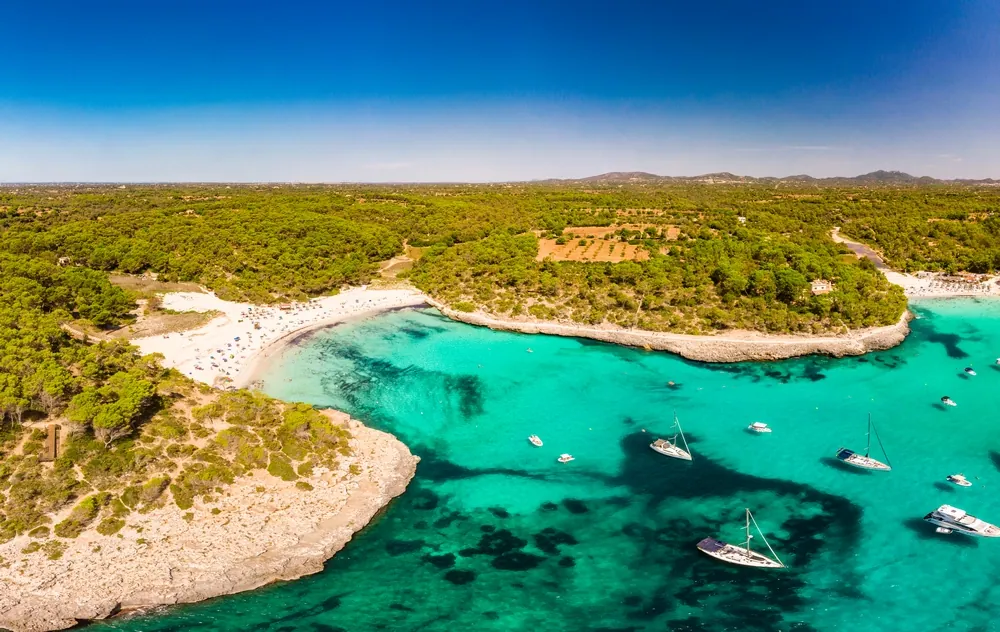
16South · Town
Santanyí
A market town built from its own golden stone, with a great church, quiet galleries and the coves of the south-east coast a few minutes' drive away.
20 min from Colònia de Sant Jordi
45 min from the airport
A seaside village between the dunes of Es Trenc and the islands of Cabrera

Drives outside peak traffic. Markets from the official 2026 list; seasonal evening markets on the market days page.
Colònia de Sant Jordi is a small harbour village at the southern edge of Mallorca, and most people come for what lies beyond it. Along the coast runs Es Trenc, one of the island's longest undeveloped beaches; inland are the salt pans and lagoons of the Salobrar de Campos; offshore, the islands of the Cabrera archipelago form a national park. The village itself is relaxed and low-rise, with small town beaches, a working harbour and sunsets over open sea.
The roads south from Campos and Ses Salines cross flat farmland and end at the sea, and Colònia de Sant Jordi is where they stop. The village belongs to the municipality of Ses Salines and has grown around its harbour and rocky points, mostly in low white buildings and holiday homes. It keeps an easy, unhurried rhythm, especially outside July and August, when the population thins to residents and a few walkers and cyclists.
Between the harbour and the rocks there are small beaches of pale sand, sheltered enough for children on most days, and a seafront walk that links them. The water is shallow and clear, often turquoise over sand, and the islands of Cabrera sit on the horizon to the south. The day here is organised around the sea and the light, and very little happens after dark, which is rather the point.
Es Trenc is the reason many visitors come. Its long, straight beach of fine pale sand is backed by dunes and low scrub instead of buildings, and the sea shelves gently through shades of blue and green. The beach and its hinterland are protected as the natural park of Es Trenc and the Salobrar de Campos, which also takes in the salt flats and lagoons inland. Our guide to Es Trenc and the south coast beaches covers the access points and the quieter stretches.
The Salobrar is a different world: shallow pools and salt pans where sea salt, including the delicate flor de sal, is still harvested. Herons and stilts feed in the brine, and at times flamingos appear, pale pink against the white crusts. Spring and autumn migration are especially rewarding for birdwatchers. On the beach, banks of dried Posidonia are part of the system, so read our note on Posidonia and beach etiquette before you spread a towel.

From the harbour, boats leave for the Cabrera archipelago, a scatter of islands and islets off the south coast that make up the Cabrera Archipelago Maritime-Terrestrial National Park. The main island has a sheltered natural harbour, a small medieval castle on the rise above it and a handful of marked paths, and its waters are strictly protected. Many excursions include a stop at the Blue Cave, a sea cave where the light turns the water an intense blue, and a swim there is often possible.
Cabrera also carries a darker memory: thousands of French prisoners were held on the island during the Napoleonic wars, and many did not survive. Sailings depend on the season and the sea, so check the current timetable; private boats need a permit to moor in the park. Back in the village, the Cabrera National Park visitor centre has exhibitions on the archipelago and its marine life, worth an hour before you sail or on a day when the wind keeps the boats in harbour.
A short drive away, the lighthouse of Cap de ses Salines marks the southern tip of Mallorca. Around it the land is low, stony and covered in wind-pruned scrub, and the sea is loud against the rocks on most days. From near the lighthouse a path follows the shore to Platja des Caragol, an undeveloped beach of sand and Posidonia with no buildings in sight. The walk is easy but exposed: carry water and expect no facilities.
Colònia itself is a fine place for late light. In winter, when the sun sets further to the south-west, it drops straight into the open sea off the village, one of the best reasons to come here out of season. Our sunset spots tool shows where the sun meets the sea on any date.

From May to October, Colònia de Sant Jordi holds its weekly market on Wednesday evening, a relaxed affair of crafts, clothing, local produce and people strolling up from the beach. It is a different mood from the morning markets inland; the market days tool shows what else is trading that week, including Santanyí on Wednesday and Saturday mornings.
Look out for sea salt and flor de sal from the salt pans, local almonds and sobrassada, and in season the fruit and vegetables grown on the flat farmland around Campos and Ses Salines.
Colònia de Sant Jordi is about 45 minutes from Palma airport outside peak traffic, by way of Llucmajor and Campos. In summer the car parks behind Es Trenc fill early and the beach roads slow down by late morning; the land here is flat, and cycling to the beaches is an easy alternative. Buses link the village with Palma, with fuller services in season, so check the current timetable.
This coast faces south, so it is calm when the Tramuntana blows from the north and rougher when the Migjorn or Xaloc comes in off the sea; the wind beach finder helps you choose your day. Combine the village with Santanyí and its market, the salt pans and the farming town of Campos, or the quiet village of Ses Salines inland.
Beach lovers who prefer dunes to promenades, families who want shallow water, birdwatchers drawn to the salt flats and anyone curious about Cabrera. It suits a slow, sea-centred holiday with cycling and coastal walks. Those wanting nightlife, mountain scenery or old-town architecture will be happier basing themselves elsewhere and coming here for the day.
May, June, September and early October bring warm water, regular boats to Cabrera and space on the sand. In July and August, reach Es Trenc early or late in the day, as the car parks fill by mid-morning. Winter is very quiet and many places close, but the coastal walking is good and the sun sets into the sea off the village.
Excursion boats leave from the harbour in the village during the season, and many include a swim at the Blue Cave and time ashore on the main island. Departures depend on the weather and the sea, so check the current timetable and book ahead in summer. Private boats need a permit from the national park to moor.
Yes. Es Trenc is close enough to reach on foot or by bicycle from the village along the shore and quiet lanes, though in summer heat many people drive to one of the access points instead. Go early, carry water and stay off the dunes, which are fragile and protected.
At times, yes. Flamingos visit the Salobrar de Campos irregularly, along with herons, stilts and other wading birds. Numbers vary from year to year and season to season, so treat a sighting as a bonus. Spring and autumn migration are usually the richest times for birdwatching.
The weekly market is held on Wednesday evening from May to October. It is a relaxed affair with crafts, clothing and local produce, and it suits a stroll after a day on the beach. For a morning market, Santanyí trades on Wednesday and Saturday, a short drive to the east.
A market town built from its own golden stone, with a great church, quiet galleries and the coves of the south-east coast a few minutes' drive away.
20 min from Colònia de Sant Jordi
45 min from the airport
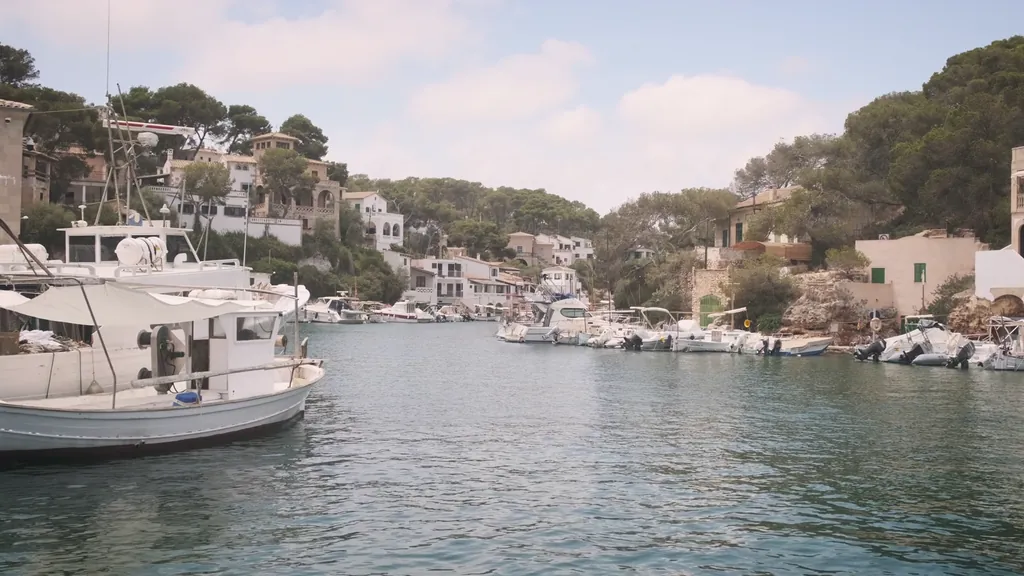
Two narrow arms of sea, boathouses cut into the rock and nets mended on the quay: a working harbour that is at its best in the quiet of evening.
30 min from Colònia de Sant Jordi
50 min from the airport
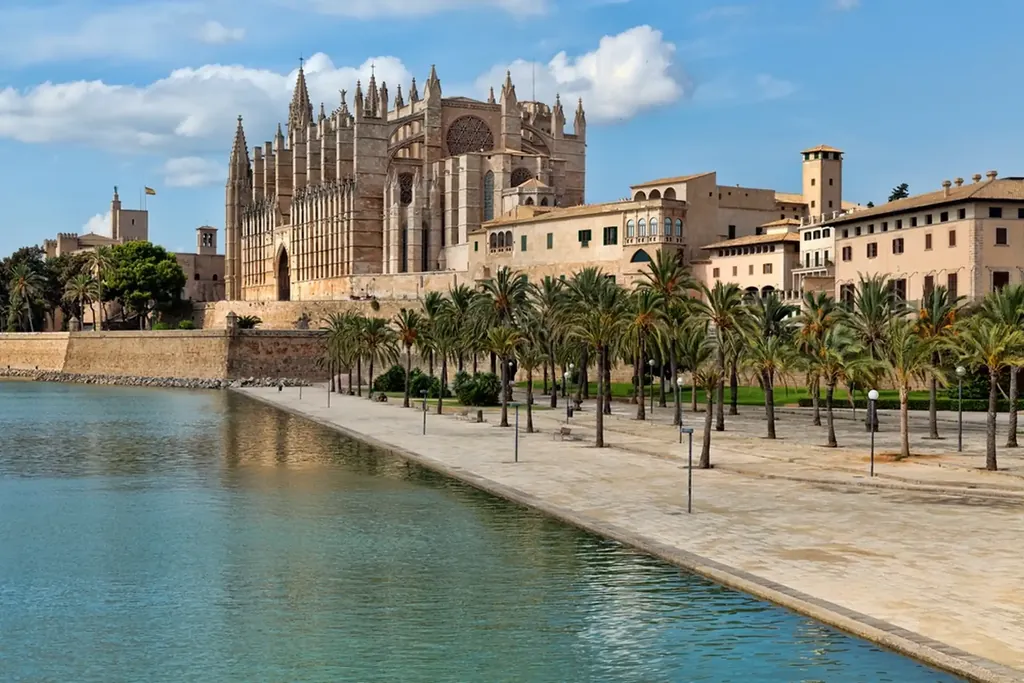
A cathedral city on a wide bay, with courtyards, covered markets and a long seafront path. Palma rewards slow walking and stays awake all year.
50 min from Colònia de Sant Jordi
15 min from the airport

Choose how long you stay, where you sleep and what you love. The planner suggests a day-by-day route with drive times, market days and the beaches the wind allows. Keep it, print it or send it to yourself.