
02Southwest · Marina
Puerto Portals
A glossy yacht harbour on the Bay of Palma, sociable in summer and quiet in winter, with small coves of pine and pale sand close by.
15 min from Palma
20 min from the airport
Palma and the bay: a cathedral city facing open water, lived in every month
Drives outside peak traffic. Markets from the official 2026 list; seasonal evening markets on the market days page.
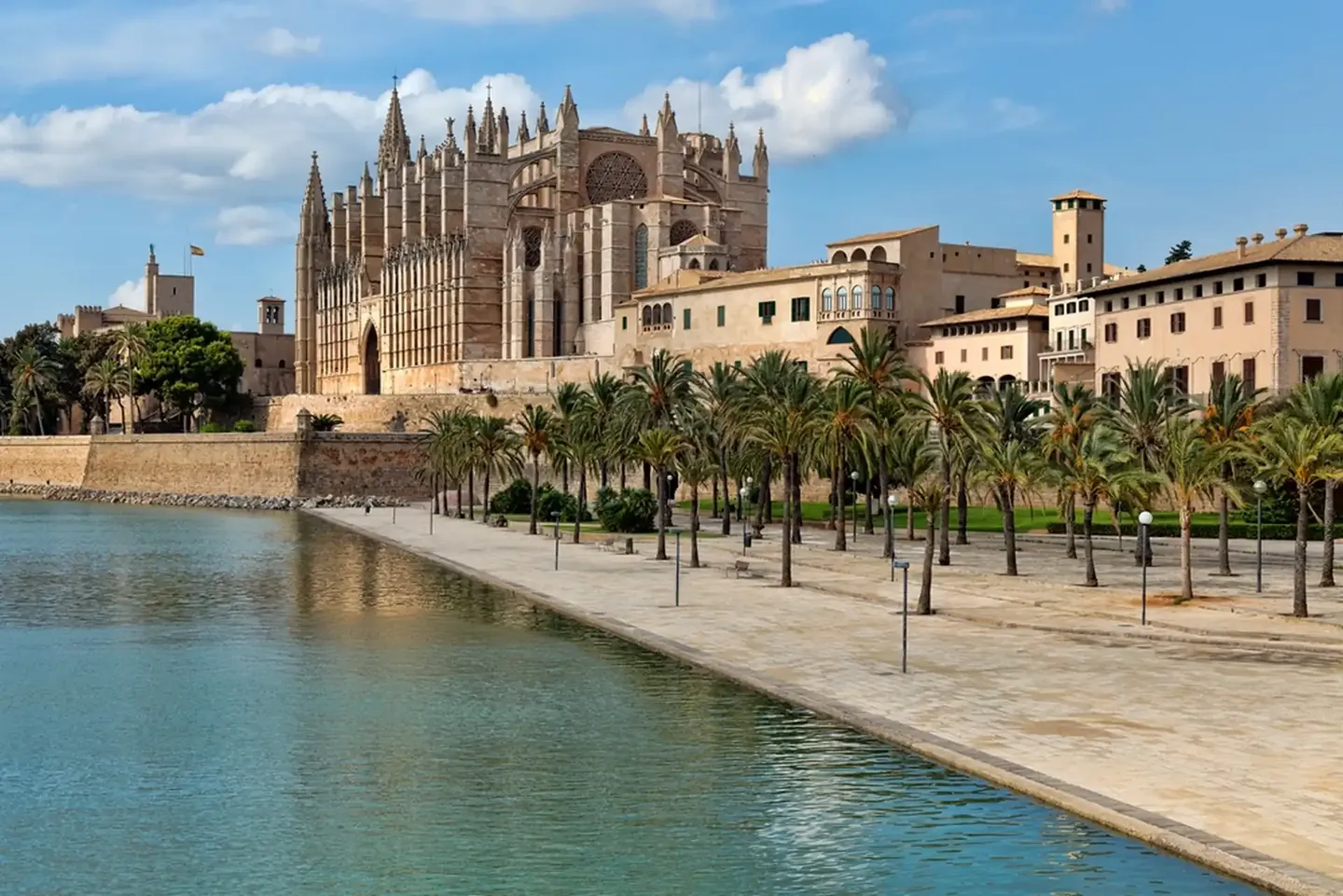
Palma is where most journeys to Mallorca begin, and where many of the best ones end. The capital of the island and of the Balearics sits on a wide bay, its golden cathedral raised on the old sea wall like a ship at anchor. Behind it lies an old town of shaded lanes and hidden courtyards; in front, a promenade follows the water east and west. It is a city to walk, to eat in, and to return to in every season.
Palma has been a port for more than two thousand years, and it still faces the water first. Roman, Moorish and Catalan layers sit on top of one another: the Almudaina, once the fortress of the Moorish governors, became the palace of the kings of Mallorca, and La Seu rose after Jaume I took the city in 1229. Soft local sandstone, the marès, gives the old town its honey tone, warmest in the low light of late afternoon.
Yet Palma is no museum. It is a working capital of offices, schools and markets, with a population that stays when the season ends, which is precisely why it makes such a good base. Most of the island lies within an hour's drive outside peak traffic, and you come back each evening to a city rather than a resort.
Start in the Parc de la Mar, where a long lake below the walls reflects the buttresses of La Seu and the towers of the Almudaina. Inside the cathedral, look for the great rose window, the canopy that Antoni Gaudí designed to hang over the altar, and Miquel Barceló's ceramic chapel, a cave of fish, fruit and loaves. On 2 February and 11 November the early sun throws the colours of the rose window onto the wall beneath the facing window, and people gather inside to watch.
Then put the map away. The lanes behind the cathedral, around Plaça de Santa Eulàlia and the basilica of Sant Francesc, where the philosopher Ramon Llull is buried, are lined with the stone mansions of old families. Their great doors often stand open onto patios with wide stairs, wells and palms. The Banys Àrabs, a small domed bathhouse in a garden, is one of the few Moorish buildings still standing. Our architecture guide follows the city from Gothic to modernisme.

The Passeig des Born, the city's shaded drawing room, leads up from the sea towards the shopping streets around Jaume III. West of it, the Renaissance bastion of Sant Pere holds Es Baluard, the museum of modern and contemporary art, whose walkways on the walls look across the harbour. Beyond lies Santa Catalina, once the quarter of sailors and fishermen and now dense with places to eat, with its covered market at the centre and the old windmills of Es Jonquet on the ridge beside it.
Two more sights reward a short trip out of the centre. Bellver Castle, a round Gothic fortress built in the fourteenth century for the kings of Mallorca, crowns a pine-covered hill and houses the city's history museum; the view of the bay from its roof is one of the best in Palma. Further west, in Cala Major, the Fundació Miró Mallorca keeps the studios where Joan Miró worked from 1956 until his death in 1983, much as he left them.
East of the cathedral, a promenade follows the shore to Portixol, a small fishing harbour where the boats sit in a tight basin, and on to Es Molinar, a former fishermen's quarter of low cottages named after the mills that once stood here. It is the easiest walk or bike ride in the city: flat, with the sea on one side, and continuing towards Can Pastilla for those who want more. Locals swim from the small beaches and the steps along the way.
The city beaches face south, so a northerly Tramuntana leaves them calm while the north coast takes the swell. In summer the afternoon sea breeze, the embat, rises after midday and fades towards dusk, so swim in the morning if you want flat water. The wind beach finder shows which coast is sheltered on any given day.

Palma's covered markets are where the city's kitchens begin. The Mercat de l'Olivar, near Plaça d'Espanya, has a fish hall of startling variety, stalls of sobrassada and island cheese, and counters where shoppers stop for something hot in the middle of the morning. Santa Catalina market is smaller and more neighbourly. Both are liveliest in the morning and busiest on Saturdays; our markets guide covers the weekly street markets across the island.
Eat as Mallorcans do: an ensaïmada with coffee, pa amb oli at lunch, frit mallorquí or tumbet when a kitchen offers them, and fish from the morning's market in the evening.
The airport is about 15 minutes away outside peak traffic, with a public bus into the centre. Much of the old town is closed to non-resident cars, so leave yours in one of the public underground car parks on its edge, such as the one beneath the Parc de la Mar, and walk. The Sóller railway leaves from Plaça d'Espanya, and city buses run out to Cala Major and along the seafront.
For day trips, Valldemossa in the hills, Puerto Portals along the bay and the wine villages around Binissalem are all within about half an hour. If a week becomes a season, read our notes on living in Mallorca year-round.
Travellers who like to walk a city rather than tick it off, culture lovers drawn by the cathedral, the museums and the architecture, cooks who plan their mornings around markets, and second-home owners looking for a base with life in January as well as July. Families do well too: short distances, a flat promenade and beaches on the edge of town.
Palma works in every month. Spring and autumn bring warm days for walking and quieter streets; winter is mild and often bright, with the city entirely itself. In high summer, explore early, retreat at midday and come out again for the evening. Avoid the old town lanes when several cruise ships are in port, and visit the cathedral early.
Two full days cover the essentials: La Seu, the Almudaina and the old town on one, Bellver Castle, Es Baluard and Santa Catalina on the other. A third allows the Fundació Miró Mallorca, a slow morning at the Mercat de l'Olivar and a walk or ride along the seafront to Portixol.
Yes. Small city beaches line the seafront east of the cathedral, around Portixol, Es Molinar and Ciutat Jardí, with larger sandy beaches further along the bay. They face south, so they are calmest when the wind is from the north; on summer afternoons the embat can bring a light chop.
The drive takes about 15 minutes outside peak traffic, and a public bus runs between the airport and the city centre; check the current timetable. Taxis wait outside arrivals. If you hire a car, plan to leave it in a public car park, as much of the old town is closed to non-resident traffic.
Very good. Motorways leave the city for the southwest, the airport and Inca, and the tunnel road brings Sóller within easy reach. Most of the island lies within an hour outside peak traffic, and you return each evening to restaurants, concerts and walks that no resort can match.
A glossy yacht harbour on the Bay of Palma, sociable in summer and quiet in winter, with small coves of pine and pale sand close by.
15 min from Palma
20 min from the airport
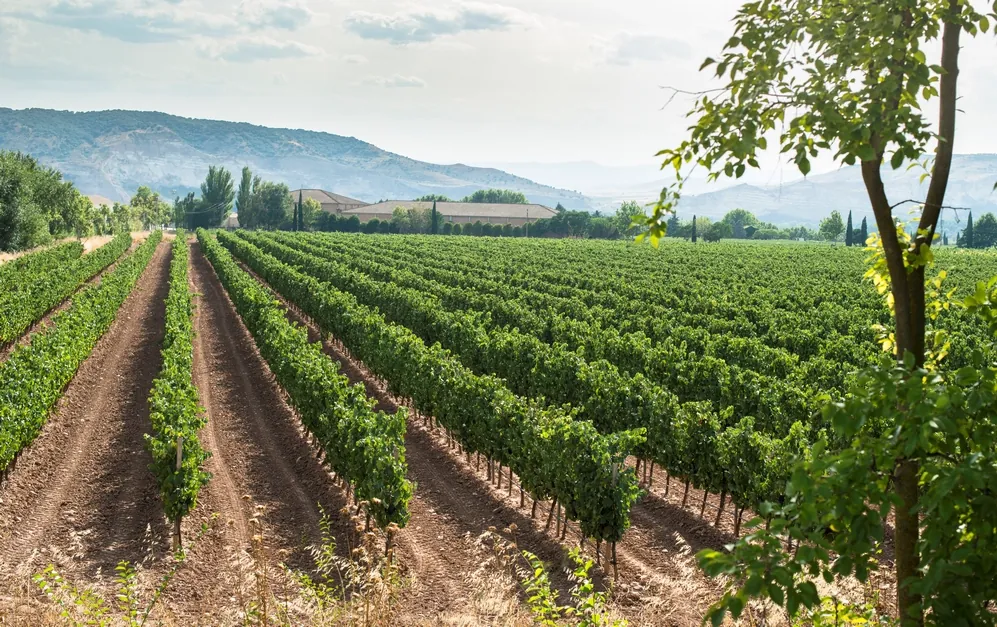
Home of one of Mallorca's two wine denominations, Binissalem pairs Manto Negro reds with stone manor houses, a Friday market and a lively harvest festival.
20 min from Palma
25 min from the airport
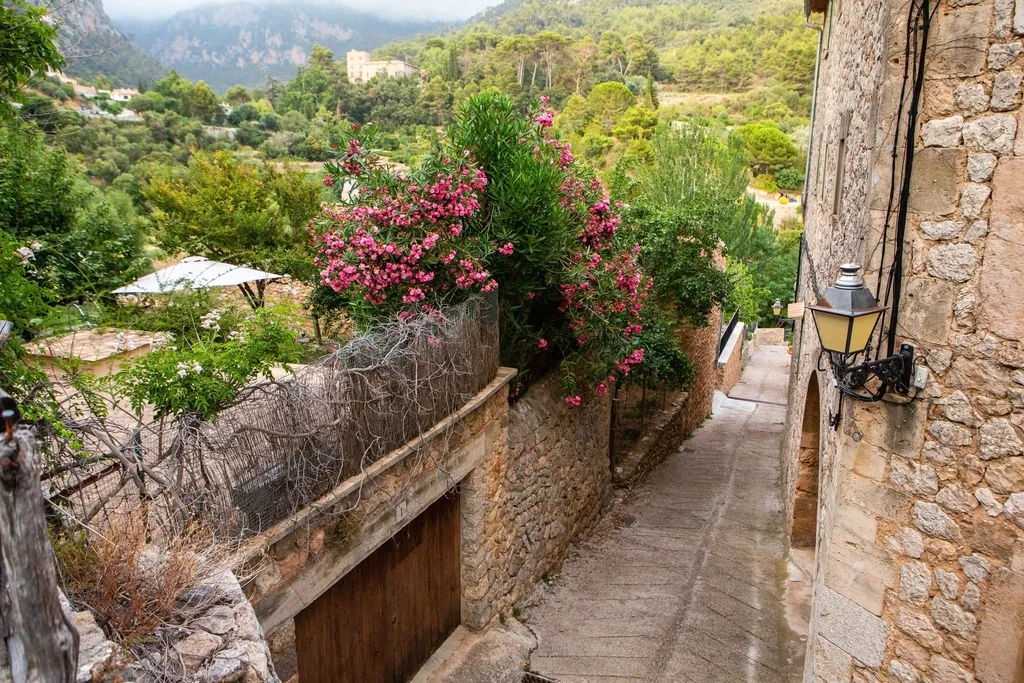
Cobbled lanes, a royal Carthusian monastery and the island’s own saint. Valldemossa rewards an early start and a slow drive down to the coast.
25 min from Palma
30 min from the airport
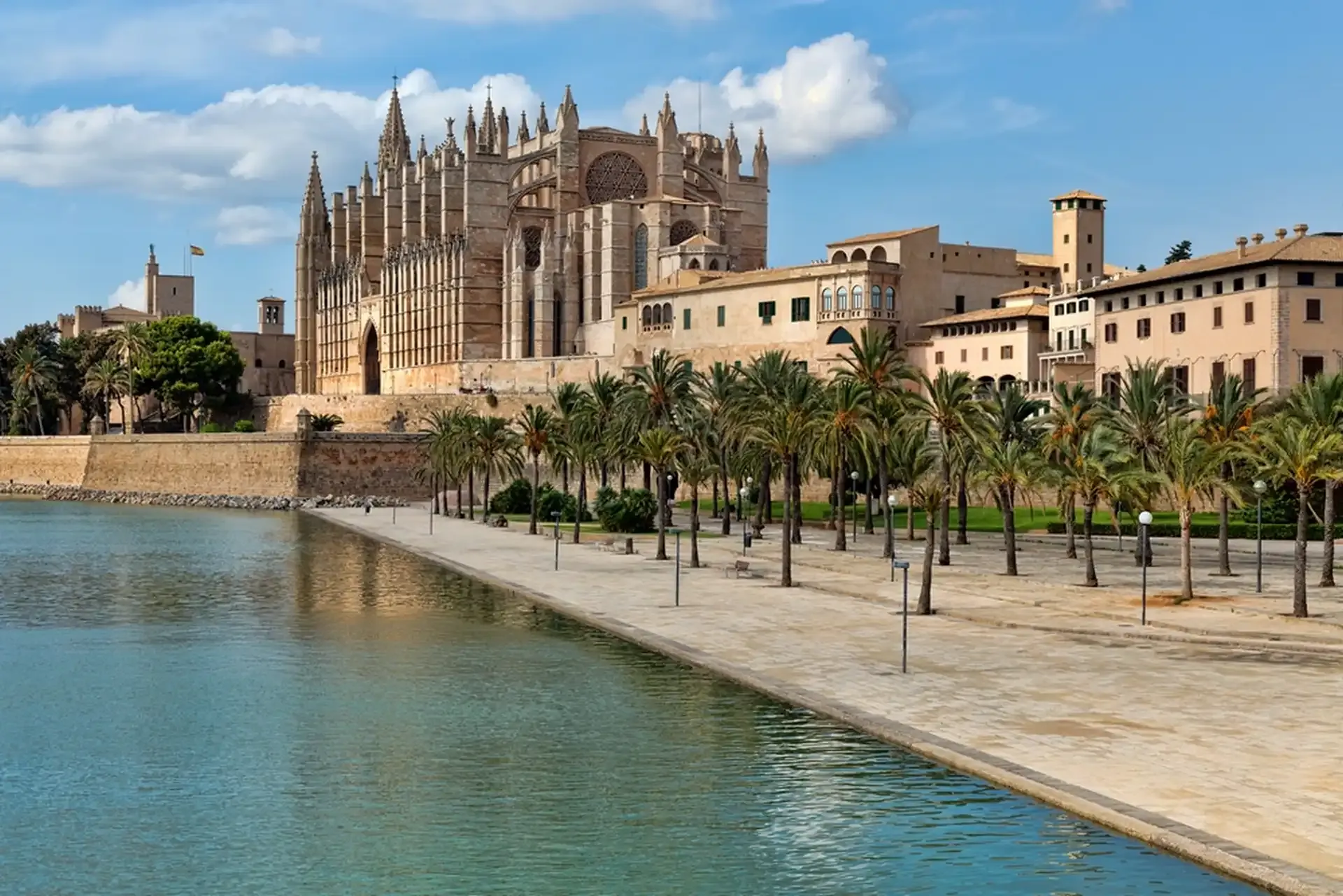
Choose how long you stay, where you sleep and what you love. The planner suggests a day-by-day route with drive times, market days and the beaches the wind allows. Keep it, print it or send it to yourself.