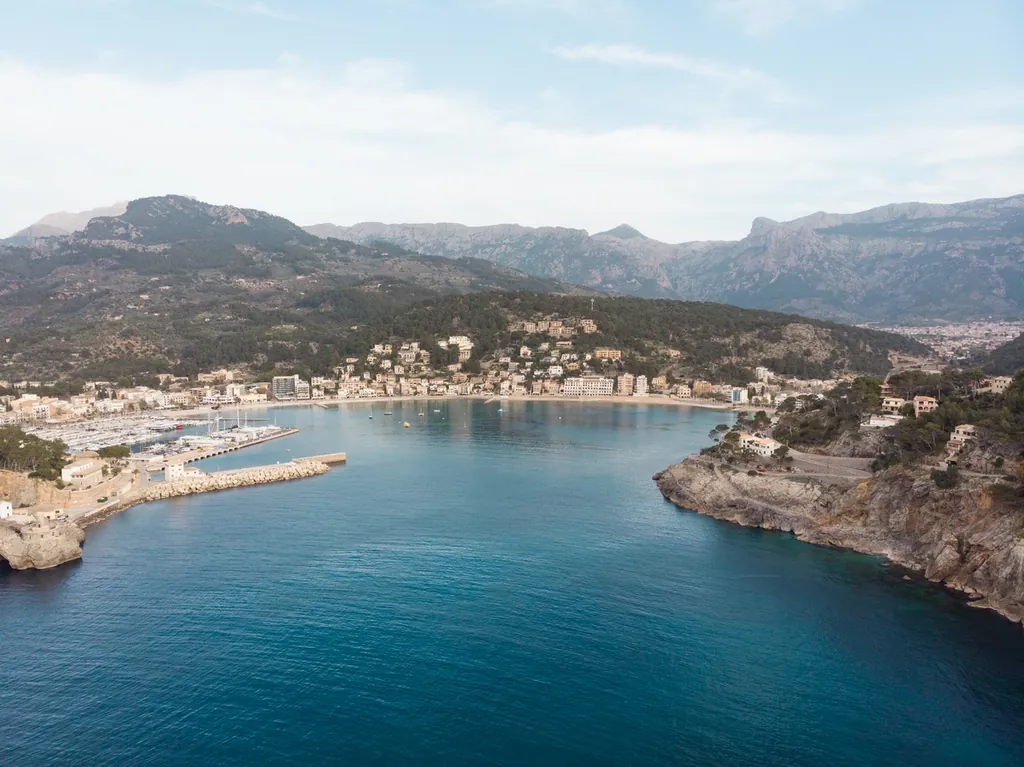
08Tramuntana · Town and port
Sóller
A wooden train over the mountains, a tram to the sea and a valley full of orange groves. Sóller is the Tramuntana at its most complete.
10 min from Fornalutx
35 min from the airport
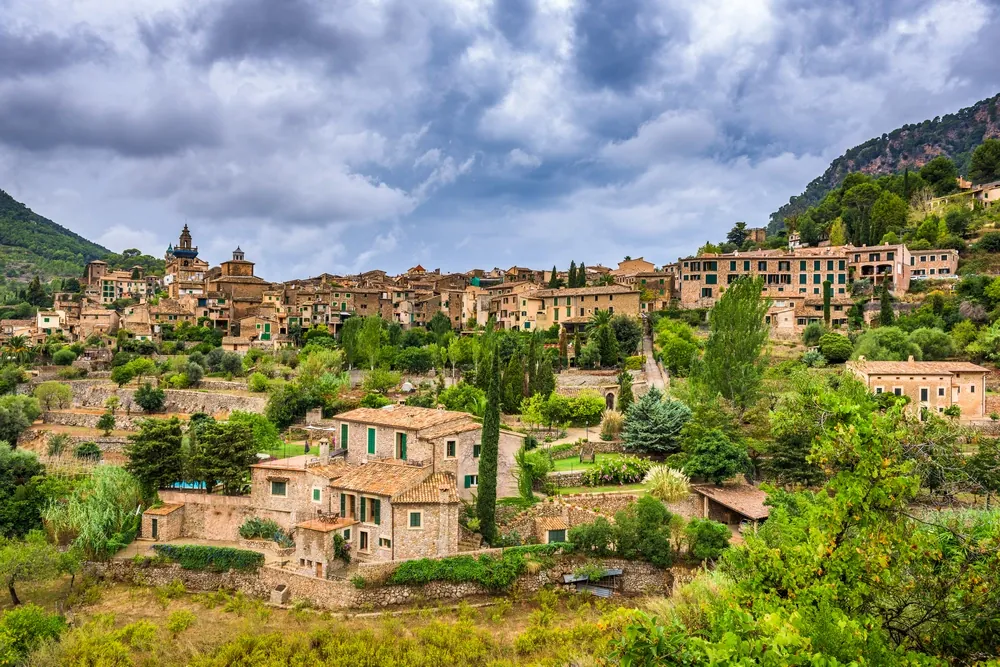
Stepped lanes of golden stone at the head of the Sóller valley
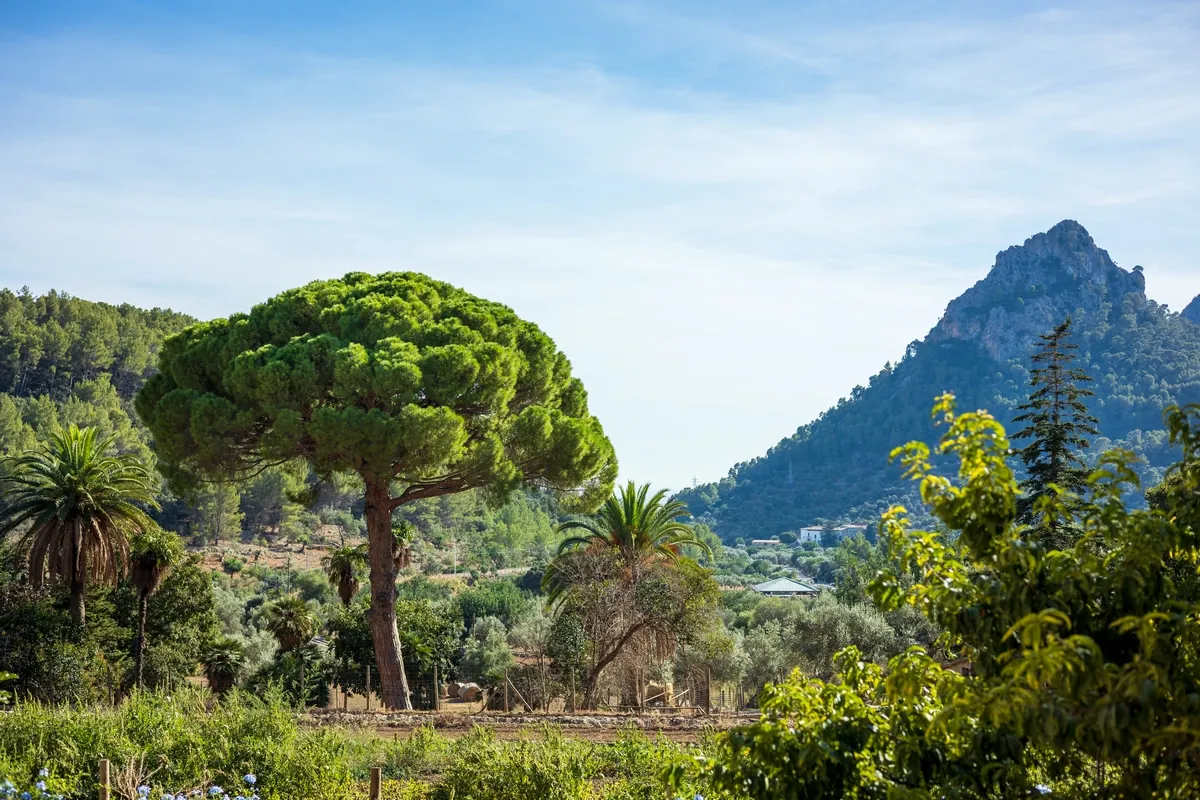
Drives outside peak traffic. Markets from the official 2026 list; seasonal evening markets on the market days page.
Fornalutx sits at the head of the Sóller valley, where the orange groves give way to the steepest slopes of the Tramuntana. Its houses of golden stone, with green shutters and potted plants on every step, climb the hillside in lanes too narrow and too steep for cars. Above them rises Puig Major, the highest mountain on the island. You can walk from one end of the village to the other in minutes, yet many people come back to it year after year.
The heart of Fornalutx is a small square below the parish church, with a few café tables and a view down the valley. From here, lanes of worn stone steps climb and drop between the houses, some barely wide enough for two people to pass. Doorways are framed in dressed stone, shutters are painted green, and pots of geraniums line every ledge. Look up at the eaves: on some older houses the undersides of the roof tiles are painted, an old local custom meant to protect the home.
Fornalutx belongs to the association of the most beautiful villages in Spain, and it wears the title lightly. It is a working village as much as a pretty one. People still tend the terraces, cats doze on the warm steps, and the lanes fall silent in the heat of the afternoon.
Around the village the hillsides are carved into terraces held up by dry-stone walls, planted with oranges, lemons and olives and watered by old stone channels that carry water from mountain springs. This patient engineering is exactly what earned the Serra de Tramuntana its place as a UNESCO World Heritage cultural landscape in 2011. Above it all stands Puig Major. Its summit is a military zone closed to walkers, but its great grey bulk fills the view from almost every corner of the village.
The best views are from the upper lanes and from the road above the village, where Fornalutx appears as a single stepped mass of stone and terracotta against the valley. For more on the island’s citrus and oil, see our guide to oranges, olive oil and almonds.
An easy and lovely walk leaves Fornalutx along an old path between stone walls and groves to Biniaraix, a hamlet of stone houses further down the valley, in about half an hour. From there you can carry on down to Sóller for lunch and return by bus or taxi, or turn uphill into the Barranc de Biniaraix, a paved mule track that climbs a gorge in hundreds of steps towards the high plateau.
More ambitious walkers use Fornalutx as the start or finish of stages on the GR 221 through the high mountains. The paths are well marked but steep, and the terraces give little shade, so set off early in summer.
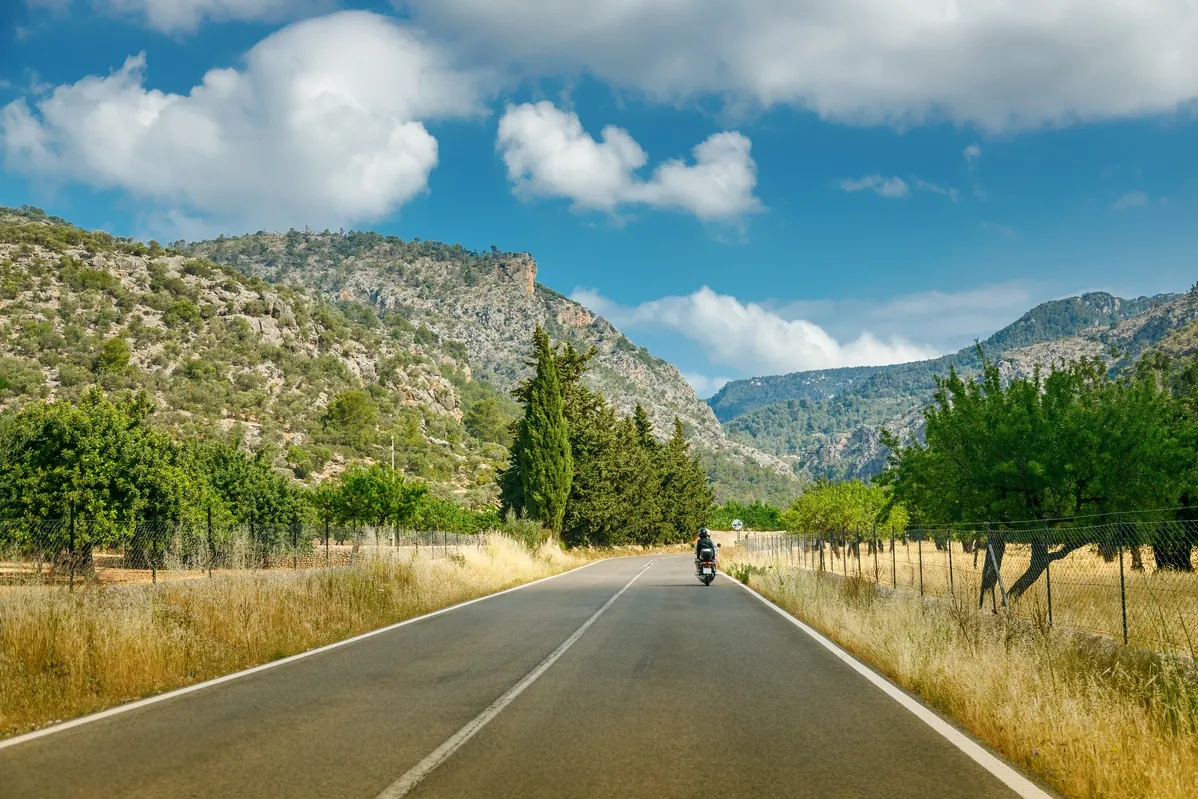
Fornalutx lies just below the Ma-10, the road that crosses the Tramuntana from Sóller towards Pollença. Climbing above the village, it passes the Mirador de Ses Barques with its view over Port de Sóller, then threads below the flanks of Puig Major to the reservoirs of Cúber and Gorg Blau, two lakes of green water in a bare, stony landscape that feels a world away from the orange groves.
Cúber is the starting point for some of the finest high walks on the island, including the descent past l’Ofre to the Barranc de Biniaraix. Beyond Gorg Blau the road continues to Lluc and its sanctuary. Allow plenty of time: the road is narrow in places and busy with cyclists. Stops worth making:
Most visitors arrive mid-morning and leave by late afternoon, and that is when Fornalutx is at its best. As the light turns amber on the stone, swifts scream over the rooftops in summer, neighbours sit out on their steps and the only sounds are church bells and water running in the channels. If you can, stay a night or two; choosing a base weighs the Tramuntana against other parts of the island.
The nearest weekly market is in Sóller on Saturday, a good place to stock up on fruit, cheese, olives and sobrassada. Eating in the village is simple and local: pa amb oli, grilled meat, and oranges from the terraces squeezed to order.
Fornalutx is about 45 minutes from Palma airport outside peak traffic, through the Sóller tunnel and up the valley; drive times gives other routes. Cars cannot enter the old lanes, and the small car parks at the edge of the village fill quickly in summer, so come early or late. Some buses link the village with Sóller; check the current timetable.
Fornalutx combines naturally with Sóller and its port on the same day, or with the mountain road to Lluc for a full crossing of the range.
Walkers, photographers and anyone who prefers a village to a resort. Fornalutx suits couples looking for a quiet base in the mountains, hikers on the GR 221 and drivers crossing the Tramuntana on the Ma-10. It is less suited to people with limited mobility, as almost every lane is a staircase, or to those who want a beach on the doorstep.
Spring is glorious, with blossom on the citrus and wild flowers on the terraces; October and November bring soft light and good walking. In summer, come early in the morning or after five in the afternoon, when the lanes empty and the stone glows. Avoid the middle of the day in July and August, when heat and visitors peak together.
Only to its edge. The old village is a web of stepped lanes where cars cannot go, so park in one of the small car parks on the edge of the village and walk in. They fill quickly in high summer, so arrive early in the morning or in the late afternoon.
Fornalutx sits at the head of the same valley, a short drive from Sóller. On foot, an old path through the orange groves links the village with Biniaraix in about half an hour, and from there it is an easy walk on into Sóller. Some buses also connect the two; check the current timetable.
Not to the top. The summit of Puig Major, the highest mountain on the island, is a military zone and closed to the public. Walkers enjoy its slopes from the paths around Cúber and the high plateau, or climb Puig de Massanella near Lluc instead, the usual choice for a big summit day.
Yes, if you want peace. Day visitors leave by late afternoon, and the evenings are calm, with long views over the terraces. From here you are close to Sóller, its port and the trails of the high Tramuntana, though you will need a car or strong legs for most excursions.
A wooden train over the mountains, a tram to the sea and a valley full of orange groves. Sóller is the Tramuntana at its most complete.
10 min from Fornalutx
35 min from the airport
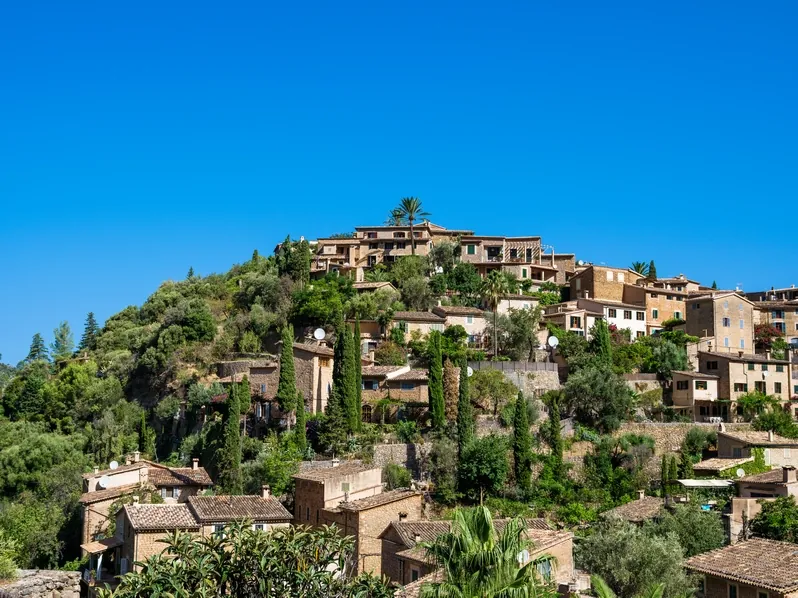
Robert Graves, a churchyard above the sea and a stony path down to a rocky cove. Deià is small and steep, and best taken slowly.
25 min from Fornalutx
45 min from the airport
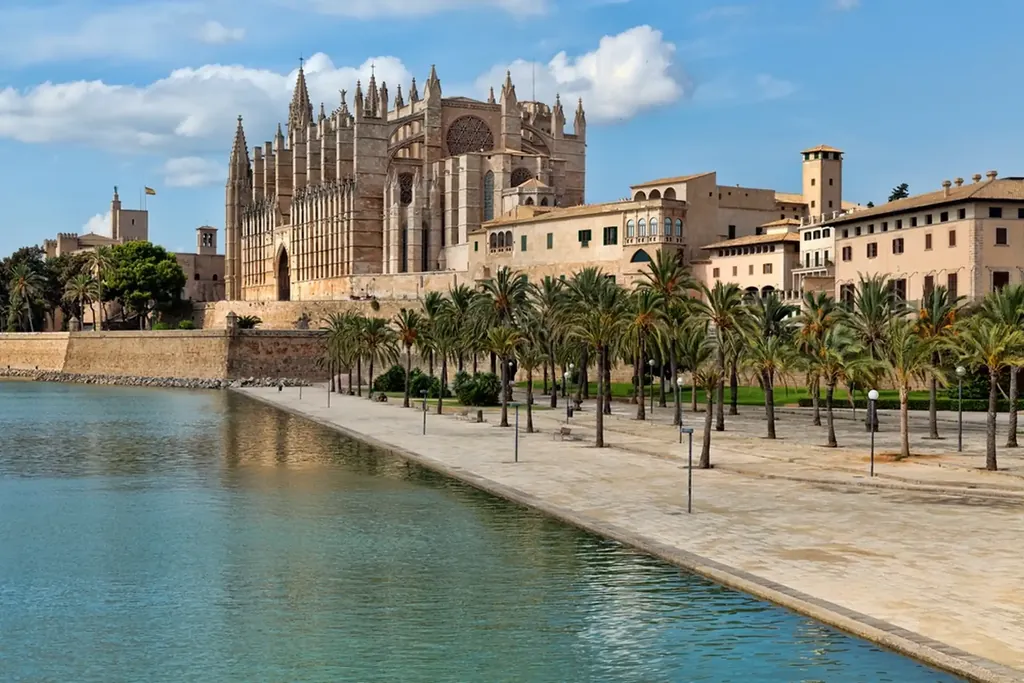
A cathedral city on a wide bay, with courtyards, covered markets and a long seafront path. Palma rewards slow walking and stays awake all year.
40 min from Fornalutx
15 min from the airport
Choose how long you stay, where you sleep and what you love. The planner suggests a day-by-day route with drive times, market days and the beaches the wind allows. Keep it, print it or send it to yourself.