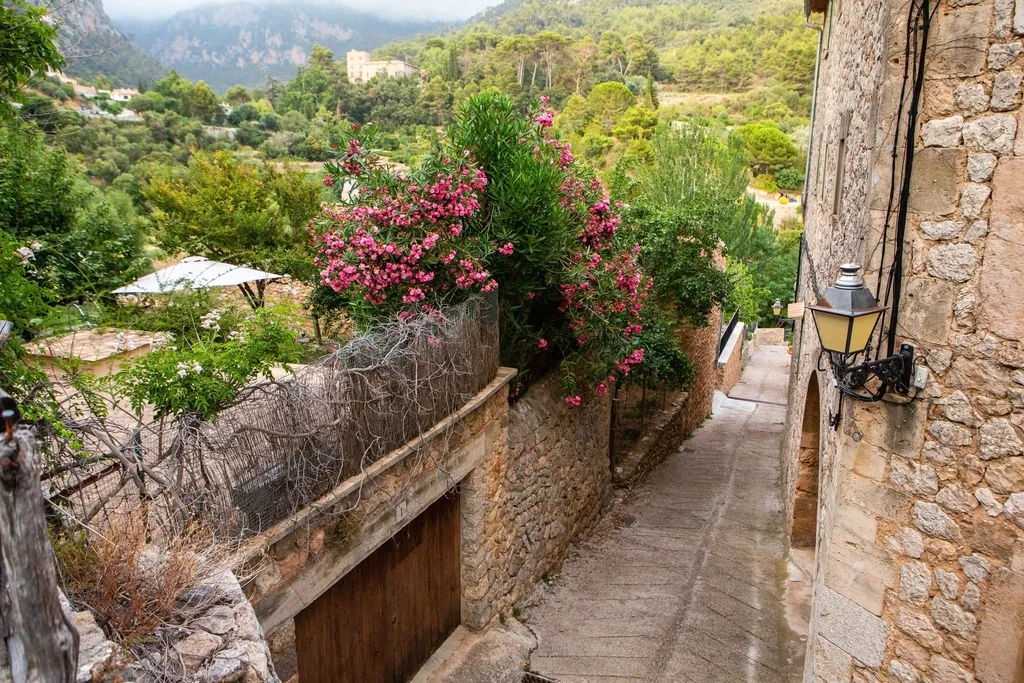
06Tramuntana · Village
Valldemossa
Cobbled lanes, a royal Carthusian monastery and the island’s own saint. Valldemossa rewards an early start and a slow drive down to the coast.
20 min from Banyalbufar
30 min from the airport
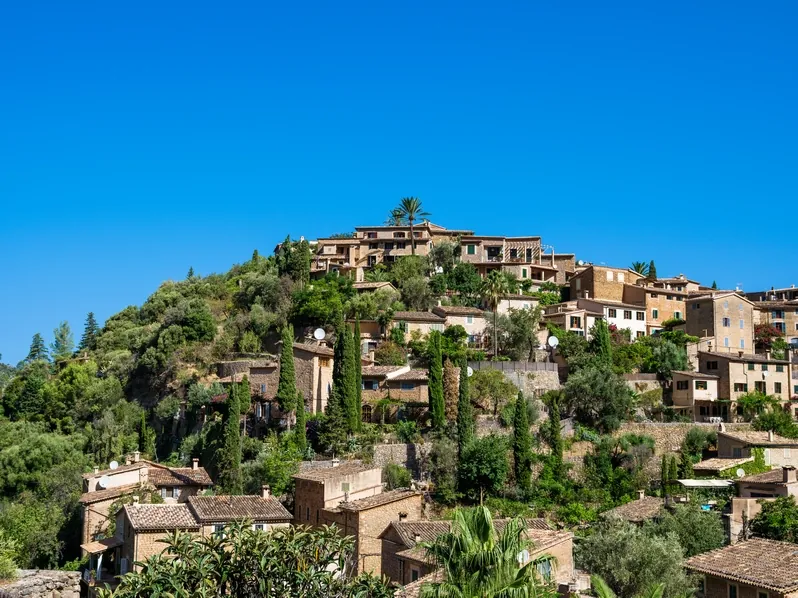
Serra de Tramuntana: a village of stone terraces, water channels and sea views
Drives outside peak traffic. Markets from the official 2026 list; seasonal evening markets on the market days page.
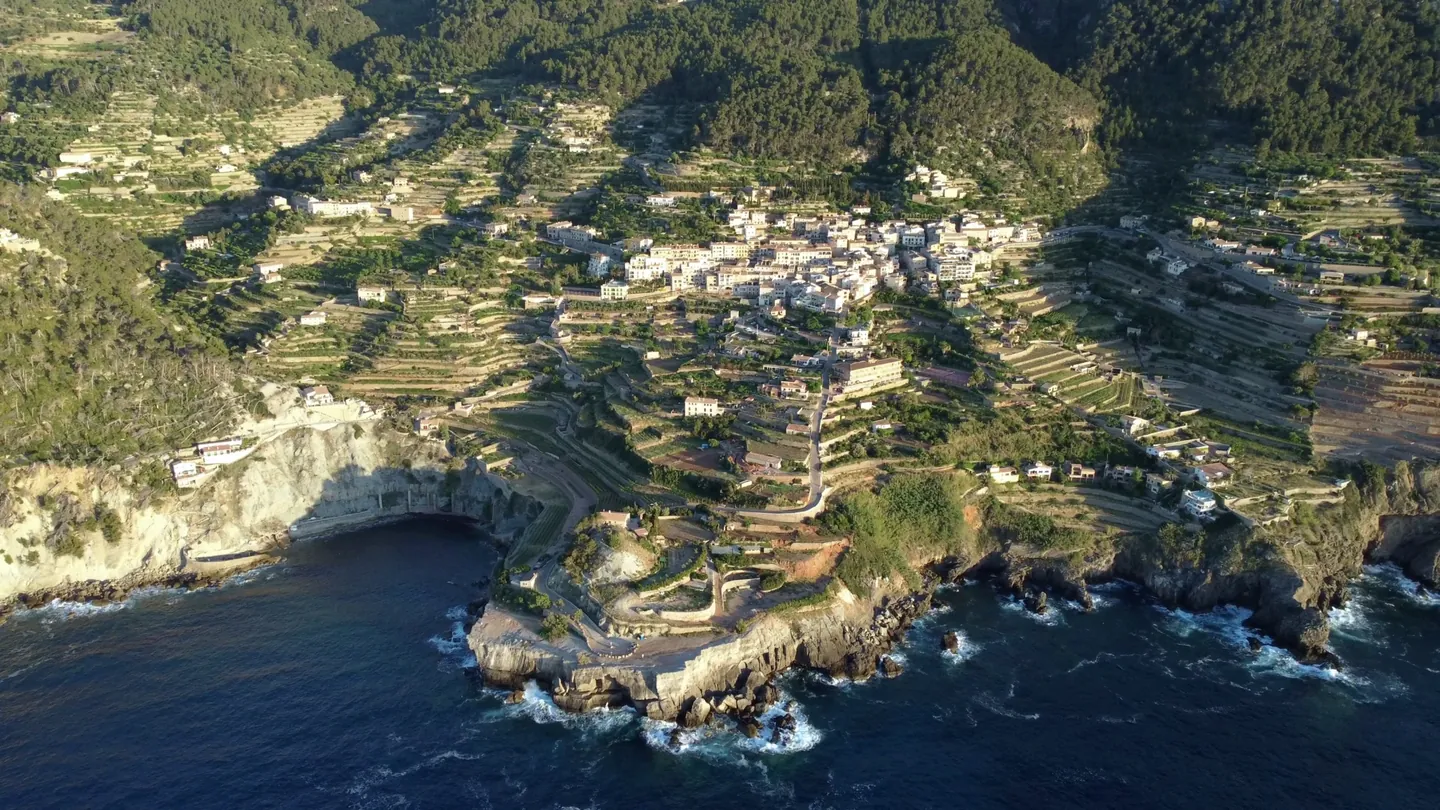
Banyalbufar hangs on a steep slope above the sea, on the Ma-10 between Andratx and Valldemossa. Below the road, row upon row of dry-stone terraces, the marjades, step down towards the cliffs, watered by stone channels and cisterns that still carry spring water from the hills. It is small, quiet and made almost entirely by hand. About 40 minutes from the airport outside peak traffic, it is one of the clearest places to see why UNESCO recognised the Serra de Tramuntana as a cultural landscape in 2011.
The village is a main street of stone houses with the church at its centre, and lanes that drop steeply towards the sea or climb into the pines behind. Everything else is terraces. They were begun in the Moorish period and extended over centuries, each wall built without mortar to hold a strip of soil just wide enough for vines, vegetables or a row of fruit trees.
The terraces are the whole point. Walk any of the lanes below the main road and you move between them, past stone steps, irrigation channels and small gardens, with the sea always below. The scale is human and the work is visible everywhere: this is a landscape made by hand and still kept by hand.
What makes the terraces fertile is water. Springs in the hills feed a network of channels that runs along the walls and fills the safareigs, the stone cisterns that store water for the gardens. Some are centuries old, and many are still in use. Look for the small sluices that send the flow from one terrace down to the next.
For centuries Banyalbufar was known for its Malvasia, a sweet white wine. Phylloxera destroyed the vines at the end of the nineteenth century, and the terraces turned to tomatoes and vegetables. In recent decades local growers have replanted Malvasia on the old slopes, and it is made again in small quantities, in dry and sweet styles; our guide to Mallorca's wine regions tells the wider story.
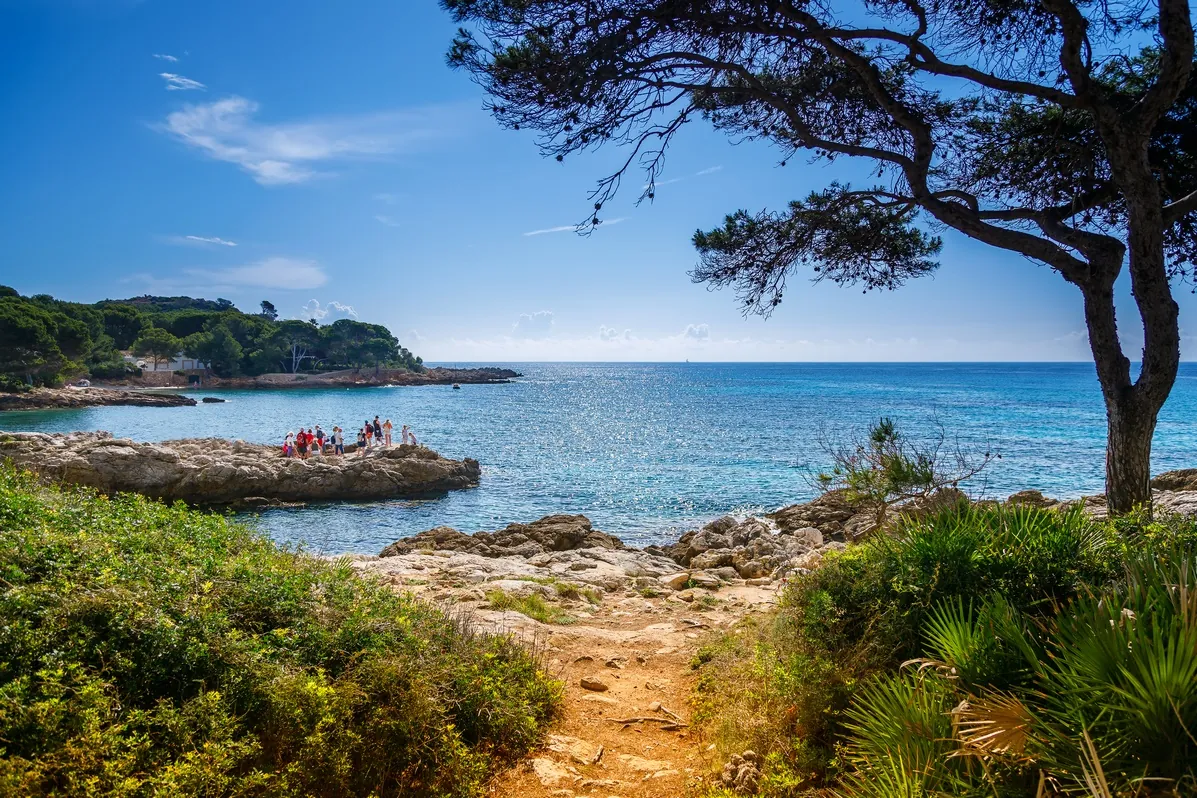
South of the village, towards Estellencs, the Torre des Verger stands on a rocky spur above the sea. Built in the sixteenth century to watch for pirate ships, the round tower is also known as the Mirador de ses Ànimes, and you can climb inside for a long view along the coast. The coast here faces northwest, so in summer it is a fine place to watch the sun go down; see our sunset spots tool for the dates.
North of the village, a narrow road drops from the Ma-10 to Port des Canonge, a pebble cove with old stone boat huts and a few houses; a coastal path also links it with Banyalbufar. Because this shore faces northwest, it is calm when the wind is southerly or easterly and rough when the Tramuntana or the Mestral blows. Check the wind beach finder before you plan a swim.
Banyalbufar has no weekly market of its own, so plan around the markets in Valldemossa on Sunday or Andratx on Wednesday. Locally, the produce is the terraces themselves: vegetables, olive oil from the slopes, Malvasia, and the ramellet tomatoes that are tied in bunches and hung to keep through the winter. A simple lunch of pa amb oli with those tomatoes, olives and a glass of white from the village says more about the place than any long menu.
Food here follows the season. Late summer brings the best tomatoes, and in autumn the grapes are picked by hand, since no machine can work terraces this narrow.
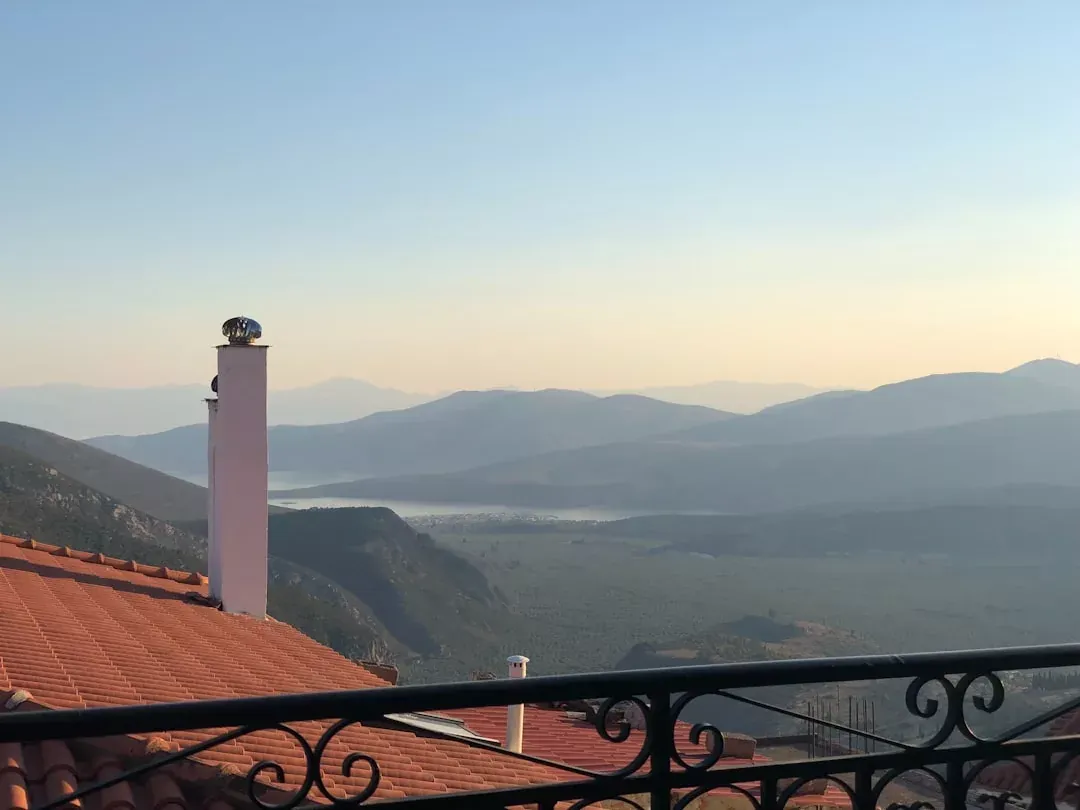
The Ma-10 is one of the great drives of the island, a narrow mountain road that clings to the slopes between Andratx and Valldemossa and continues towards Sóller and Pollença. Drive it slowly, use the pull-ins at the viewpoints, and expect cyclists on every bend.
For walkers, the old mail path, the Camí des Correu, crosses the hills between Banyalbufar and Esporles through holm oak woods, and the village lies on the long-distance GR 221. Esporles itself, in a green valley on the road back to Palma, is a pleasant, unhurried town that makes a good stop for coffee on the way home.
From Palma, the quickest route runs via Esporles; allow about 40 minutes from the airport outside peak traffic. Buses link the village with Palma; check the current timetable. Parking is limited to a few spaces along the main road and at the edges of the village, and the lanes below are steep and narrow, so leave the car and walk.
Combine Banyalbufar with Estellencs, the next village south, and Port d'Andratx at the end of the coast road, or turn north to Valldemossa and Deià for a day along the mountains.
Walkers, photographers and anyone curious about how the Tramuntana landscape was made, wine lovers interested in Malvasia, drivers who enjoy a mountain road, and travellers looking for a quiet base on the west coast. It suits couples more than families with small children, given the steep lanes and the lack of a sandy beach.
Spring is lovely, with green terraces, running water and flowers on the walls; autumn brings the grape harvest and a warm sea. In summer the evenings are the best part of the day here. Avoid driving the Ma-10 at the busiest midday hours in high season, and stay off the coast when a strong Tramuntana is running.
Not a sandy one. Below the village there is a small rocky cove, and the swimming spot most people use is Port des Canonge, a pebble cove a short drive north, also reached by a coastal path. The coast faces northwest, so it is best on days of southerly or easterly wind.
Malvasia is the grape that once made the village famous for its sweet white wine. Phylloxera ended production at the end of the nineteenth century, but local growers replanted the variety on the old terraces in recent decades. Today it is made in small quantities, in both dry and sweet styles.
Yes. The watchtower stands beside the Ma-10 just south of the village, with a small parking area by the road. A short path leads to the tower, and you can climb inside for the view along the coast. It is a popular stop at sunset, so arrive a little early.
Public buses run between Palma and Banyalbufar via Esporles; check the current timetable, especially outside summer. Walkers can also arrive on foot, on the GR 221 or along the old Camí des Correu from Esporles through the holm oak woods.
Cobbled lanes, a royal Carthusian monastery and the island’s own saint. Valldemossa rewards an early start and a slow drive down to the coast.
20 min from Banyalbufar
30 min from the airport
Robert Graves, a churchyard above the sea and a stony path down to a rocky cove. Deià is small and steep, and best taken slowly.
35 min from Banyalbufar
45 min from the airport

A deep natural harbour at the foot of the mountains, with a working fishermen's quay, villas on the slopes and sunsets over the open sea.
38 min from Banyalbufar
35 min from the airport

Choose how long you stay, where you sleep and what you love. The planner suggests a day-by-day route with drive times, market days and the beaches the wind allows. Keep it, print it or send it to yourself.