11North · Town and bay
Pollença
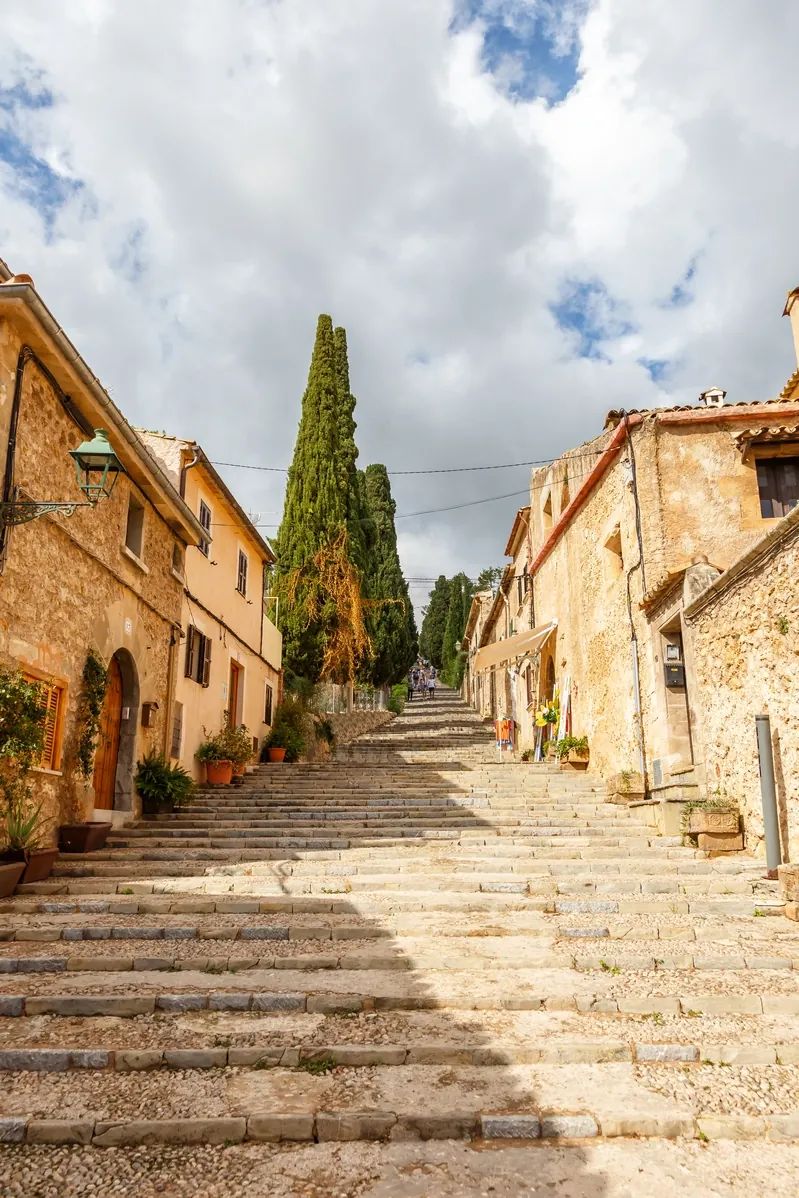
Pollença climbs 365 steps to its Calvari chapel; Port de Pollença spreads along a calm, shallow bay. Two halves of the north's most rounded base.
25 min from Lluc
50 min from the airport
Mallorca’s mountain sanctuary: cool, quiet and still a place of pilgrimage
Drives outside peak traffic. Markets from the official 2026 list; seasonal evening markets on the market days page.
Lluc is not a village but a sanctuary: a great stone complex of basilica, courtyards and pilgrims’ lodgings in a high, wooded valley at the heart of the Serra de Tramuntana. For centuries Mallorcans have walked here to visit the Mare de Déu de Lluc, the dark statue of the Virgin known affectionately as La Moreneta, and many still do. Around it lie holm oak forests, limestone peaks and some of the island’s best walking, in air that stays cooler than the coast even in August.
According to tradition, a shepherd boy named Lluc found a statue of the Virgin among the rocks here in the thirteenth century, not long after the Christian conquest of the island. A chapel followed, then a church and a community to care for it, and the sanctuary grew into the spiritual centre of Mallorca. The statue, small and dark-faced and holding the Child, stands in a chapel raised behind the high altar of the basilica, and visitors file past her in a steady, quiet stream.
She is the patroness of Mallorca, and the sanctuary still feels like a place of devotion rather than a monument. Families light candles, walkers arrive dusty from the hills, and a small museum tells the story of Lluc and its pilgrims; check the current opening times.
Lluc is home to the Blauets, a boys’ choir named after their blue cassocks, with roots that go back centuries. The boys live and study at the sanctuary, and hearing them sing in the basilica is one of the most moving experiences Mallorca offers. They sing at set times during the school year; check the current timetable before you plan around it.
Behind the sanctuary, the Camí dels Misteris climbs a small hill past stone monuments to the mysteries of the Rosary, a short, peaceful walk with views over the valley. There are simple pilgrims’ rooms within the sanctuary itself, and picnic areas in the woods nearby, where Mallorcan families gather at weekends with long tables and paella pans.

Walking to Lluc is a Mallorcan rite. Every year, on a night in early August, thousands of people set off from Palma in the evening and walk through the darkness to reach the sanctuary in the morning, in the pilgrimage known as Des Güell a Lluc a peu. It is a long, hard walk on roads, made for faith, for a promise or simply for the experience, and the arrival as the sun comes up over the mountains stays with people for years. More island feasts are in festivals and traditions.
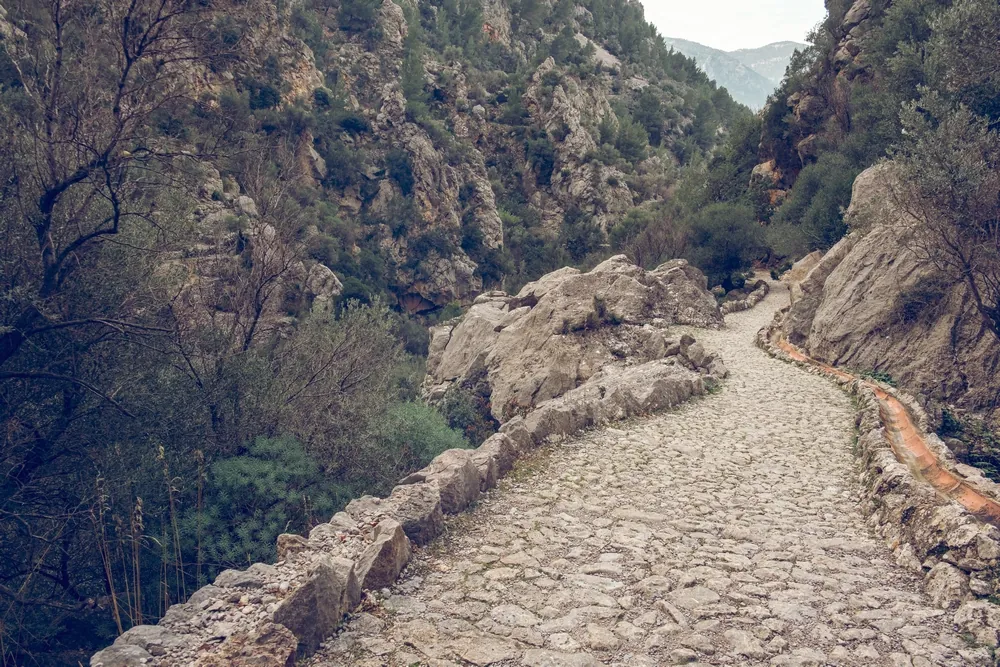
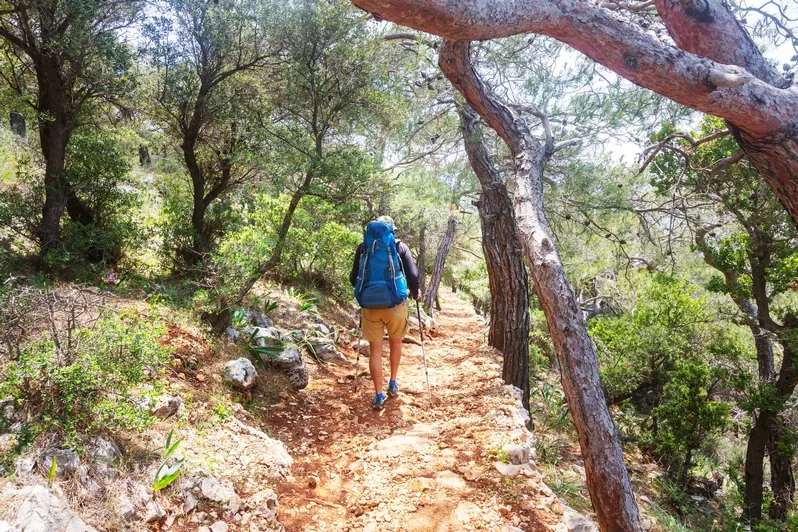
Gentler routes exist. The old pilgrims’ path climbs from Caimari through holm oak woods and limestone outcrops, past the platforms of old charcoal burners. Lluc is also a key point on the GR 221, and a public refuge of its network stands close to the sanctuary, a natural place to break a multi-day crossing of the mountains.
Puig de Massanella, the second-highest mountain on the island and the highest summit open to walkers, rises to the south of Lluc. The usual routes take most of a day, climbing through woods to bare limestone and the old snow houses, deep stone pits where snow was packed into ice in winter and carried down to the towns in summer. Access crosses private land and arrangements change, so check locally before you go.
Below Escorca, a short drive from Lluc, the Torrent de Pareis cuts a deep gorge down to the sea at Sa Calobra. Walking its full length is a serious undertaking, with scrambling over boulders and few ways out once you are committed; it must never be attempted after rain or when storms are forecast. Most people see only its mouth, from Sa Calobra.
The road down to Sa Calobra leaves the Ma-10 between Lluc and the Gorg Blau reservoir and drops to the sea in a sequence of tight hairpins carved from the rock in the 1930s. Its most famous moment is the Nus de sa Corbata, the tie knot, where the road turns through almost a full circle and passes beneath itself. It is a celebrated climb for cyclists, covered in our cycling guide, and a demanding drive for everyone else.
At the bottom, a path through tunnels in the rock leads from the small harbour of Sa Calobra to the mouth of the Torrent de Pareis, where the gorge ends in a pebble beach between sheer walls. In summer go very early or late in the day, as coaches and boats from Port de Sóller bring large crowds around midday.
Lluc is about 55 minutes from Palma airport outside peak traffic, usually via Inca and the winding road up through Caimari; drive times shows the alternatives. The Ma-10 links it with Pollença to the north-east and with Fornalutx and Sóller to the west, making Lluc a natural halfway stop on a crossing of the range. Buses serve the sanctuary; check the current timetable.
Lluc lies high and inland, in one of the wettest corners of the island, so it is often noticeably cooler than the coast. Bring a layer even in summer, and in winter expect mist, rain and, now and then, snow on the surrounding peaks.
Walkers, cyclists and anyone curious about Mallorca’s inner life. Lluc suits families with a picnic, hikers on the GR 221 or heading up Massanella, and travellers crossing the mountains on the Ma-10. It also appeals to anyone in need of a few quiet hours. Beach lovers can pair it with Sa Calobra or a swim near Pollença later in the day.
Lluc works all year, but summer is when its cool air matters most. Come in the morning to walk before the heat, and avoid summer weekends if you want calm, as local families arrive for long picnics. Spring and autumn are best for Massanella and the Torrent de Pareis. In winter, roads can be misty or icy and the days are short.
La Moreneta is the affectionate name for the Mare de Déu de Lluc, a small, dark-faced statue of the Virgin and Child kept in the sanctuary basilica. Tradition says a shepherd boy called Lluc found it in the thirteenth century. She is the patroness of Mallorca, and pilgrims still climb behind the altar to see her.
The Blauets sing in the basilica at set times during the school year. The schedule can change with the season and the school holidays, so check the current timetable with the sanctuary before planning your visit around it. Arrive a little early, as the basilica fills up quickly.
It is the island’s great night pilgrimage, held in early August. Thousands of walkers set off from Palma in the evening and walk through the night to reach the sanctuary of Lluc by morning. Some walk for faith or a promise, others for the challenge. Expect slow traffic along the route that night.
It is narrow, steep and full of tight hairpins, including the famous Nus de sa Corbata, where the road loops beneath itself. It is perfectly drivable with care, but coaches and cyclists make it slow in season. Drive early, use a low gear on the way down and give way where you can.
Pollença climbs 365 steps to its Calvari chapel; Port de Pollença spreads along a calm, shallow bay. Two halves of the north's most rounded base.
25 min from Lluc
50 min from the airport
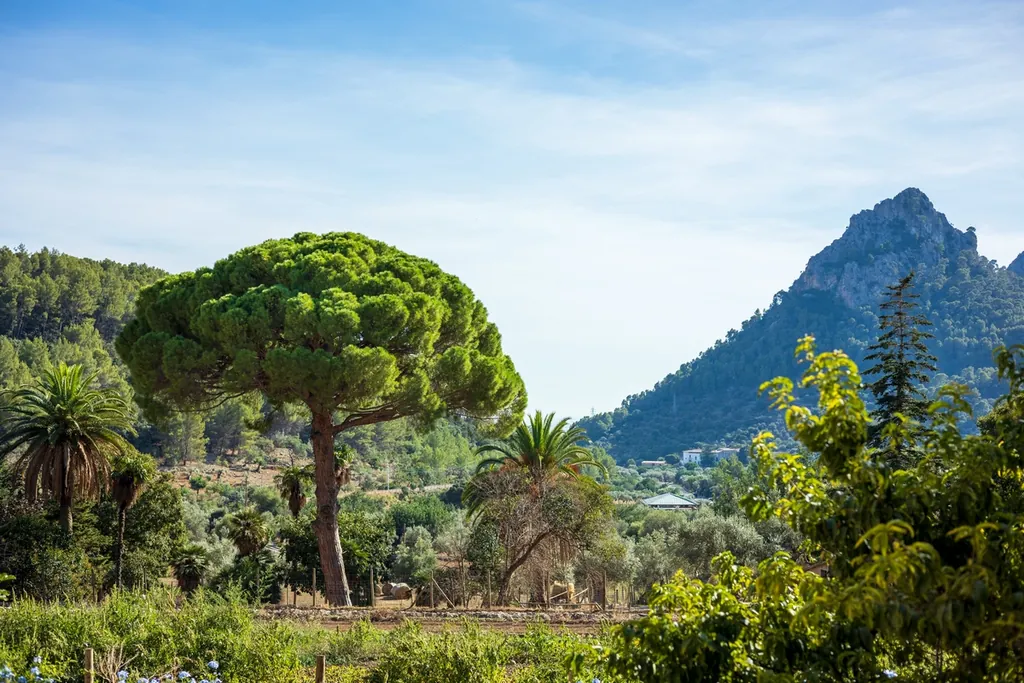
Golden stone, stepped lanes and citrus terraces beneath Puig Major. Fornalutx is at its best in the evening, once the day visitors have gone.
40 min from Lluc
45 min from the airport
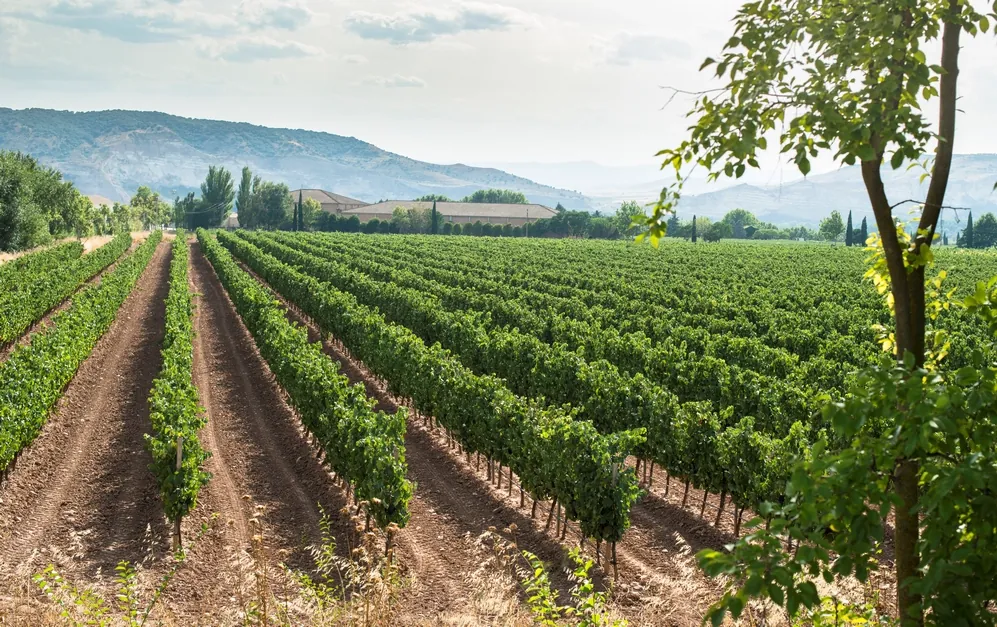
Home of one of Mallorca's two wine denominations, Binissalem pairs Manto Negro reds with stone manor houses, a Friday market and a lively harvest festival.
40 min from Lluc
25 min from the airport
Choose how long you stay, where you sleep and what you love. The planner suggests a day-by-day route with drive times, market days and the beaches the wind allows. Keep it, print it or send it to yourself.