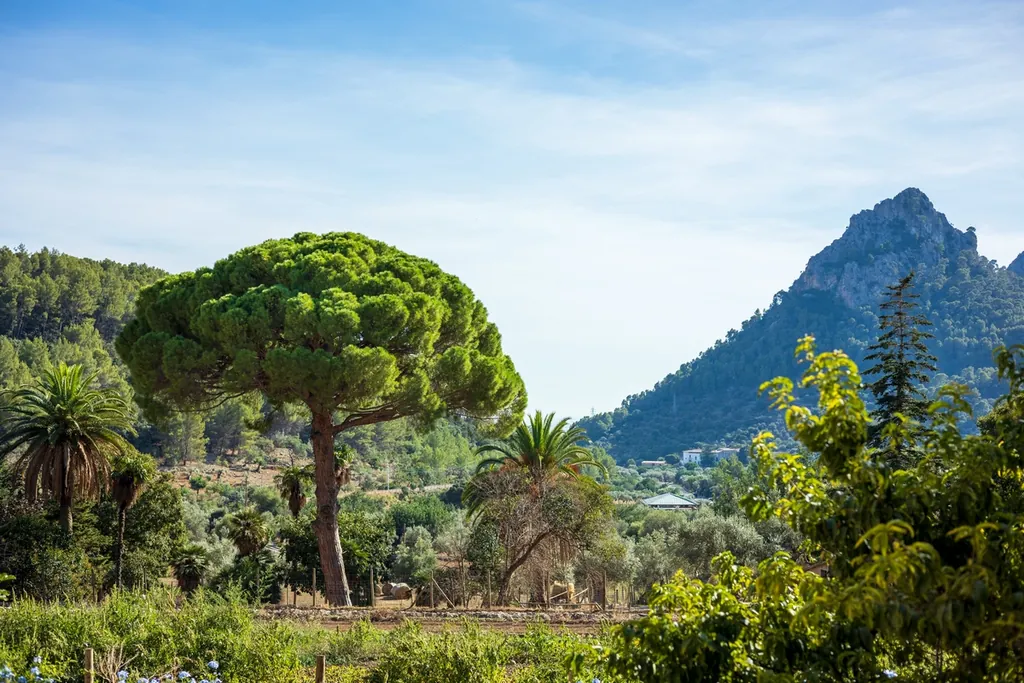
09Tramuntana · Village
Fornalutx
Golden stone, stepped lanes and citrus terraces beneath Puig Major. Fornalutx is at its best in the evening, once the day visitors have gone.
10 min from Sóller
45 min from the airport
An orange-growing town in a bowl of mountains, joined to its harbour by a tram
Drives outside peak traffic. Markets from the official 2026 list; seasonal evening markets on the market days page.
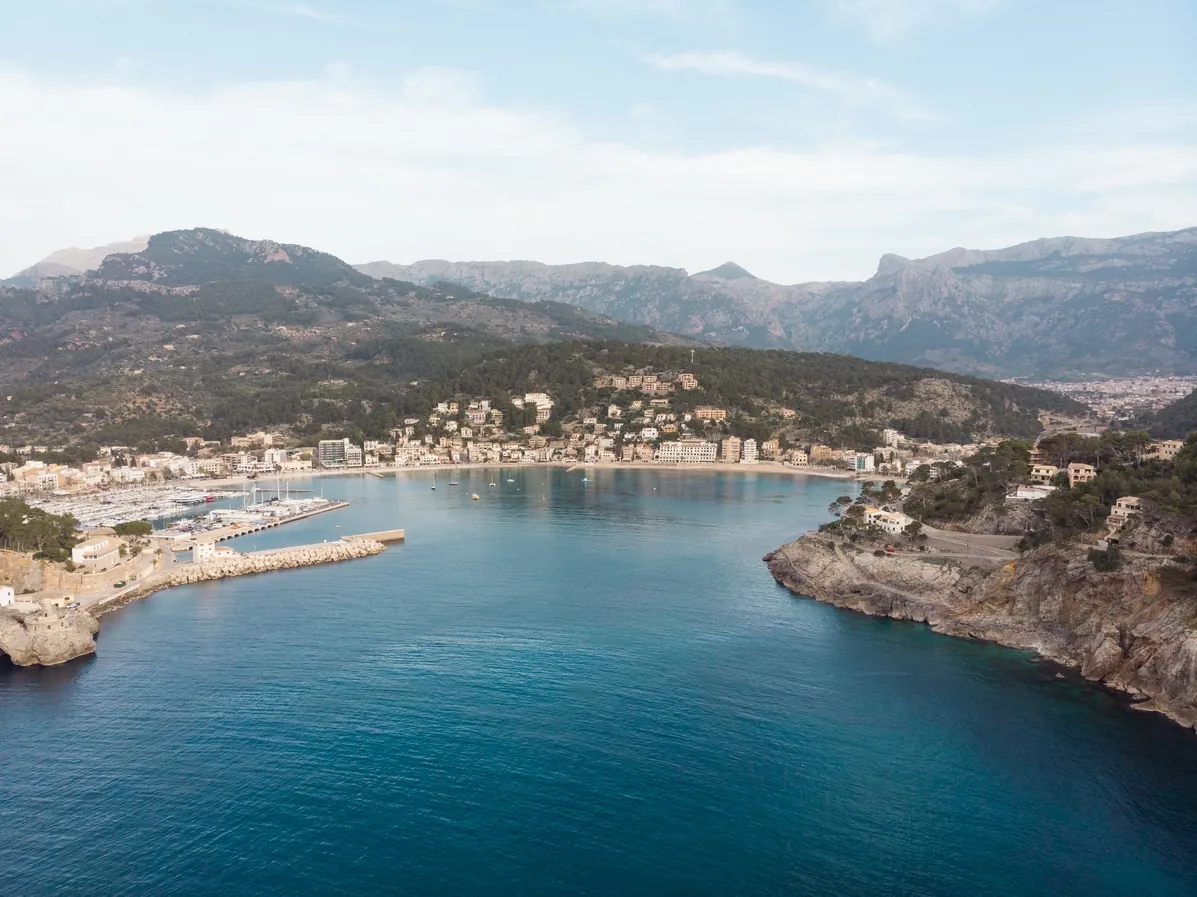
Sóller lies in a wide bowl of mountains on the north-west coast, a market town of stone townhouses, modernista façades and walled gardens heavy with oranges and lemons. For centuries the mountains cut it off from Palma, and its trade and its emigrants went by sea to France. A railway finally crossed the range in 1912, and a tram still rattles from the main square to Port de Sóller, a sheltered horseshoe bay a few kilometres away. Few places on the island feel so complete.
The valley floor is a patchwork of citrus groves behind dry-stone walls, with olive terraces climbing the slopes and the bare limestone of the high Tramuntana above. In spring the scent of orange blossom hangs over the lanes; in winter the trees glow with fruit. Oranges made Sóller’s fortune in the nineteenth century, when the town shipped them to the south of France and many families followed the trade across the water.
Some came back rich, and their money shows in the modernista townhouses, iron balconies and tiled hallways of the centre. That French connection lingers in the architecture and in a certain urban confidence, unusual for a mountain town. For the story of the island’s citrus, oil and almonds, see our guide to oranges, olive oil and almonds.
Everything in Sóller leads to the Plaça de la Constitució, the main square, where café tables fill the paving and the tram runs straight across it. On one side stands the church of Sant Bartomeu, an older church given a bold modernista façade in the early twentieth century by Joan Rubió, an architect who had worked with Gaudí. Its carved stone and great rose window are best seen in the late afternoon light. The bank building next door, by the same architect, has window grilles of twisted iron that look almost organic.
Carrer de sa Lluna, the main shopping street, runs off the square, and the side lanes reveal courtyards, garden walls with orange trees showing over the top and the occasional carved doorway. It is a town to wander rather than to tick off.

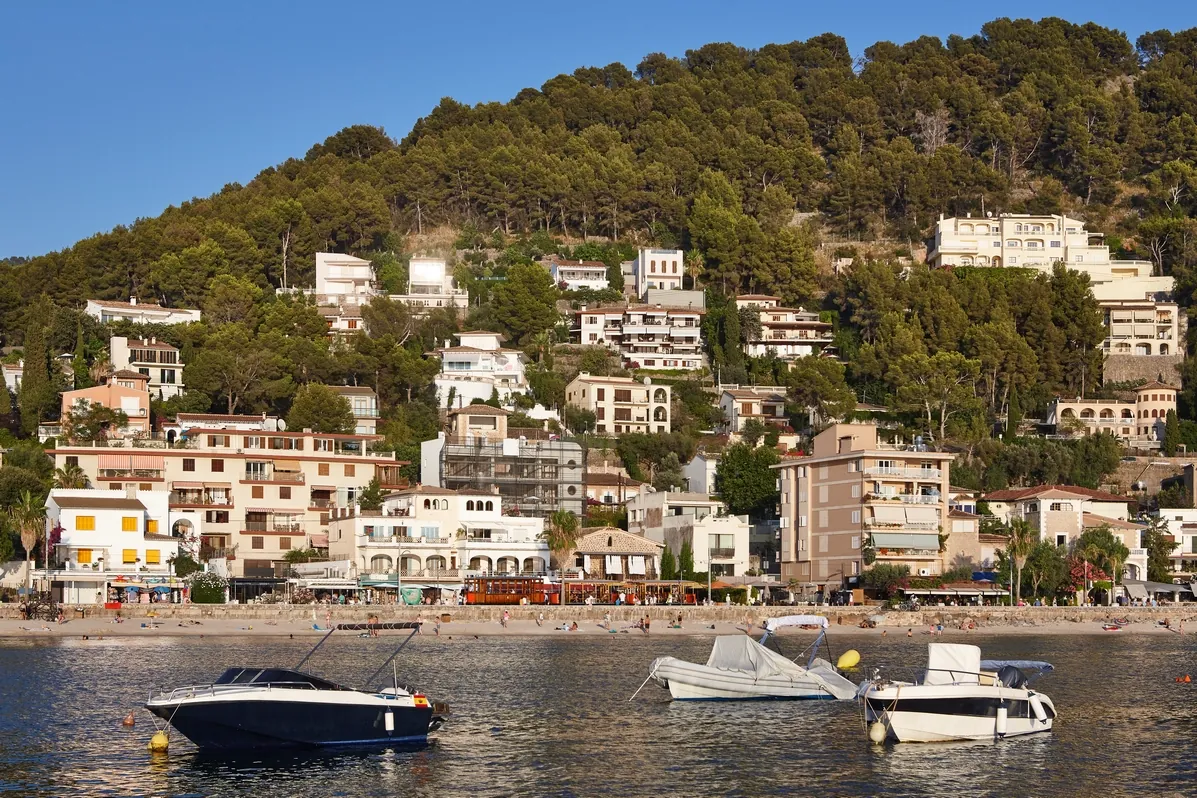
The tram follows the orange groves down to Port de Sóller, a nearly enclosed horseshoe bay and the one sheltered natural harbour on this stretch of coast. A promenade curves around the water, fishing boats still tie up at the quay, and the sea inside the bay is usually calm when the open coast is not. Swimming is from the small sandy beaches along the promenade.
On the west side of the bay, a road and footpath climb to the lighthouse at Cap Gros, high on the cliffs. It is the place to watch the sun drop into the sea, especially from spring to early autumn; sunset spots shows the angle for any date. From the port, boats run in season along the cliffs to Sa Calobra, a fine way to see this coast from the water.
Every May, Sóller relives the raid of 1561, when corsairs from North Africa landed at the port and the townspeople drove them back. Es Firó is a loud, joyful re-enactment, with hundreds of locals dressed as Moors and Christians fighting mock battles at the port and in the town, clouds of gunpowder smoke and a starring role for the two Valiant Women, sisters who, the story goes, saw off raiders at their own door. More island feasts are in festivals and traditions.
The Saturday market fills the streets of the centre with fruit, vegetables, cheese, sobrassada and baskets. Around town, look out for fresh orange juice from the valley, orange ice cream and marmalade, and for local olive oil, some of it under the Oli de Mallorca designation.
Sóller is perhaps the best walking base in the Tramuntana. The classic route leaves town for Biniaraix, a hamlet of stone houses a short walk away, then climbs the Barranc de Biniaraix, an old paved mule track that zigzags up a gorge in hundreds of stone steps between terraces and cliffs. Go as far as you like and turn back, or continue towards the reservoir of Cúber with transport arranged at the top. The route is part of the GR 221.
Another path links Biniaraix with Fornalutx, the stone village at the head of the valley, and the old coast path to Deià runs west through olive groves. With a car, the Ma-10 climbs from Sóller past the Mirador de Ses Barques towards Lluc.
The Ferrocarril de Sóller has run from Palma since 1912, in varnished wooden carriages that pass Bunyola and then burrow through a long series of tunnels under the Serra d’Alfàbia, pausing at a viewpoint high above the valley. The ride is worth making for its own sake. In town, the tram links the station with the port. Check the current timetable for both.
By car, Sóller is about 35 minutes from Palma airport outside peak traffic, via the tunnel; the old road over the Coll de Sóller, with its long chain of hairpins, is slower but beautiful. Parking in the centre is limited, so use the signposted car parks on the edge of town and walk in. The main ways to arrive:
Almost everyone. Sóller suits walkers who want real trails from the door, families who love the train and the tram, food lovers drawn to the Saturday market and the orange groves, and travellers without a car, since public transport here works well. It is also one of the best places on the island to stay for a week rather than a night.
April and May bring orange blossom, green terraces and Es Firó; October is warm and quieter. Oranges ripen through the winter, when the valley is at its most colourful and calm. In July and August the train and tram are crowded from mid-morning, so ride early. Saturday is market day and busy; weekday evenings at the port are the most relaxed.
Yes, at least once. The wooden carriages, the climb through the mountains and the view down into the valley make the hour-long ride an experience in itself. It is slower than the road through the tunnel, so many people take the train one way and the bus the other. Check the current timetable.
The tram runs from the main square down through the orange groves to the harbour in a short, rattling ride. You can also walk, which takes about an hour along quiet lanes and the road, or drive, though parking at the port is limited in summer.
Es Firó takes place every year in May and commemorates the corsair raid of 1561, when the people of Sóller fought off attackers at the port. Hundreds of residents take part, dressed as Moors and Christians, with mock battles in the town and at the port. Expect noise, crowds and gunpowder.
Saturday. The weekly market spreads through the streets of the centre with fresh produce, cheese, sobrassada, olives and household goods. It gets busy, so come early, then take the tram to the port for lunch. In winter look out for oranges and lemons from the valley.
Golden stone, stepped lanes and citrus terraces beneath Puig Major. Fornalutx is at its best in the evening, once the day visitors have gone.
10 min from Sóller
45 min from the airport
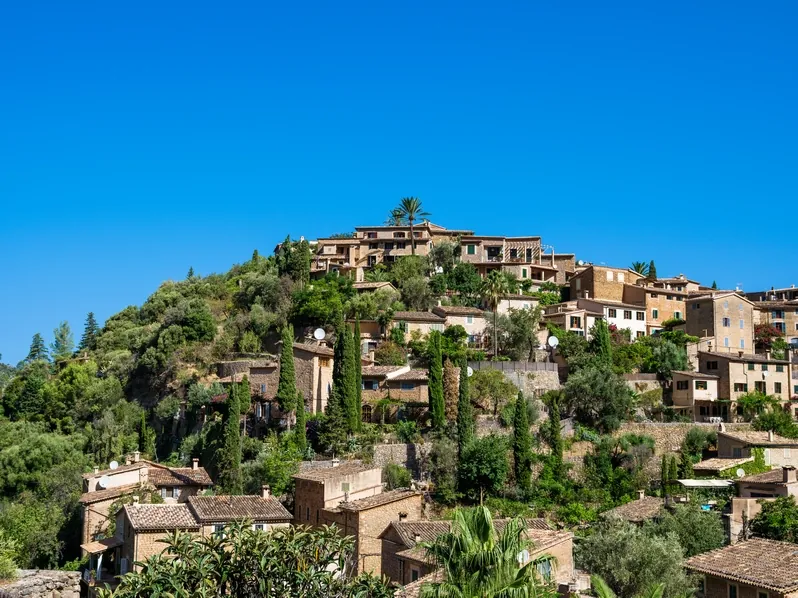
Robert Graves, a churchyard above the sea and a stony path down to a rocky cove. Deià is small and steep, and best taken slowly.
15 min from Sóller
45 min from the airport
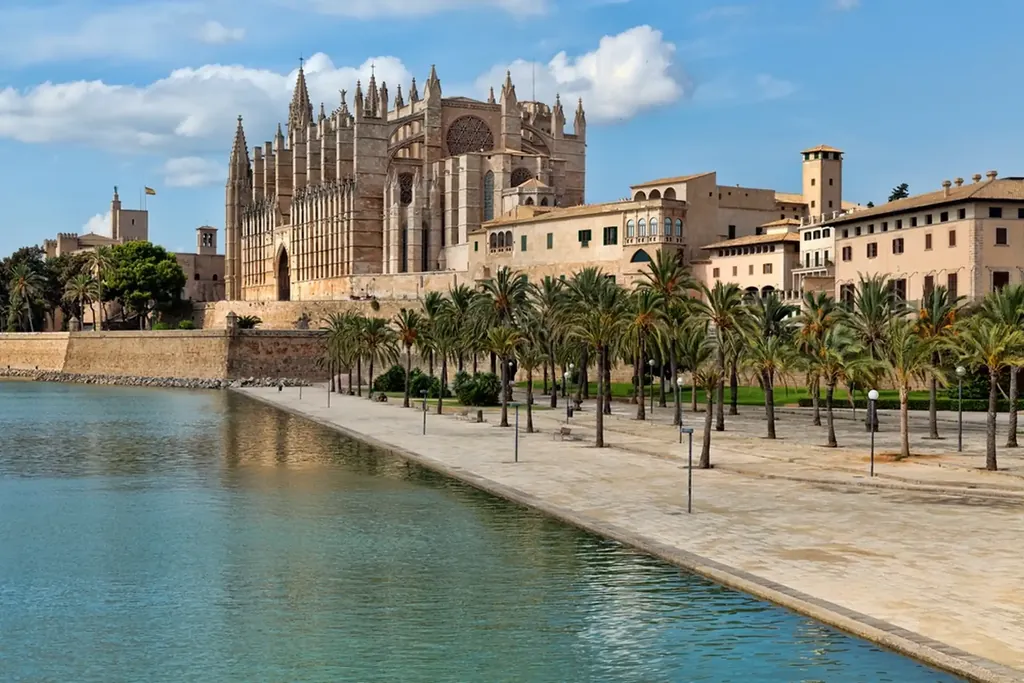
A cathedral city on a wide bay, with courtyards, covered markets and a long seafront path. Palma rewards slow walking and stays awake all year.
30 min from Sóller
15 min from the airport
Choose how long you stay, where you sleep and what you love. The planner suggests a day-by-day route with drive times, market days and the beaches the wind allows. Keep it, print it or send it to yourself.