The Dry Stone Route: walking the GR 221
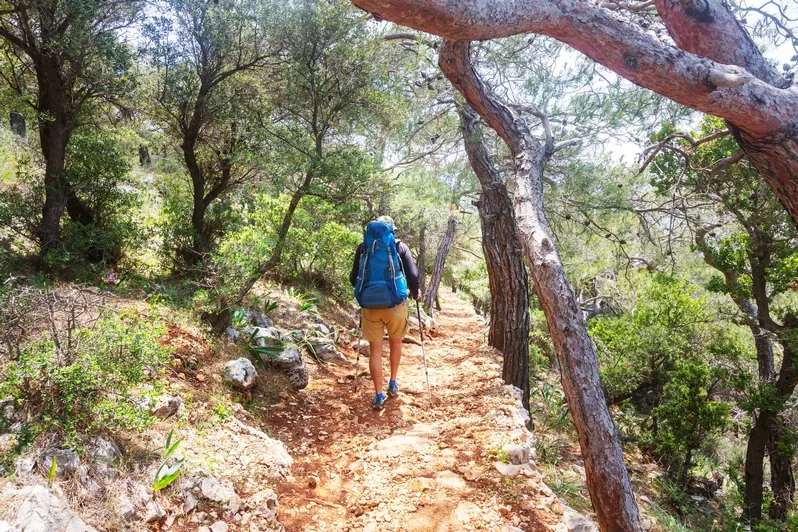
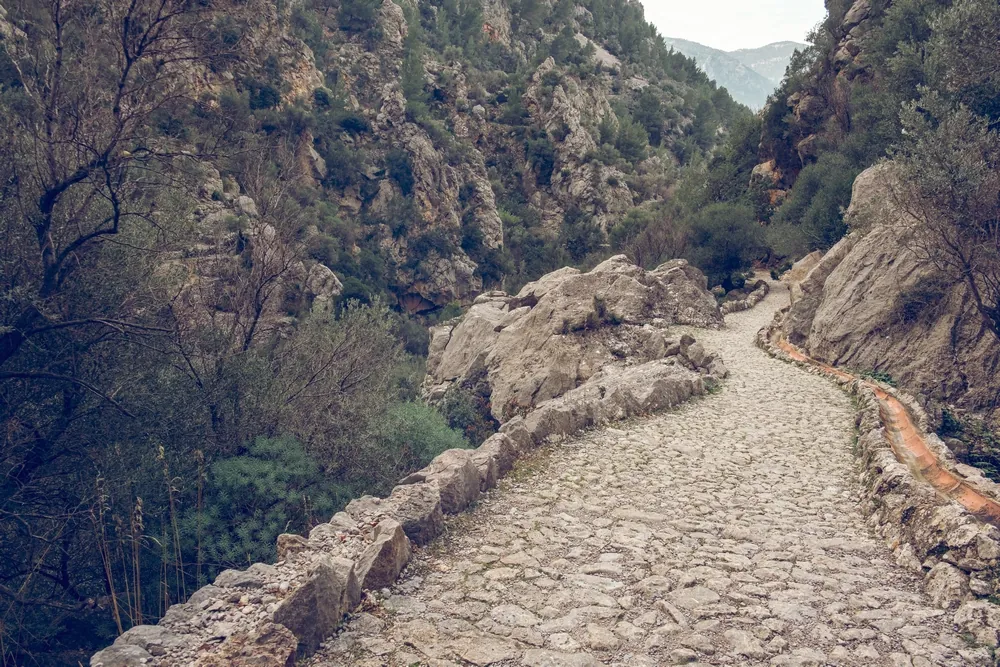
The GR 221 follows the spine of the Serra de Tramuntana from Port d'Andratx in the south-west to Pollença in the north, mostly on paths that were built by hand: mule tracks, charcoal burners' trails, pilgrim ways and stepped lanes held up by dry-stone walls. That is why it carries the name Ruta de Pedra en Sec, the Dry Stone Route. Walked end to end it takes most people a week or more. Walked in pieces, it is the finest introduction to the mountains.
A path built by hand
The Serra de Tramuntana has been a UNESCO World Heritage cultural landscape since 2011, and the listing is not about the peaks alone. It recognises centuries of work: terraces carved out of steep slopes, water channels, threshing floors, snow pits and the web of paths that linked farms, villages, monasteries and the sea. The GR 221 strings that web together into one long route, looked after by the Consell de Mallorca, the island council.
Like other Spanish long-distance paths it is waymarked with red and white stripes, backed by wooden signposts at junctions. Much of it is finished and well signed. Some stretches have taken years to agree with landowners and still rely on variants. Check the current state of each section with the Consell de Mallorca before you plan, and carry a proper map rather than trusting the paint alone.
The stages in broad terms
Walkers usually split the route into daily stages between villages and refuges, though nobody is obliged to follow the official division. The character changes as you head north, and it helps to think of the route in four parts.
- The south-west: from Port d'Andratx the path climbs through pine woods and over cols towards Estellencs and Banyalbufar, with the sea below on your left for much of the way.
- The middle coast: Esporles, Valldemossa and Deià, through holm oak woods and olive terraces, past the round platforms where charcoal was once made.
- The Sóller valley: down through orange and lemon groves to Sóller and its port, then the long climb up the stepped Barranc de Biniaraix towards the high ground.
- The high Tramuntana: past the Cúber reservoir beneath Puig Major to Tossals Verds, on to the monastery at Lluc, and finally down old woodland paths to Pollença.
Sleeping in the public refuges
What turns the GR 221 into a journey rather than a series of day walks is its chain of public refuges, run by the Consell de Mallorca. They are simple places: dormitory beds, shared washrooms, a common room and staff who know the path. Check what meals and bedding are included when you book.
Reservations are made in advance, and spring weekends and the weeks around Easter go quickly. Between refuges the route passes villages with ordinary accommodation, so a mixed itinerary is easy to build. The refuges along the way are these:
- Coll de sa Gramola, on the pass above Andratx
- Can Boi, in the village of Deià
- Muleta, on the headland above Port de Sóller
- Tossals Verds, deep in the mountains between Sóller and Lluc
- Son Amer, close to the sanctuary of Lluc
- Pont Romà, on the edge of Pollença beside the old bridge
The craft behind the name
Dry-stone walling, pedra en sec in Catalan, is the reason these mountains could be farmed at all. Stones are fitted together without mortar to hold up terraces, known as marjades, to line paths, build huts and guide water. The craftsmen who do it are called margers. In 2018 UNESCO added the art of dry-stone walling, its knowledge and techniques, to its list of the Intangible Cultural Heritage of Humanity, in a joint nomination from several European countries that included Spain.
Once you start to look, the craft is everywhere on the path. Cobbles on the old bridle ways are set on edge so that hooves and boots can grip. Retaining walls lean slightly back into the slope. Stones laid across the path at an angle throw rainwater off before it can wash the surface away. In the woods, the ruined huts of charcoal burners stand beside their flat stone platforms. Where a wall is being rebuilt, stop and watch for a minute: the work is slow, and the choice of each stone is the whole skill.
When to walk
Spring and autumn are the seasons for the GR 221. From March to May the terraces are green, the days are long enough for full stages and the heat is moderate. October and November bring softer light and fewer walkers, although autumn is also when heavy storms are most likely. Winter can be clear and beautiful, but the days are short, the high section can see snow and ice, and you should confirm that the refuges you need are open.
Summer is the wrong time for long stages. Heat on open slopes is punishing by late morning, springs dry up and the woods are tinder dry. If July or August is your only window, walk short sections at first light and finish early. The month-by-month planner shows temperatures and crowds across the year.

Water, gates and private land
Carry more water than you think you need. Springs and fountains are marked on maps, but many run thin by early summer and some are not safe to drink. Two litres is a sensible minimum for a spring stage. In warm weather take more, and refill in every village you pass.
Most of the Serra de Tramuntana is private land, divided into large old estates called possessions, and the route crosses many of them by agreement. Close every gate behind you, keep dogs on a lead near livestock, leave sheep and goats undisturbed and stay on the waymarked line. Signs reading camí privat or propietat privada mean what they say. Respecting them is the reason the path exists at all, and it is how the missing stretches will one day be opened.
Mountain weather and safety
The Tramuntana makes its own weather. A clear morning on the coast can turn to cloud on the high ground by midday, and in fog the high, rocky ground between Sóller and Lluc is easy to get lost on. Autumn storms can drop a great deal of rain in a few hours, turning dry torrent beds into rivers: never try to cross a flooded torrent and never shelter in one. A strong north wind makes the exposed ridges cold even in spring. The guide to Mallorca's winds and weather explains the patterns.
Check the AEMET forecast and any warnings before each stage, start early and tell someone your plan. Wear proper boots: the limestone is sharp, and the old cobbles are polished by centuries of use and slippery when wet. Mobile coverage is patchy in the deeper valleys. Above all, allow time. This is not a path for speed but for the slow change from pine and sea to holm oak, terraces and bare grey rock.
Key points
- The GR 221 crosses the Serra de Tramuntana from Port d'Andratx to Pollença, mostly on historic stone paths.
- Public refuges run by the Consell de Mallorca make a hut-to-hut journey possible; book them in advance.
- Dry-stone walling, the craft behind the route's name, has been UNESCO intangible heritage since 2018.
- Spring and autumn are the best seasons; summer heat and dry springs make long stages hard work.
- Carry ample water, close every gate, stay on the waymarked line and check the forecast before each stage.
Questions
How long does it take to walk the whole GR 221?
Most walkers allow a week or more to go from Port d'Andratx to Pollença, walking one stage a day and sleeping in refuges or village accommodation. The exact time depends on the variants you choose and on your fitness. Many people walk the route in sections over several visits, which also lets them pick the best seasons.
Do I need to book the refuges?
Yes. The public refuges are booked in advance through the Consell de Mallorca, and spring weekends fill quickly. Arriving without a reservation at the end of a remote stage is a risk not worth taking. Check what is included, such as meals or bedding, and confirm the current opening dates when you book.
Is the GR 221 suitable for beginners?
The south-western and middle stages are manageable for fit walkers used to hills, provided they wear good boots and carry enough water. The high section between Sóller and Lluc is longer, rockier and more exposed, with little shelter and real navigation in fog. Beginners can start with a single stage as a day walk and build from there.
Can I walk the GR 221 in summer?
You can, but long stages are hard going. Temperatures climb fast on open slopes, many springs dry up and shade is limited. If summer is your only option, choose short sections, start at first light, carry plenty of water and finish before the worst of the afternoon heat.
Official sources
- Consell de Mallorca
- UNESCO
- AEMET
Published 19 October 2026 by the editors of island mallorca. Facts were checked in autumn 2026; rules, timetables and access can change.