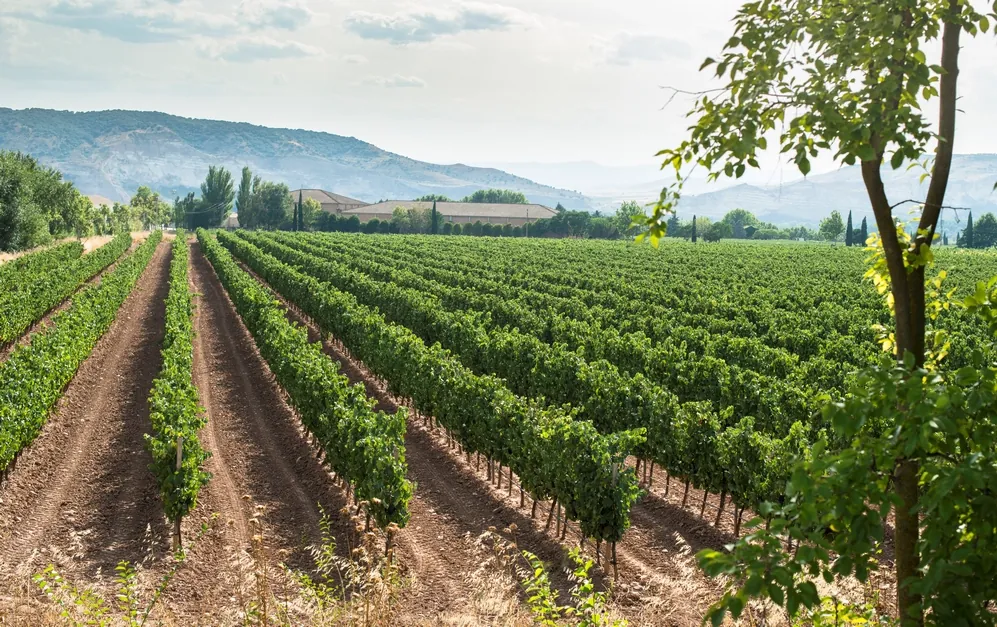
19Centre · Wine town
Binissalem
Home of one of Mallorca's two wine denominations, Binissalem pairs Manto Negro reds with stone manor houses, a Friday market and a lively harvest festival.
20 min from Sineu
25 min from the airport
A hilltop market town with a royal past and a Wednesday that has lasted for centuries
Drives outside peak traffic. Markets from the official 2026 list; seasonal evening markets on the market days page.
Sineu sits on a low rise near the middle of Mallorca, and for most of its history the island has come to it. Every Wednesday, under a royal privilege granted in the early fourteenth century, the town hosts its weekly market: livestock in the morning lanes, produce and crafts in the squares, and a crowd that mixes farmers, residents and visitors. On other days it is a calm, stone-built town with a royal past, looking out over windmills and almond orchards.
Sineu stands close to the centre of Mallorca on a gentle hill above the plain, and its position explains its history. Roads from every direction converge on it, which made it a natural meeting place for the farming villages of Es Pla, and the medieval kings of Mallorca kept a royal residence here. From the higher streets the view runs across fields and orchards, and on clear days the long wall of the Serra de Tramuntana marks the horizon.
Away from Wednesday the town is quiet and handsome in an understated way: streets of golden and grey stone houses, wooden shutters, the odd carved doorway, and small squares where older residents sit in the shade. It is a place to walk slowly, look up and catch the sense of an old market town that still lives from the land around it.
Sineu's market has been held on Wednesdays under a royal privilege granted in the early fourteenth century, and it remains one of the largest and liveliest on the island. The day starts early in the lanes at the edge of town, where livestock is still bought and sold, from poultry to sheep and goats, with farmers inspecting animals and closing deals much as their grandparents did.
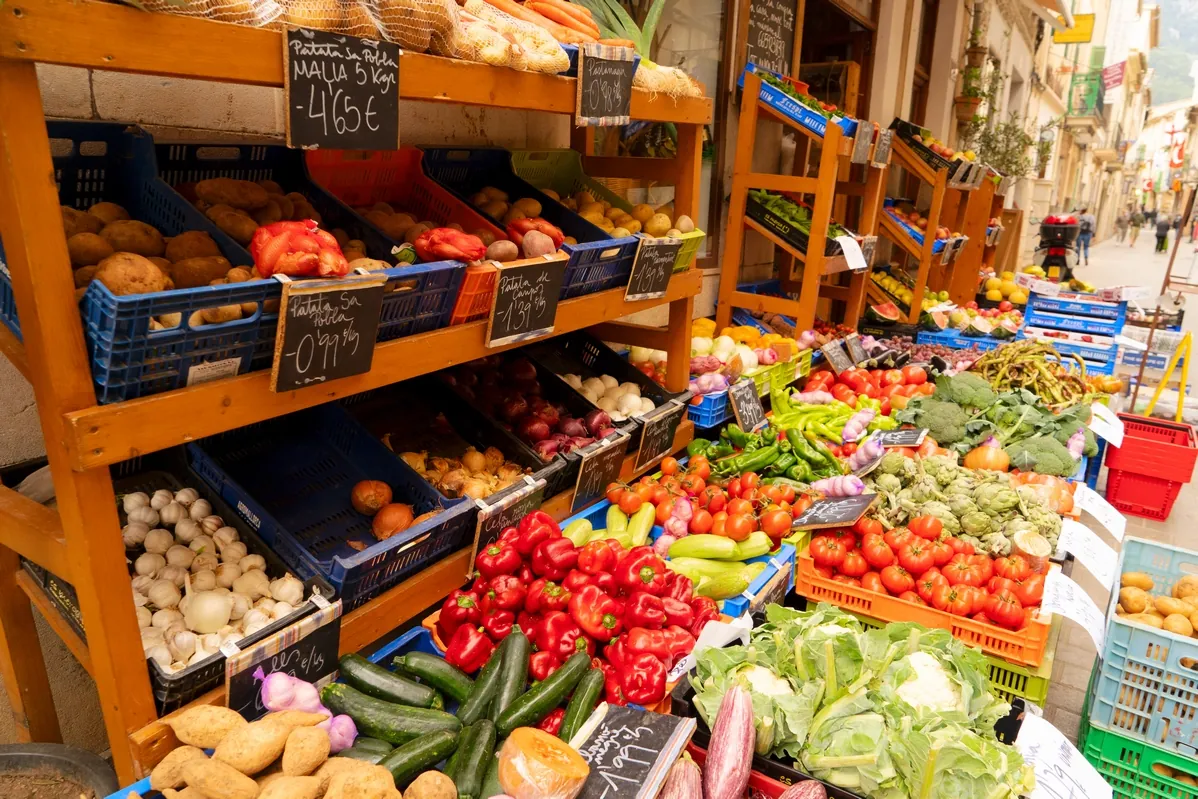
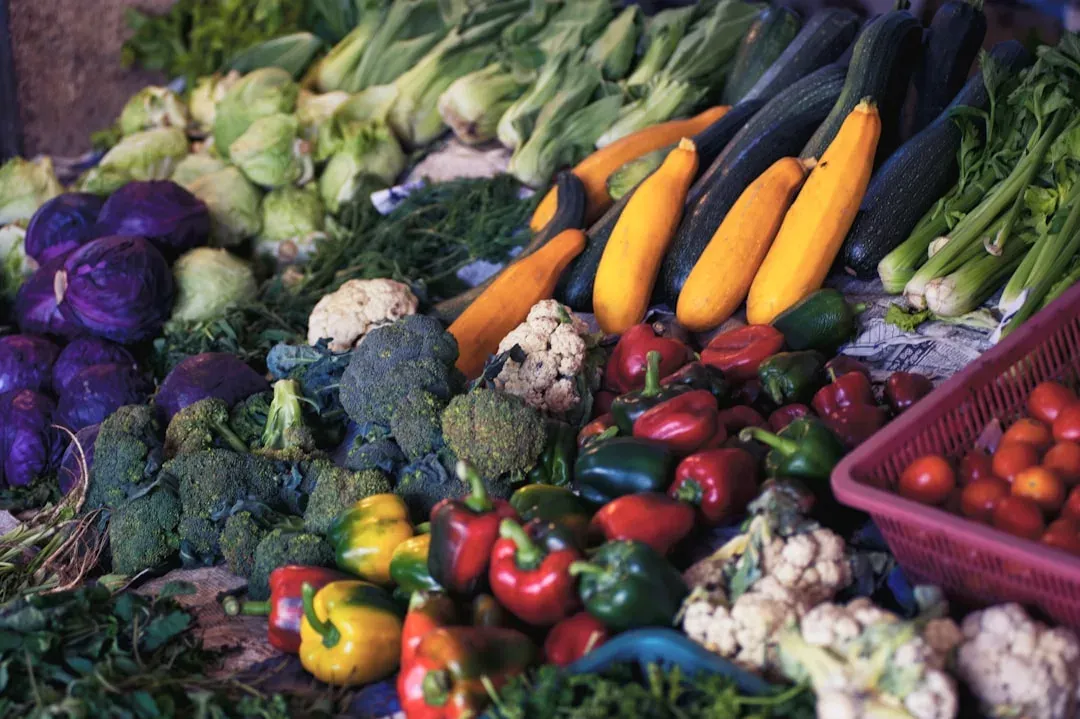
As the morning goes on, the market spreads through the streets and squares around the church, with fruit and vegetables, cheese, olives, sobrassada, baskets, leather, ceramics, clothing and plants. Arrive early, both for the animals and for parking; the stalls wind down around lunchtime. Our guide to Mallorca's markets suggests what to buy, and the market days tool helps you plan other markets during your stay.

The parish church of Santa Maria dominates the town, a large church of Gothic origin whose tall bell tower rises above the roofs and can be seen from far across the plain. On the square before it stands a statue of the winged lion of Saint Mark, the town's patron and emblem, a fitting guardian for a place that has always lived from trade.
A short walk away is the former royal palace of the kings of Mallorca. For centuries it has been a convent of enclosed nuns, so treat it as a place of prayer rather than a monument, and appreciate the building from the street. Knowing what stood here gives weight to a quiet corner of town, and to the idea of Sineu as a small capital of the interior.
Around Sineu stretches Es Pla, the broad agricultural plain of the island's centre. This is a landscape of dry-stone walls, small fields of cereals, fig and carob trees, and above all almonds. In late January and February the orchards blossom white and pale pink, and for a few weeks the plain looks lightly dusted with snow.
Old windmills punctuate the view, many now without their sails, a reminder of the days when they ground the grain of the plain. Quiet lanes link the villages, which makes Es Pla excellent cycling country: see our guide to cycling in Mallorca. For the story of the island's almonds and their place in the kitchen, read about olive oil, almonds and Sóller oranges.
Sineu is about 35 minutes from Palma airport outside peak traffic. It is also a stop on the railway line from Palma to Manacor, and the train is the most relaxed way to come on market day, when the roads into town are busy and parking fills early. The station is a short walk from the centre.
If you drive on a Wednesday, arrive early and park on the outskirts rather than trying the old centre, whose narrow streets are given over to stalls. Our guide to getting around Mallorca covers trains, buses and the roads across the plain, and how to combine Sineu with other inland towns in a single day.
Sineu sits among a ring of small farming villages, each worth an hour or two, and each a natural pairing with the market or with a slow day on the plain once Sineu has gone quiet again.
Market lovers, photographers and anyone curious about rural Mallorca beyond the coast. It suits a Wednesday morning visit by train from Palma, cyclists exploring the lanes of Es Pla, and travellers who want to understand how the island's interior lives. Beach-centred holidaymakers will treat it as a day out rather than a base.
Wednesday is the day and early morning is the time: the livestock trading starts first and the streets are crowded by mid-morning. Late January and February bring almond blossom across the plain, and spring and autumn are ideal for cycling. Summer afternoons are hot and very quiet. On other weekdays Sineu is calm and unhurried.
Wednesday. The market has been held on that day under a royal privilege granted in the early fourteenth century, and it is among the oldest and best known on the island. It starts early in the morning, with livestock on the edge of town, and winds down around lunchtime, so plan to arrive early.
Yes. Early on Wednesday mornings animals are still bought and sold in the lanes on the edge of town, from poultry to sheep and goats. It is a working trade rather than a show, so keep a respectful distance, ask before photographing people and avoid touching the animals.
Yes. Sineu is on the railway line from Palma to Manacor, and the station is a short walk from the centre. It is the easiest way to visit on market day, when roads and parking around the town fill early. Check the current timetable, as frequencies vary through the week.
Petra, the birthplace of Junípero Serra, has a museum devoted to him and the sanctuary of Bonany on a nearby hill. Montuïri has windmills and the Talayotic site of Son Fornés, and the lanes of Es Pla are ideal for cycling. Binissalem, the wine town, is a short drive to the west.
Home of one of Mallorca's two wine denominations, Binissalem pairs Manto Negro reds with stone manor houses, a Friday market and a lively harvest festival.
20 min from Sineu
25 min from the airport
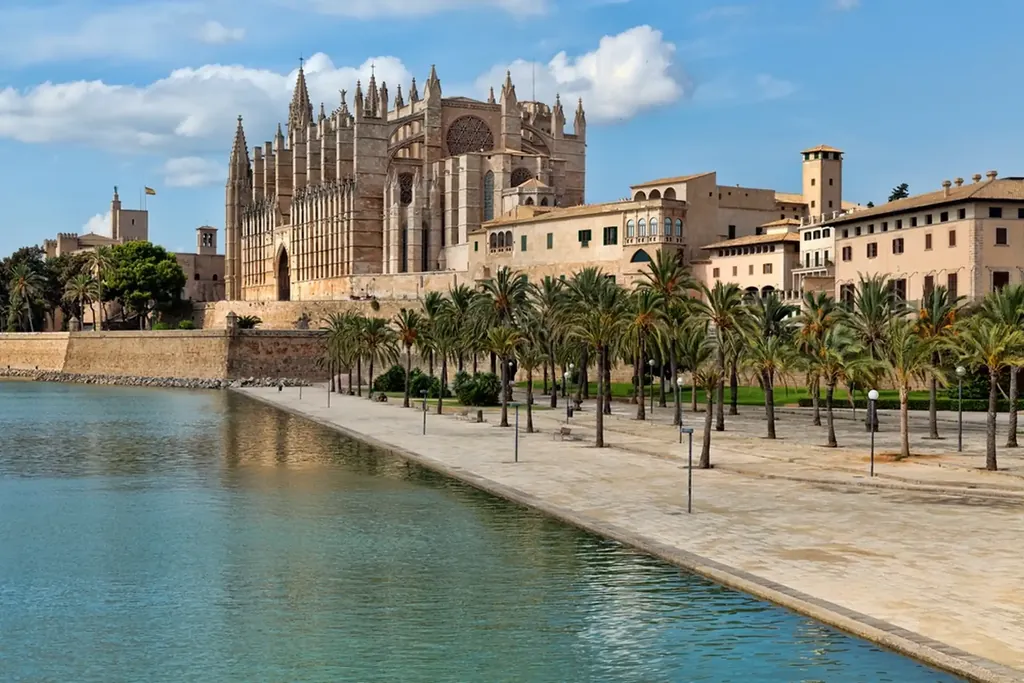
A cathedral city on a wide bay, with courtyards, covered markets and a long seafront path. Palma rewards slow walking and stays awake all year.
40 min from Sineu
15 min from the airport
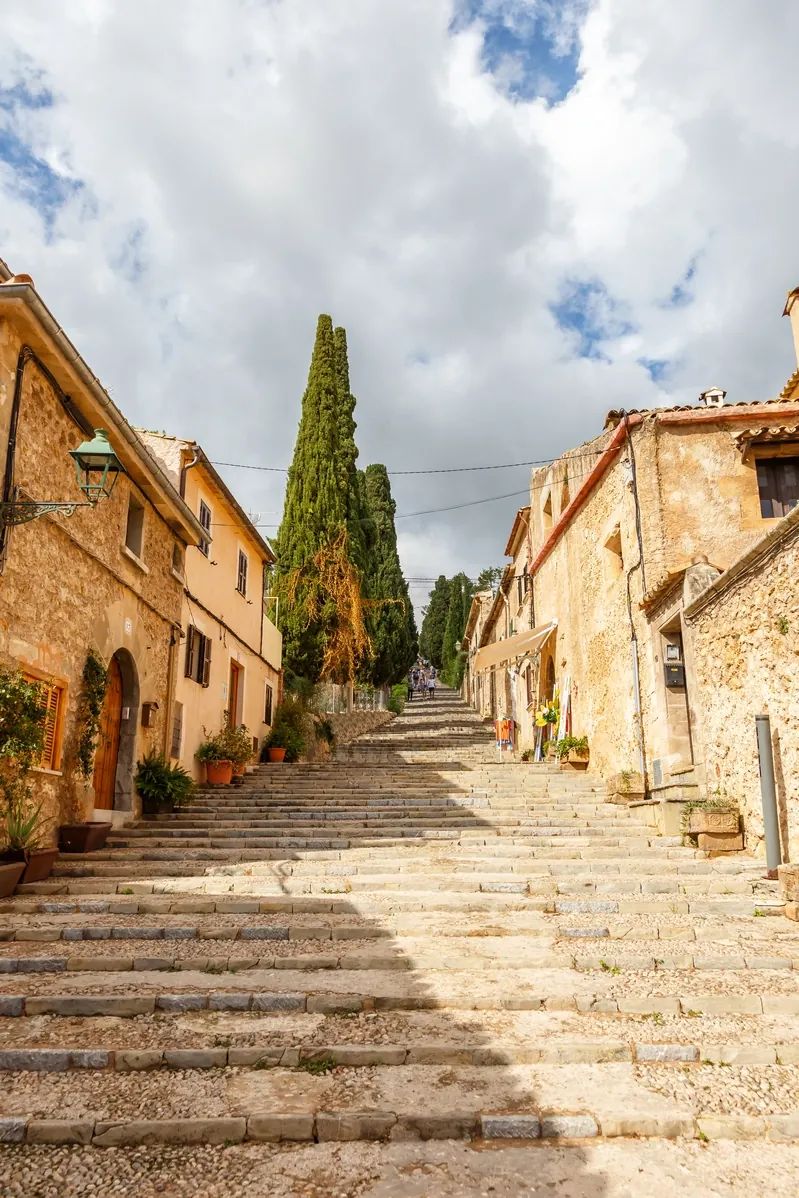
Pollença climbs 365 steps to its Calvari chapel; Port de Pollença spreads along a calm, shallow bay. Two halves of the north's most rounded base.
40 min from Sineu
50 min from the airport
Choose how long you stay, where you sleep and what you love. The planner suggests a day-by-day route with drive times, market days and the beaches the wind allows. Keep it, print it or send it to yourself.