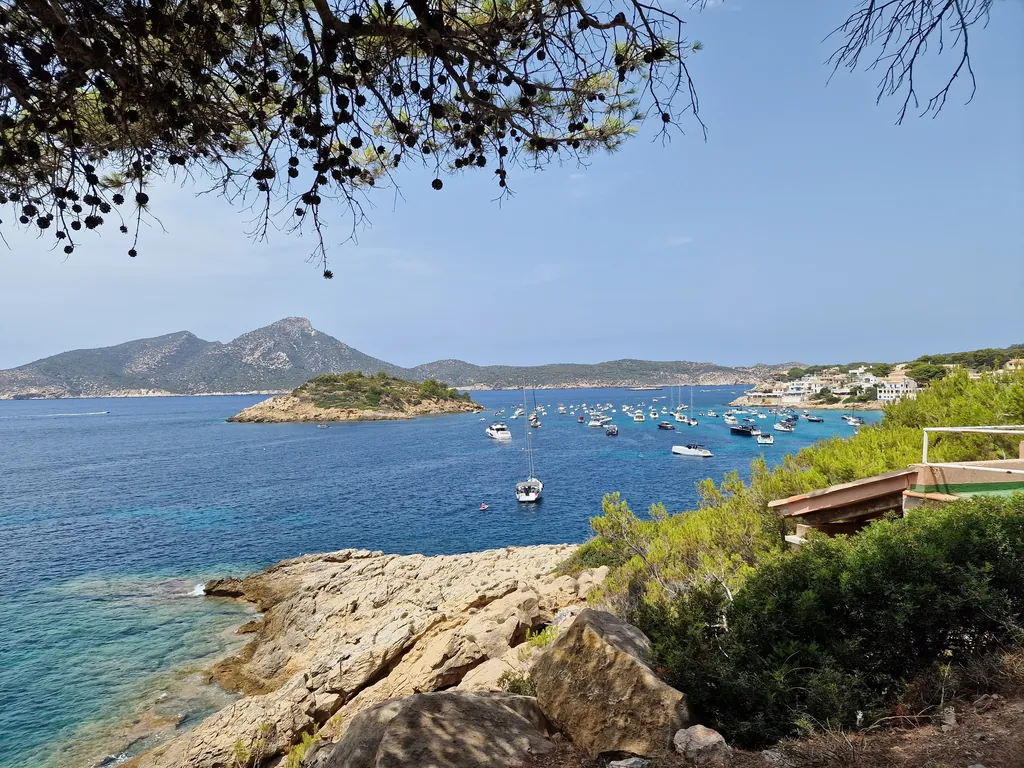
04Southwest · Fishing village
Sant Elm
A small village at the western tip of Mallorca, facing the long ridge of Sa Dragonera across a narrow channel. Come for the boat, the walk and the sunset.
23 min from Port d'Andratx
45 min from the airport
The southwest: a long, sheltered inlet where fishing boats and yachts share the water
Drives outside peak traffic. Markets from the official 2026 list; seasonal evening markets on the market days page.
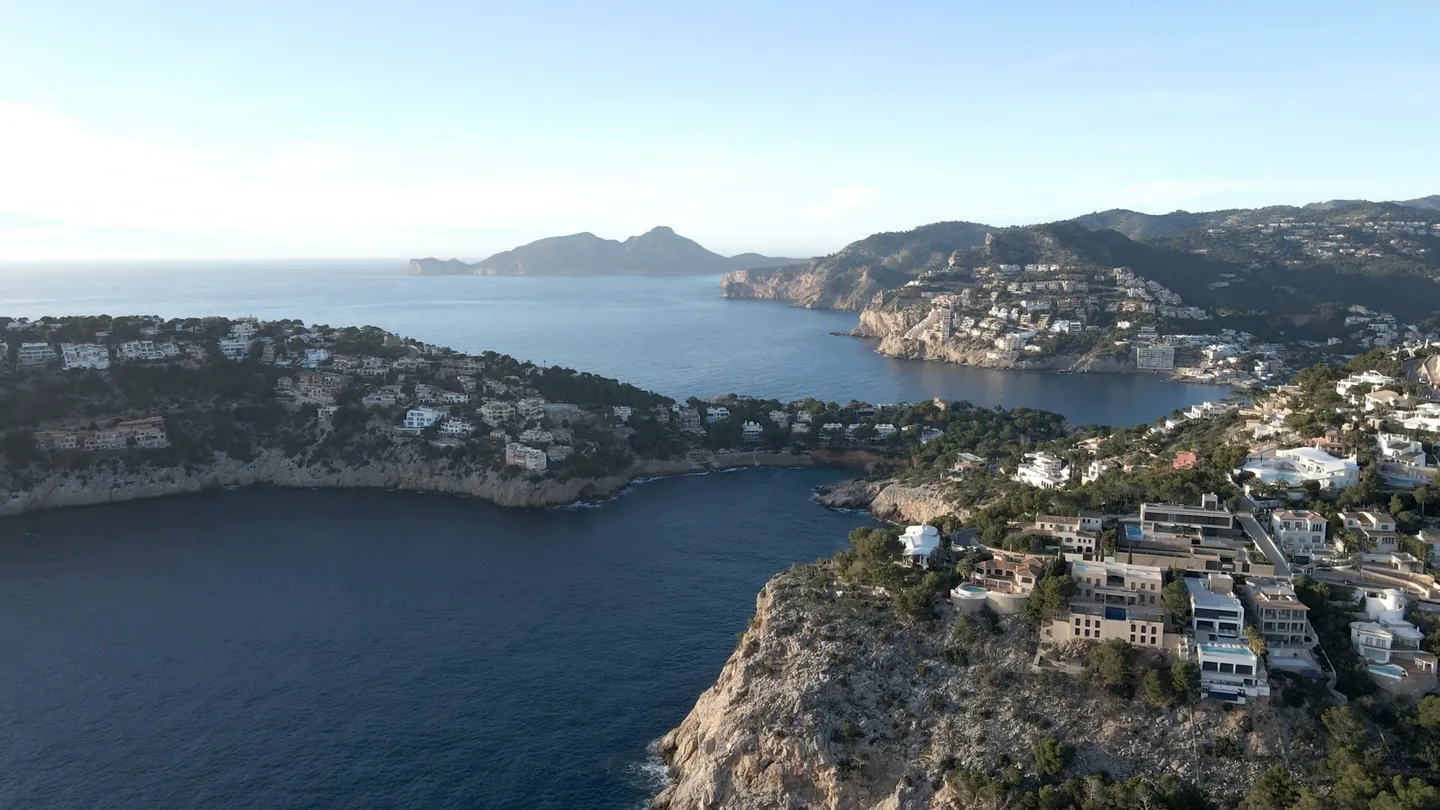
Port d'Andratx lies at the end of a long, narrow inlet in the far southwest of Mallorca, so well sheltered that sailors have run for it in bad weather for centuries. Fishing boats still tie up at the old quay, the sailing harbour fills with yachts, and the hillsides above have become some of the most sought-after addresses on the island. It is about 35 minutes from the airport outside peak traffic, and it is where the GR 221 begins.
The inlet cuts deep into the land between two headlands, which is why the water inside is so often calm when the open coast is not. For most of its history the port was a modest fishing settlement serving the town of Andratx, a few kilometres inland and safely out of sight of raiders from the sea. The old watchtowers along this coast recall those centuries of caution.
Today the port has two faces. Around the fishermen's quay you still see nets piled on the stone and boats coming in during the morning; along the promenade, terraces and galleries look out across the water. As in most of the island's harbours, the fishermen's patron, the Mare de Déu del Carme, is honoured around 16 July. The mix of working port and polished waterfront is what gives the place its character.
Walk the waterfront between the fishermen's quay and the sailing harbour, then follow the shore road out along the inlet, where houses step down to their own jetties. Above, the slopes of Sa Mola are stacked with villas, their terraces turned towards the sea. Roads climb the headland for wide views over the inlet and the open water beyond.
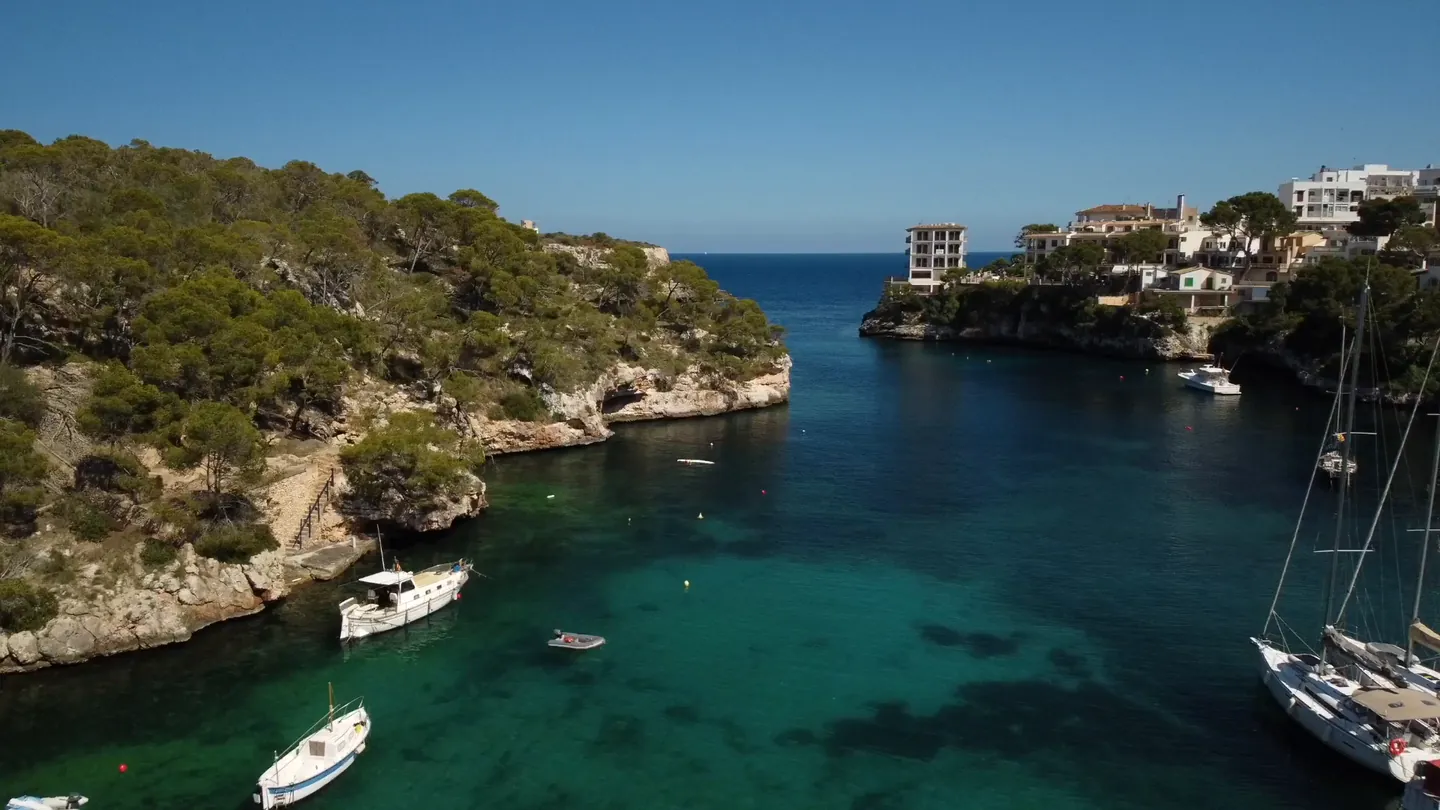
A short, winding drive from the port leads to Cala Llamp, a deep cove with no sand at all. People swim from rocks and platforms into clear, very deep water, with villas looking down from the pines. On a calm day the surface is glassy and the colour of the sea astonishing; it suits confident swimmers rather than small children.

The mouth of the harbour opens to the west, so on clear evenings the sun goes down over the sea beyond the headlands and the whole waterfront turns to watch. Our sunset spots tool shows where the sun sets on any date, which matters here: in midsummer it drops much further north than in spring or autumn.
In season, excursion boats leave the port to follow the cliffs towards Sant Elm and Sa Dragonera, the long island now protected as a natural park; check the current timetable. If you sail yourself, the inlet is one of the best natural shelters on the island, and our anchorages guide covers the coast on either side. When the Tramuntana blows, the mountains shield this corner and the southwest is often the calmest coast of all, while a strong westerly pushes swell towards the harbour mouth.
Inland, the town of Andratx climbs a hillside below its fortress-like church, a place of steep streets and stone houses with almond and carob trees on the terraces around it. Its weekly market fills the streets on Wednesday, while Port d'Andratx holds its own market on Monday; our market days tool lists the rest of the week across the island.
Fish is the obvious choice in the port: whatever the boats bring in, grilled simply or cooked into a rice. In town, look for the everyday food of the island, pa amb oli, sobrassada and whatever vegetables are in season, and for ensaïmades in the bakeries on market mornings.
The GR 221, the Dry Stone Route, starts here and runs north through the Serra de Tramuntana all the way to Pollença, following old mule tracks, charcoal burners' paths and paved mountain ways. From the port the route climbs into the hills and heads north along the mountain coast towards Estellencs and Banyalbufar. Our GR 221 guide explains the stages and the network of public refuges.
Even if you are not planning a long walk, a few hours on the first section give a taste of the whole: dry-stone walls and terraces, holm oaks, the smell of pine, and glimpses of the sea far below. Start early in summer, and carry more water than you think you need.
The Ma-1 motorway runs west from Palma towards Andratx, and the port is about 35 minutes from the airport outside peak traffic. Buses connect it with Palma and Andratx; check the current timetable. Parking along the waterfront fills quickly in summer, so arrive early or park a little back from the harbour and walk.
Combine the port with Sant Elm and its view of Sa Dragonera, a short drive further west, or take the Ma-10 north, one of the great mountain roads of the island, to Banyalbufar and its terraces. Puerto Portals and Palma lie back along the bay.
Sailors looking for a secure harbour, walkers setting out on the GR 221, couples who like a long dinner by the water at sunset, and second-home owners drawn to the villas of Sa Mola and Cala Llamp. It suits travellers who prefer a harbour with a working life of its own to a purpose-built resort, and anyone exploring the southwest and the Tramuntana coast.
May, June, September and October are ideal: warm sea, open terraces and room on the quay. In July and August the port is busy and parking is hard, so come early or in the evening. Winter is quiet and often bright, good for walking the hills behind the port. Sunset is the hour to be here in any season.
Port d'Andratx holds its weekly market on Monday, and the town of Andratx, a few minutes inland, has its market on Wednesday. Both are good for fruit, vegetables, cheese and local produce, alongside clothes and household goods. Go in the morning, when the stalls are fullest and the day is still cool.
The harbour itself is for boats rather than swimming. Most people drive a few minutes to Cala Llamp, where you swim from rocks into deep, clear water, or further on to the sandy beach at Sant Elm. Some of the smaller coves along this coast are easiest to reach by boat.
The Dry Stone Route begins in Port d'Andratx and runs north through the Serra de Tramuntana to Pollença, using old paths and a network of public refuges. Most walkers tackle it in stages over several days, and many simply walk one section as a day hike.
It is one of the best harbours on the island for them. The inlet opens to the west, so the sun sets over the sea beyond the harbour mouth and the quays catch the last light. For a wider view, climb towards Sa Mola, or drive to Sant Elm, where the sun drops behind Sa Dragonera.
A small village at the western tip of Mallorca, facing the long ridge of Sa Dragonera across a narrow channel. Come for the boat, the walk and the sunset.
23 min from Port d'Andratx
45 min from the airport

A glossy yacht harbour on the Bay of Palma, sociable in summer and quiet in winter, with small coves of pine and pale sand close by.
28 min from Port d'Andratx
20 min from the airport

A village on the Tramuntana coast where dry-stone terraces fall in steps to the cliffs, watered by old channels and planted again with Malvasia vines.
38 min from Port d'Andratx
40 min from the airport
Choose how long you stay, where you sleep and what you love. The planner suggests a day-by-day route with drive times, market days and the beaches the wind allows. Keep it, print it or send it to yourself.