06Tramuntana · Village
Valldemossa
Cobbled lanes, a royal Carthusian monastery and the island’s own saint. Valldemossa rewards an early start and a slow drive down to the coast.
15 min from Deià
30 min from the airport
A hill village of stone and olive terraces, where Robert Graves lived and is buried
Drives outside peak traffic. Markets from the official 2026 list; seasonal evening markets on the market days page.
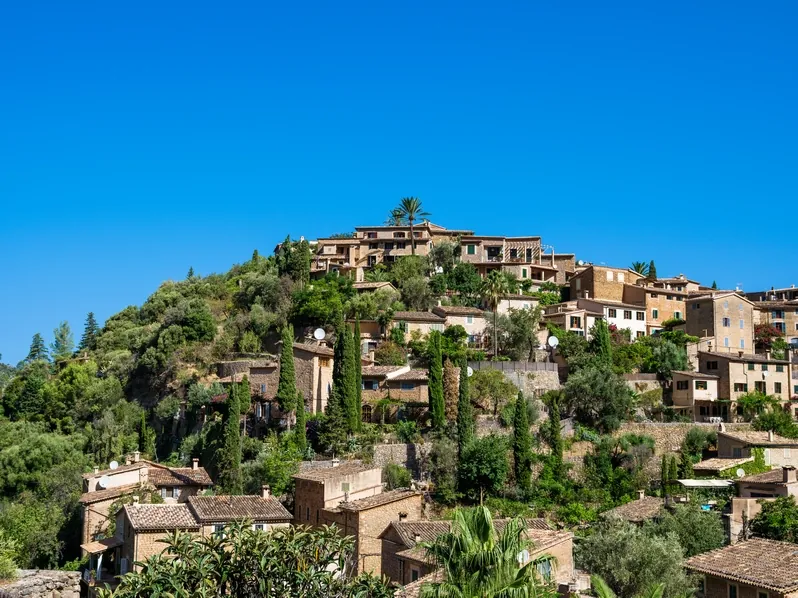
Deià climbs a small hill between the mountain of Teix and the sea, its stone houses stacked up towards a church and a churchyard at the top. Robert Graves arrived in 1929, wrote I, Claudius here and is buried in that churchyard. Painters, musicians and writers followed, and the village has kept a quiet, slightly bohemian reputation ever since. It is tiny and squeezed by the coast road, and it repays anyone willing to leave the car and walk.
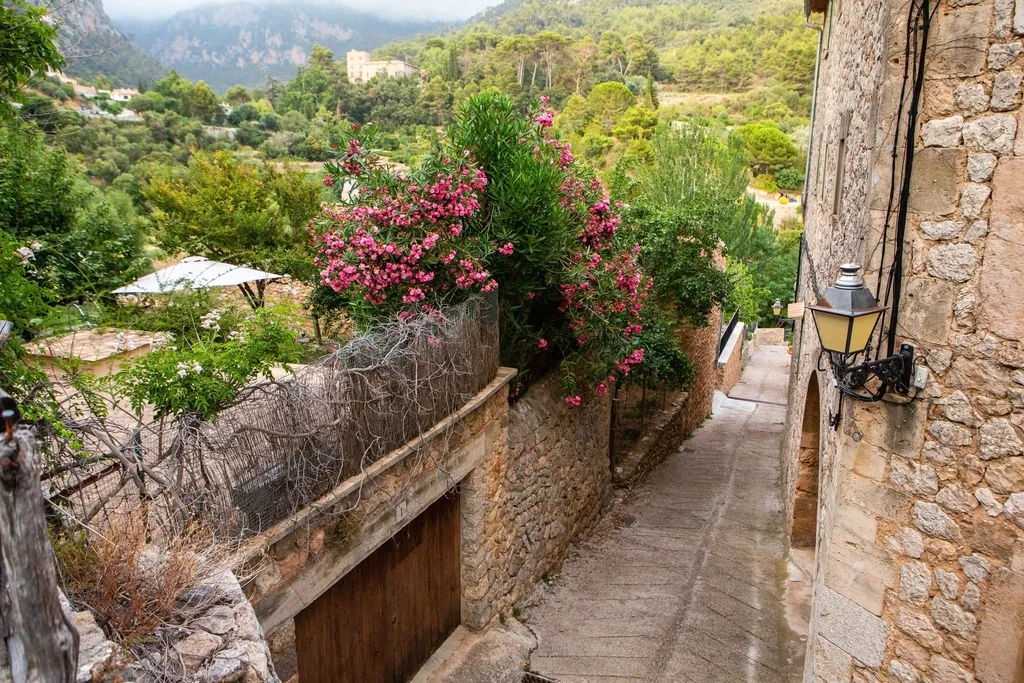
Deià lives on two levels. Along the Ma-10, which serves as its main street, are the cafés, the small shops and the bus stop. Above it, a tangle of stepped lanes climbs Es Puig, the hill crowned by the church, and here the village goes quiet. Houses of rough golden stone with green shutters sit among lemon trees, prickly pears and bougainvillea, and every gap between them frames a slice of sea.
Behind rises Teix, one of the great walls of the Tramuntana, and below the village a torrent runs down through olive terraces to the coast. It is a landscape that has always suited artists. Since Graves’s time Deià has drawn writers, painters and musicians, and many still live here, which gives the village a lived-in, slightly unconventional air once the day visitors have gone.
Graves came to Deià with the poet Laura Riding and built Ca n’Alluny, a stone house on the road towards Sóller, a few minutes’ walk from the centre. He left during the Spanish Civil War, returned after the Second World War and lived here until his death in 1985. The house is now a museum run by the Robert Graves Foundation and kept much as he left it: his study, his books, the hand press on which he and Riding printed their work, and the garden.
His grave lies in the churchyard at the top of Es Puig, beside the church of Sant Joan Baptista. It is a plain slab with his name and the single word poeta, written by hand into the cement. Climb up in the late afternoon, when the view from the churchyard wall over the terraces to the sea is at its best. More on Graves and his circle is in our guide to artists and writers.
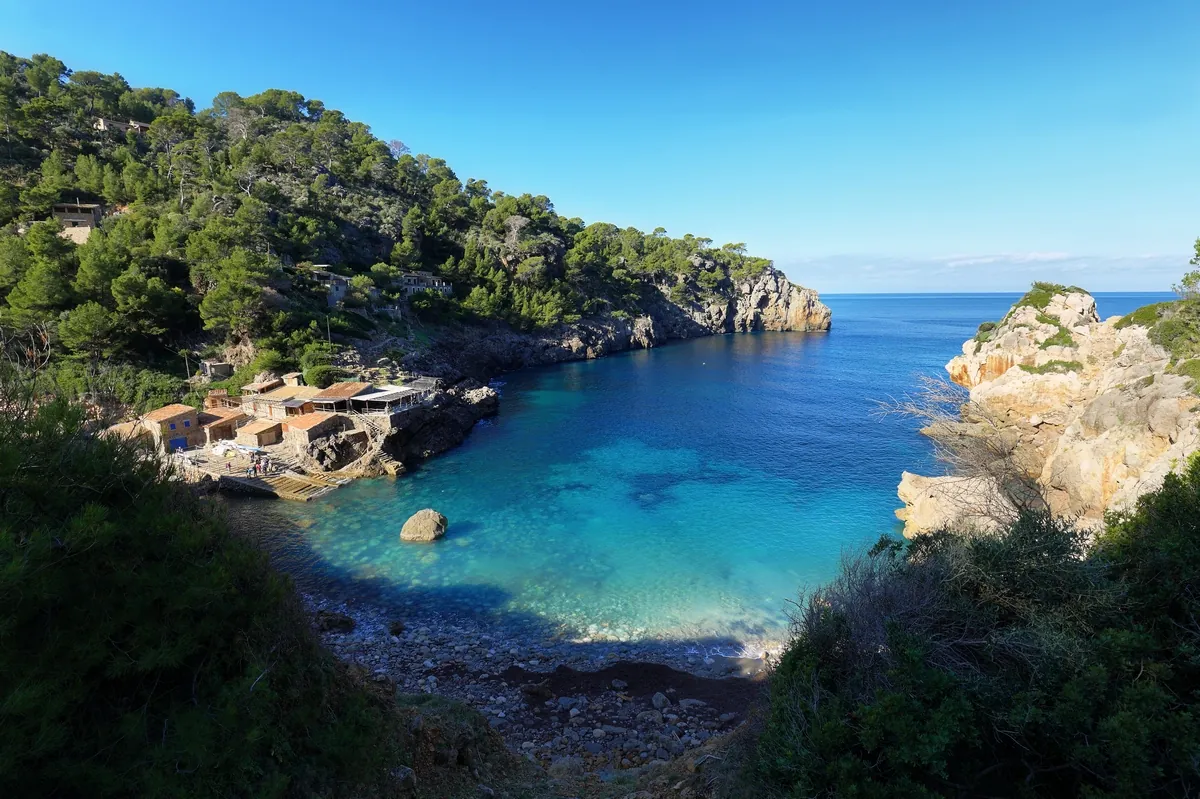
Cala Deià is the village’s cove, a rocky inlet of pebbles and boulders where the torrent meets the sea. You can drive down a narrow lane with very limited parking, but the better route is on foot: a path from the lower village follows the torrent through olive groves and takes about half an hour down, rather more on the way back. Old boathouses are cut into the rock around the cove, and the water, deep and clear, is excellent for swimming and snorkelling on calm days.
There is no sand, and when the wind blows from the north or north-west the sea can turn rough quickly, so check the forecast. In season there are simple places to eat at the water’s edge, but carry water for the walk. For other coves along this coast, see the best calas of Mallorca.
North-east of Deià the old coast path, now part of the GR 221, passes Llucalcari, a hamlet of a few old stone houses on terraces above the sea. It continues through olive groves and pine woods to Sóller, a walk of roughly three hours that is best done in spring or autumn with an early start.
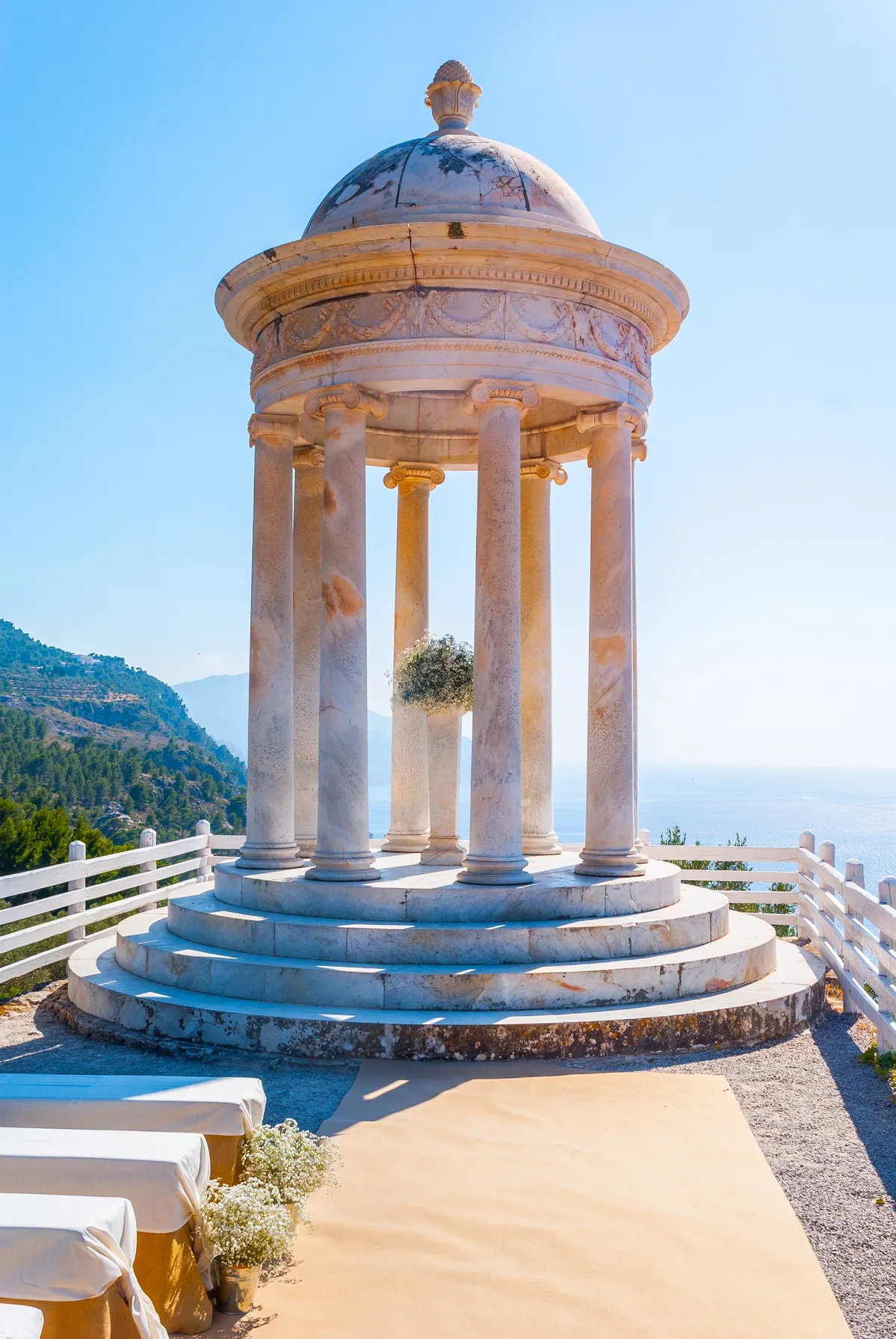
South-west of the village, on the road to Valldemossa, stands Son Marroig, one of the estates of the Archduke Ludwig Salvator and now a museum to his life, with a white marble rotunda looking out to sea. Below it, Sa Foradada pushes into the water, a rocky peninsula pierced by a great hole that gives it its name. Watching the sun go down behind it is a Deià ritual; sunset spots shows where the sun meets the sea on your dates.
Deià holds a small weekly market on Wednesday. The terraces around the village produce olives, oranges and lemons, and local oil and citrus turn up in the village shops. Meals here tend to be long and simple: grilled fish, pa amb oli, a salad of tomatoes with good oil.
The artistic community is less visible than its reputation, but it is real. Look for small exhibitions along the main street, notices for summer concerts and painters at work on the terraces. The best way to meet it is simply to stay a few days rather than a few hours.
Deià is about 45 minutes from Palma airport outside peak traffic, via Valldemossa and the Ma-10. Parking is the village’s chronic problem: there are a few small car parks along the main road and they fill early in summer. The road is narrow, winding and shared with buses and cyclists, so allow time. Buses link Deià with Palma, Valldemossa and Sóller; check the current timetable.
Combine the village with the monastery at Valldemossa, or walk the coast path to Sóller and take the bus back. A slow day might run like this:
Readers, walkers and couples who value atmosphere over amenities. Deià suits anyone who likes to explore on foot, swim from rocks rather than sand and end the day with a long view. It is less suited to families with pushchairs, people with limited mobility or anyone who needs easy parking, since the village is steep and space is scarce.
May, June, September and October are the sweet spots: warm sea, green terraces and fewer cars on the coast road. Come early in the morning or after five in the afternoon, when the day traffic thins. Avoid the middle of the day in August, when parking is close to impossible. In winter the village is very quiet and some places close, but the walking is at its best.
Yes. Ca n’Alluny, the house Graves built on the road towards Sóller, is a museum run by the Robert Graves Foundation. It keeps his study, his books and the hand press much as they were. Check the current opening times before you go, as they vary with the season.
In the small churchyard at the top of Es Puig, the hill at the heart of Deià, beside the church of Sant Joan Baptista. His grave is a plain slab with his name and the word poeta written by hand into the cement. It is a short, steep walk up through the village lanes.
Cala Deià is a rocky cove of pebbles and boulders rather than a sandy beach. The water is deep and clear and the swimming is excellent on calm days. Reach it on foot along the torrent path from the village in about half an hour, or by a narrow road with very limited parking.
The classic spot is Son Marroig, just outside the village on the road to Valldemossa, looking over the rock window of Sa Foradada. The churchyard on Es Puig and the coast path towards Llucalcari also catch the evening light. From late spring to late summer the sun sets into the sea along this north-west-facing coast.
Cobbled lanes, a royal Carthusian monastery and the island’s own saint. Valldemossa rewards an early start and a slow drive down to the coast.
15 min from Deià
30 min from the airport
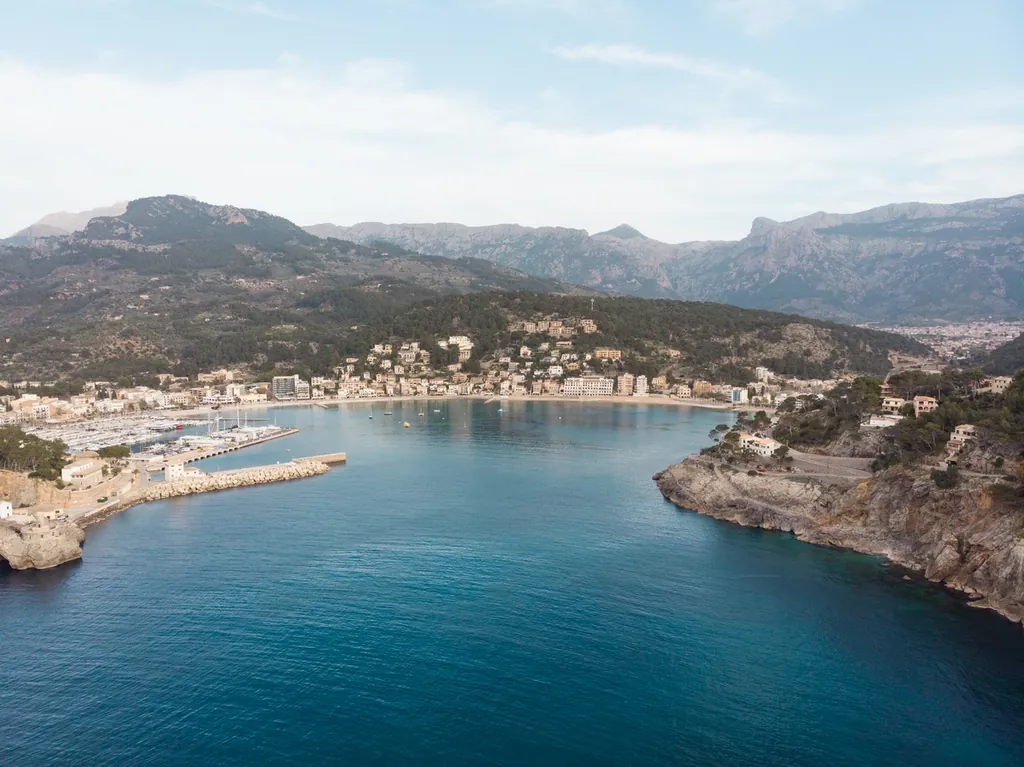
A wooden train over the mountains, a tram to the sea and a valley full of orange groves. Sóller is the Tramuntana at its most complete.
15 min from Deià
35 min from the airport
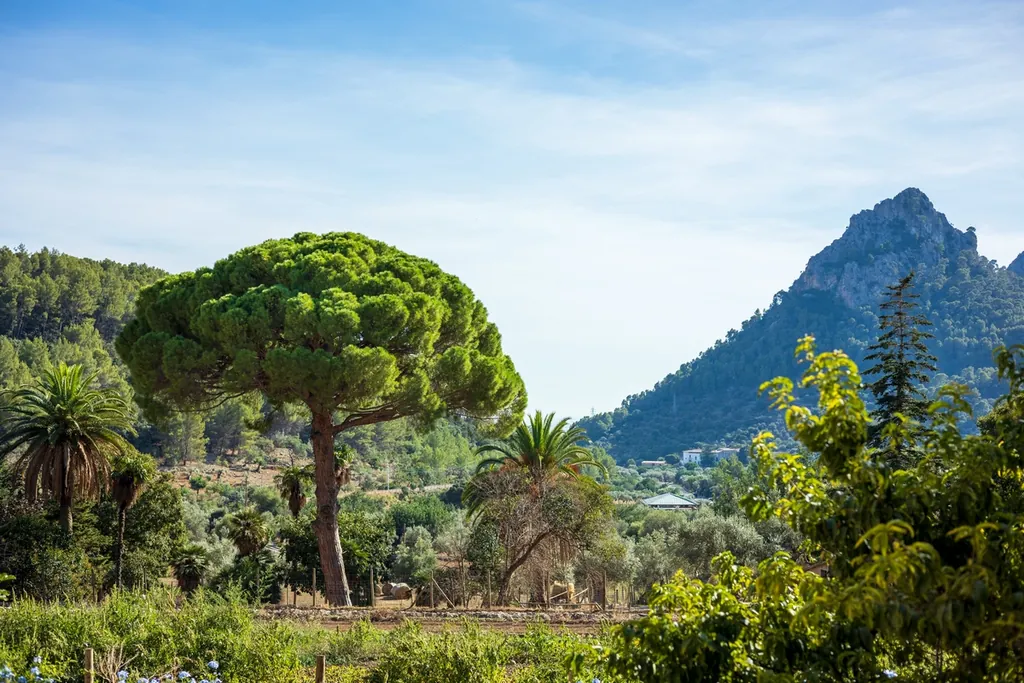
Golden stone, stepped lanes and citrus terraces beneath Puig Major. Fornalutx is at its best in the evening, once the day visitors have gone.
25 min from Deià
45 min from the airport
Choose how long you stay, where you sleep and what you love. The planner suggests a day-by-day route with drive times, market days and the beaches the wind allows. Keep it, print it or send it to yourself.