Chopin, Graves, Miró: the island of artists
Mallorca has a long habit of attracting people who make things. Some were born here, like the medieval philosopher Ramon Llull and the painter Miquel Barceló; many more came for a winter and stayed for decades. They came for the light, for the quiet, for the distance from everything else, or because a friend wrote and told them to. This guide follows them through the centuries to the places where their traces remain: a monastery cell, a house above the sea, a studio above the bay of Palma.
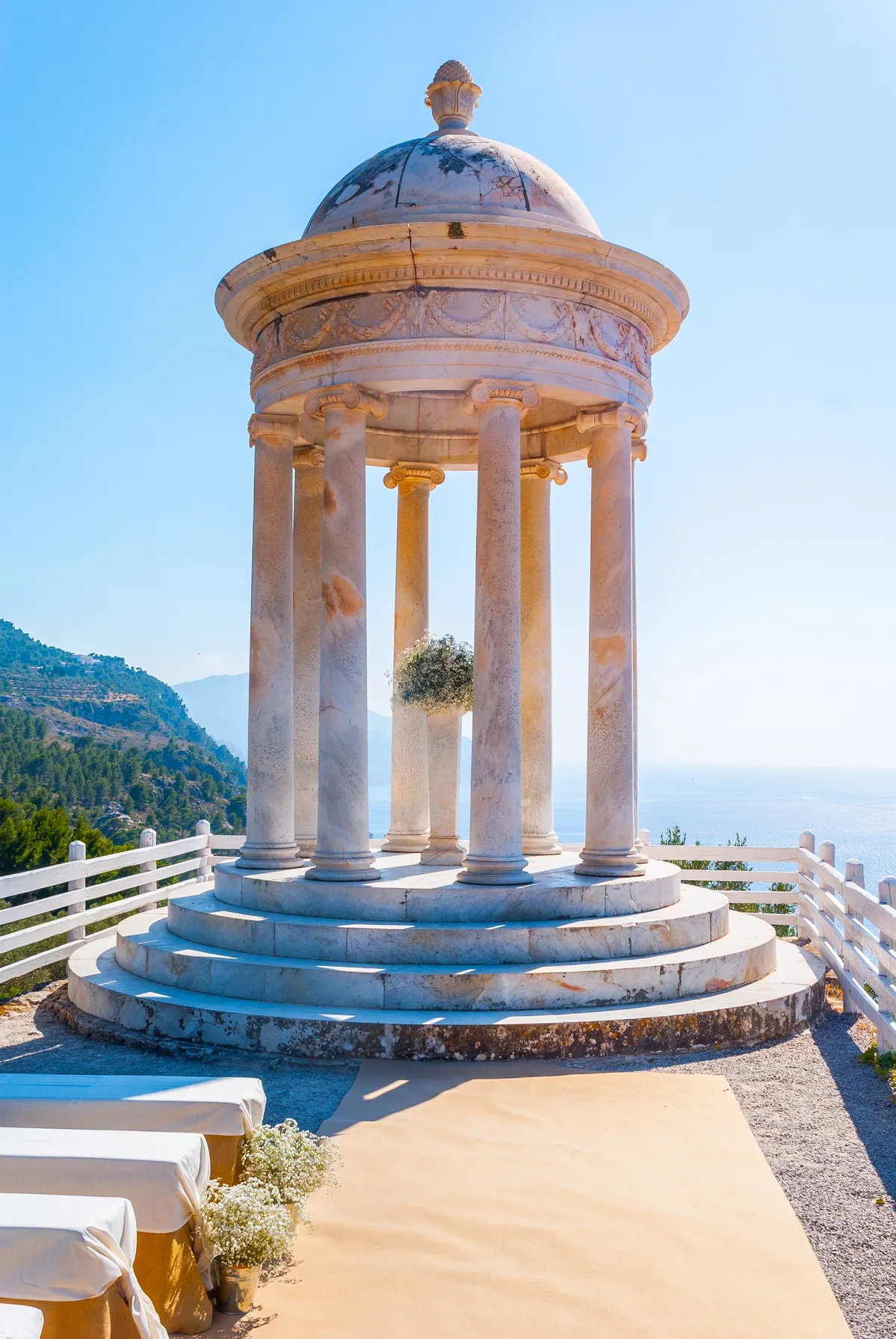
Ramon Llull, the first great island writer
Born in Palma in the early 1230s, a few years after the Christian conquest, Ramon Llull spent his youth at court before a religious conversion made him a philosopher, mystic and missionary. He wrote in Catalan, Latin and Arabic, and works such as the novel Blanquerna helped give Catalan its first great literary prose. His Ars magna, a method of combining basic principles to reach truth, is still discussed by historians of logic.
Two places on the island keep his memory. On Puig de Randa, the hill rising from the plain near Algaida, he withdrew to pray and write; its slopes and summit now hold three sanctuaries. On the Tramuntana coast near Valldemossa he founded a school at Miramar where friars learned Arabic. He is buried in the Gothic church of Sant Francesc in Palma, the place to pay your respects.
Chopin and George Sand: a winter in Valldemossa
In November 1838 Frédéric Chopin and the novelist George Sand arrived in Palma with her two children, hoping the southern climate would help his failing health. After a few weeks in a rented house outside the city they moved up to the former Carthusian monastery at Valldemossa, emptied of its monks a few years earlier, and took rooms there for the rest of the winter. It rained, damp seeped through the walls, and Chopin grew worse. They left in February 1839.
Yet the winter was not wasted. Chopin worked on his Preludes there, on a piano that had a slow journey from Paris, and Sand kept writing through the nights as was her habit. Her book A Winter in Majorca, published a few years later, praises the landscape and mocks the islanders with equal energy; it has been read, argued over and sold in Valldemossa ever since. The Royal Carthusian Monastery shows rooms associated with the couple.

The Archduke and the north-west coast
Ludwig Salvator, Archduke of Austria, first came to Mallorca in the 1860s and spent much of the rest of his life on the coast between Valldemossa and Deià. He bought estate after estate, including Miramar, where Llull had founded his school, not to farm them for profit but to protect them: he forbade the felling of old trees, laid out mule paths and stone viewpoints along the cliffs, and welcomed travellers. Islanders still speak of him simply as the Arxiduc.
He was also a serious naturalist and ethnographer. His great work on the Balearic Islands, published in German in many richly illustrated volumes, recorded costumes, farmhouses, boats and plants with remarkable thoroughness. The Archduke's path above Valldemossa is one of the classic island walks; for the long-distance route along the whole range, see our guide to the GR 221.
Rusiñol, Anglada Camarasa and the painters of light
Santiago Rusiñol, the Catalan painter and writer, came again and again from the 1890s and painted the gardens, terraces and olive groves of the Tramuntana. His book L'illa de la calma gave Mallorca a name, the island of calm, that has followed it ever since. Hermen Anglada Camarasa settled in Pollença around the start of the First World War and gathered a circle of landscape painters there; the pines and bays of the north entered Spanish painting through them.
What they were chasing is easy to see on a clear winter day: low sun raking across stone and almond blossom, shadows sharp as cut paper, the sea changing colour by the hour. In the same landscape Pollença's poet Miquel Costa i Llobera wrote his celebrated poem on the pine of Formentor. Later in the century Deià became the island's artists' village, with painters, writers and musicians drawn by the same light and by each other's company.
Robert Graves in Deià
The English poet and novelist Robert Graves came to Deià in 1929 with the American poet Laura Riding, just after publishing his war memoir Goodbye to All That. Here he wrote I, Claudius and Claudius the God, the novels that made his name with a wide public, and built a stone house on the road towards Sóller. The Spanish Civil War sent him away in 1936; he returned after the Second World War and stayed for the rest of his life.
Graves made Deià a magnet for writers, painters and musicians, and the village has remained one. His house, Ca n'Alluny, is now a museum that keeps his study, books and garden much as he left them. He died in 1985 and is buried in the small cemetery beside the church at the top of the village, under a simple hand-lettered stone that is easy to miss. Walk up at the end of the day, when the light turns the slopes of the Teix gold.
Miró in Palma: the late decades
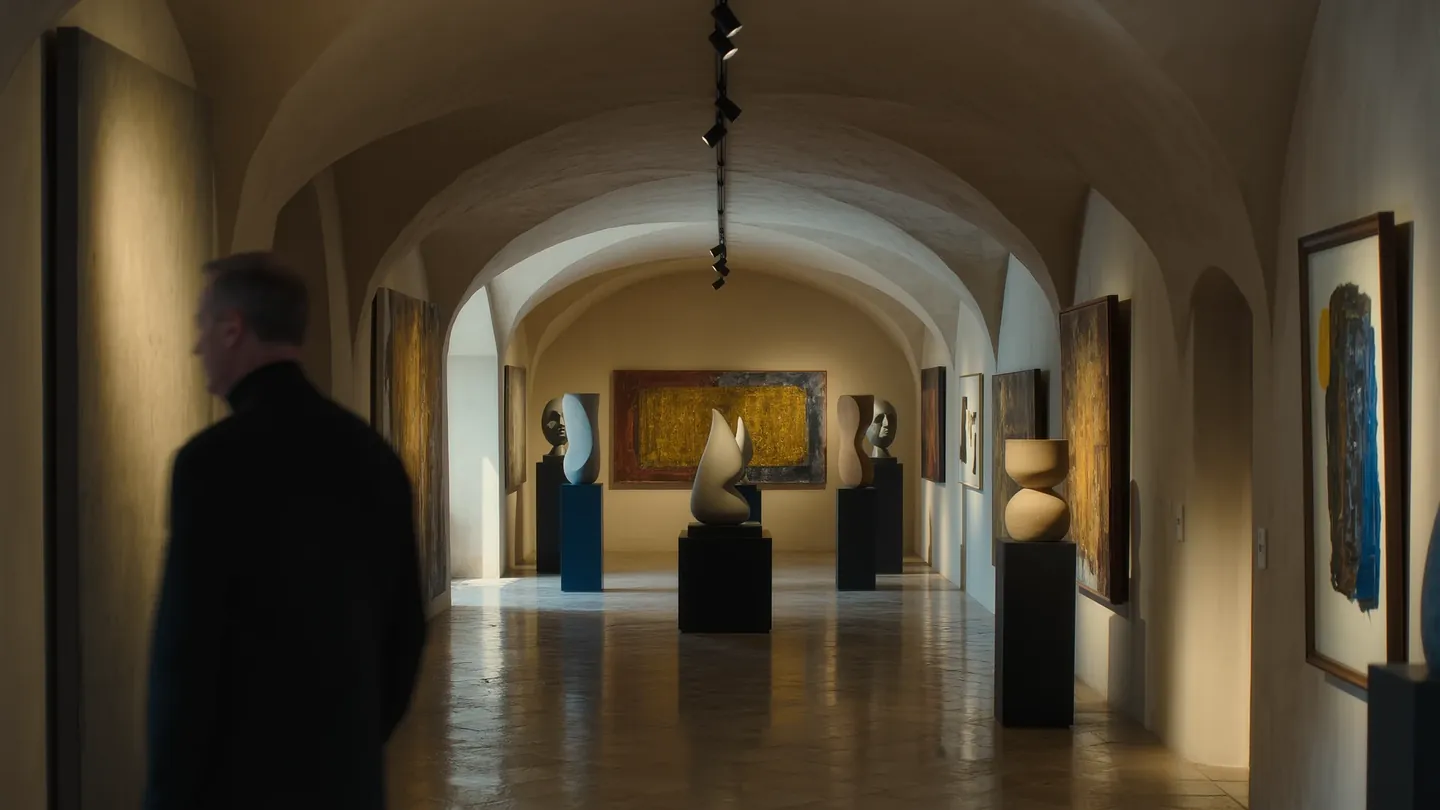
Joan Miró had deep Mallorcan roots: his mother's family came from the island, he married the Mallorcan Pilar Juncosa in Palma in 1929, and he spent long summers here. In 1956 he settled for good at Cala Major, on the western edge of Palma, in a large white studio designed by his friend Josep Lluís Sert. A few years later he bought Son Boter, an old farmhouse next to it, and covered its walls with charcoal sketches that are still there.
Those last decades were among his boldest: huge canvases, burnt paintings, sculpture and ceramics. He died in Palma in 1983. The studios, with brushes and unfinished canvases left as if he had just stepped out, now belong to the Fundació Miró Mallorca, together with a gallery building by Rafael Moneo. Miró also loved siurells, the island's painted clay whistles; follow that thread in our guide to Mallorcan crafts.
Villalonga, Barceló and the island today
Llorenç Villalonga, born in Palma in 1897, wrote what many readers consider the finest novel about the old Mallorcan landed families. Bearn follows the last lord of a decaying country house, torn between faith, reason and a world that is slipping away. The Villalonga family house in Binissalem is now a house museum dedicated to him, in a wine town among the vineyards of the plain.
Miquel Barceló, born in Felanitx in 1957, is the island's best-known living artist. He has worked in Mallorca, Paris and West Africa, and his materials are often the island's own: clay, earth, the sea. His ceramic chapel in La Seu, described in our guide to Palma's architecture, is the place to begin. And the light that brought Rusiñol and Graves still does its work: the villages of the Tramuntana shelter painters, potters and writers working quietly behind their shutters.
Key points
- Ramon Llull, born in Palma in the 1230s, shaped Catalan prose; he is buried in the church of Sant Francesc.
- Chopin and George Sand spent the winter of 1838 to 1839 in the former monastery at Valldemossa.
- The Archduke Ludwig Salvator protected the coast near Deià and left mule paths that walkers still use.
- Robert Graves lived in Deià for most of his life; his house is a museum and his grave lies by the church.
- Miró settled at Cala Major in 1956; his studios now belong to the Fundació Miró Mallorca.
Questions
Can you visit Chopin's rooms in Valldemossa?
Yes. The Royal Carthusian Monastery opens to visitors and shows rooms associated with Chopin and George Sand, along with the old monastery pharmacy and the church. Come early or late in the day, as coaches fill the village from mid-morning, and check the current timetable before you go.
Is Robert Graves's house open to visitors?
Yes. Ca n'Alluny, on the road from Deià towards Sóller, is open as a museum, with his study, books and garden kept much as he left them. It is a short walk from the village. Combine it with the climb to the church and his grave for a quiet half day, and check the current timetable first.
Where can I see Miró's work in Mallorca?
Start at the Fundació Miró Mallorca at Cala Major, west of the centre of Palma, which holds his two studios, the farmhouse of Son Boter and a gallery with changing displays from the collection. In the city itself, his large ceramic mural stands in the Parc de la Mar, below the cathedral.
Did George Sand like Mallorca?
She loved the landscape and disliked much else. A Winter in Majorca describes the mountains and the monastery with real feeling but is scathing about the weather, the cooking and the islanders, whom she found suspicious of the foreign couple. Mallorcans have answered back ever since, and the book remains a vivid, partial portrait.
Official sources
- Consell de Mallorca
- Fundació Miró Mallorca
- Govern de les Illes Balears
Published 19 October 2026 by the editors of island mallorca. Facts were checked in autumn 2026; rules, timetables and access can change.


