The calas worth the walk
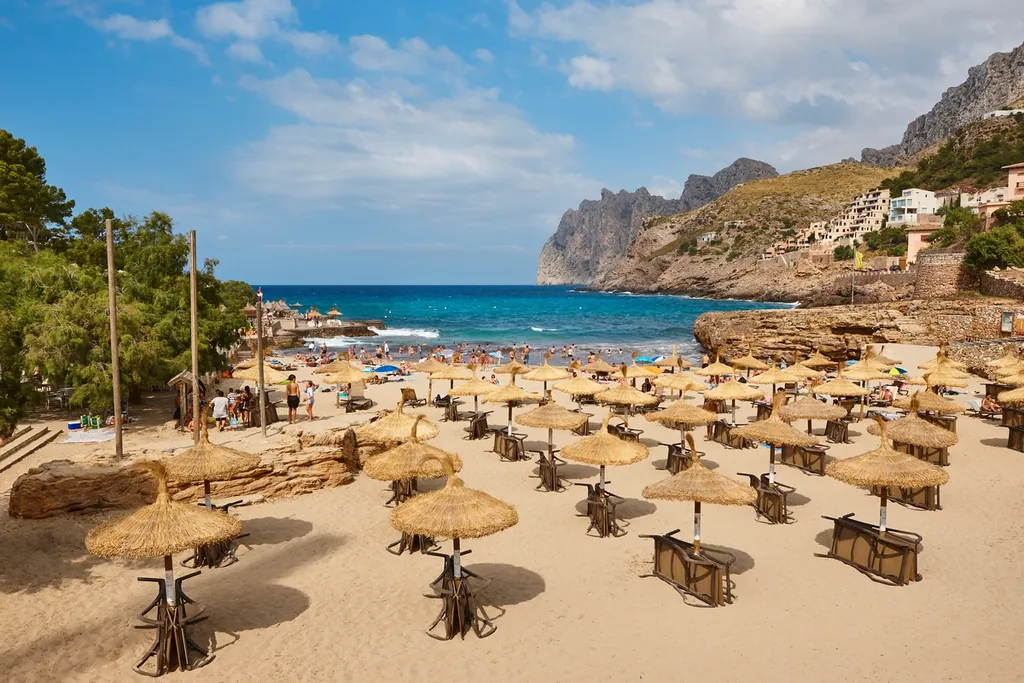
Mallorca has hundreds of calas, and the famous ones are rarely empty. This is not a list of the most photographed coves but a considered selection, coast by coast, with the facts that decide a good day: how you get there, where the car goes, when the crowds arrive and when they leave. Read the wind before you choose. On almost any summer day one side of the island is glassy while another is slapping at the rocks, and the difference is worth an hour's drive.
What a cala is, and why the coasts differ
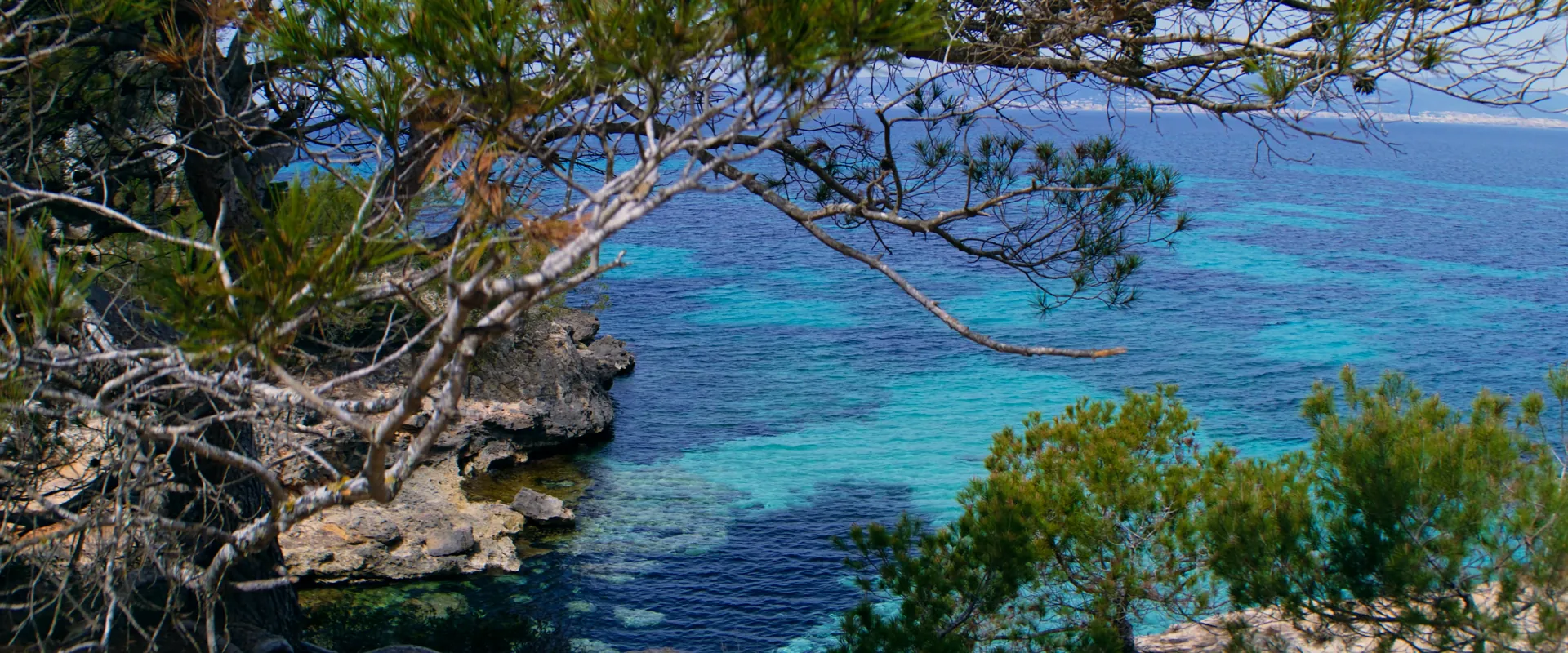
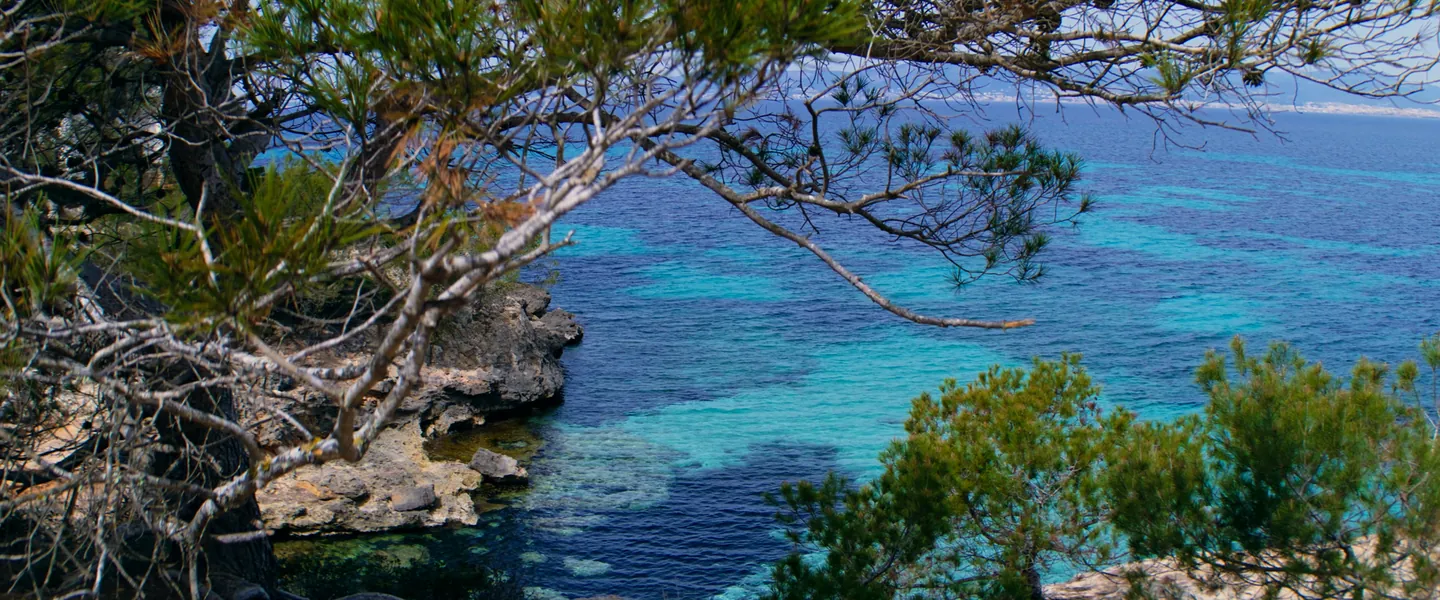
Cala is the Catalan word for a cove, and caló is its diminutive, a smaller one still. Most of Mallorca's calas are the mouths of torrents, the seasonal streams that run only after heavy rain. Over a very long time they cut into the rock and carried down the sand that now lies at the head of the inlet.
The rock decides the character. In the south and south-east the coast is a low limestone plateau, and the torrents have carved narrow, steep-sided inlets with pale sand and water that turns green and then blue as it deepens. In the Serra de Tramuntana the mountains drop straight into the sea, so the coves are pebble and boulder, deep within a few strokes. The north-east has wider bays with dunes and pines, open to the swell. The southwest, closest to Palma, has small sandy coves under pines, more built around but well sheltered.
The south-east: Caló des Moro, s'Almunia, Llombards and Mondragó
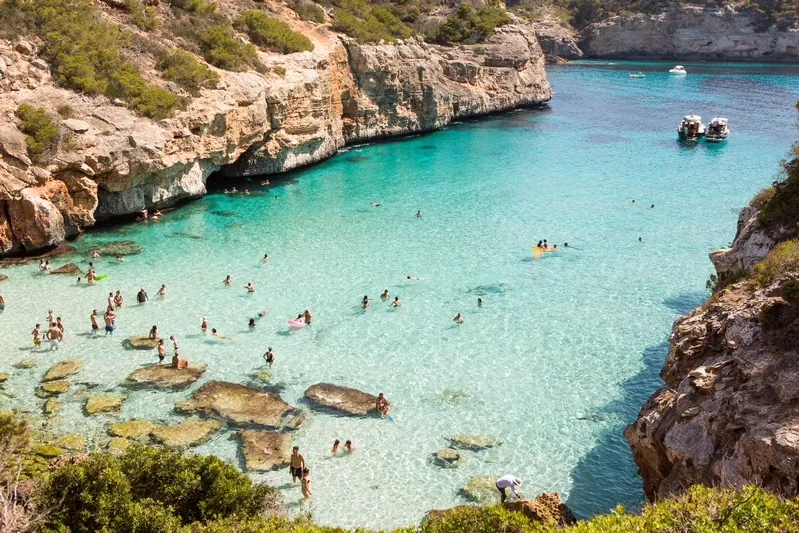
Caló des Moro is the cove everyone has seen on a screen: a narrow cleft of pale rock with a scrap of sand at its head and water of improbable clarity. It is also tiny, with no services, and in high summer there are more people on the rocks than on the sand. Parking near the top is scarce. Go at first light or in May, June and late September, and leave it alone in August.
Next door, Cala s'Almunia is the better place to linger: a rocky inlet lined with old fishermen's boathouses and slipways, a little sand and very good snorkelling along the walls. A short coastal path links the two. Cala Llombards, below the village of Es Llombards, is a proper sandy cove between cliffs, with parking above and steps down; it suits families and fills by late morning. Cala Mondragó lies inside a natural park, with two sandy beaches joined by a path through the pines and car parks close by. All four are within easy reach of Santanyí.
This coast faces south-east. It is at its best in a northerly or westerly wind and suffers in a Llevant or a Xaloc. Come in the morning, for the light and for space; later in the day the cliffs throw their shadows across the sand.
The east: Cala Varques
Cala Varques, between Porto Cristo and Portocolom, is what many people imagine an undeveloped cala to be: a deep sandy inlet framed by pines and low cliffs, with no buildings, no road to the sand and no services. Park with care along the lane, never across a gate or a track, and walk in for twenty minutes or so through pines and farmland.
The walls of the inlet are pocked with small caves, and a short way along the rocks a natural sea arch draws climbers who practise deep-water soloing, climbing above the sea without ropes. Bring water, shade and a bag for your rubbish: there is nowhere to buy or leave anything. Mornings are quieter. Avoid it in a Llevant or a Gregal, when the swell runs up the inlet; with a westerly it is often perfectly still.
The north-east: Cala Agulla, Cala Torta and Cala Mesquida
Above Cala Ratjada the coast turns north. Cala Agulla is a broad sandy beach backed by pines and dunes, close enough to town to walk to. Cala Mesquida, further along, has a long crescent of sand and a protected dune system, with a small resort at one end and open dunes at the other.
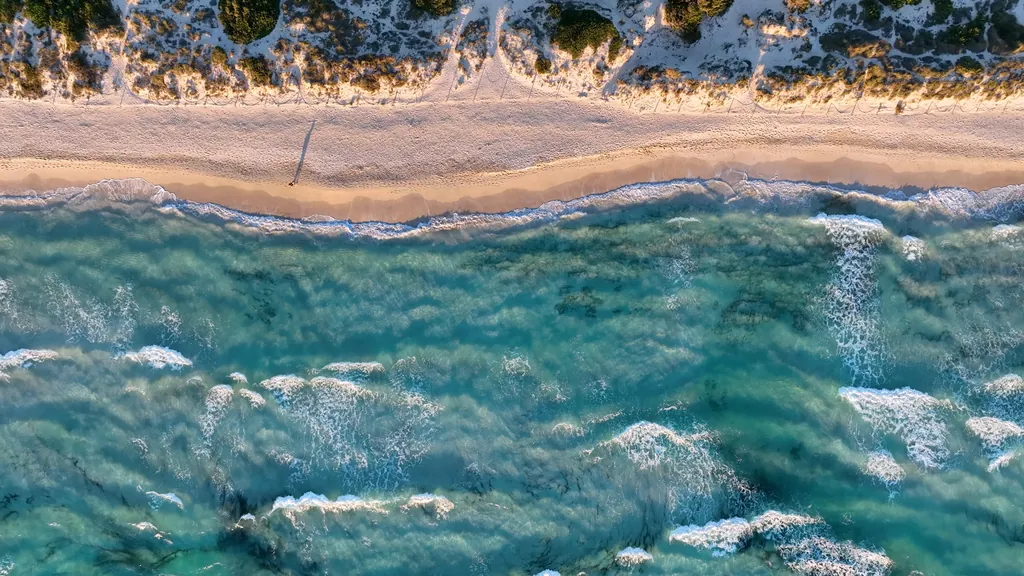
Cala Torta, reached by a winding minor road from Artà, is the wildest of the three: a wide, undeveloped bay of sand with bare hills behind. It is also the most exposed. All three face north or north-east, so the Tramuntana and the Gregal send in surf and strong currents, and a red flag means no swimming. With a southerly or westerly wind they lie flat, and the late afternoon light on the dunes is the best of the day.
The Tramuntana: Cala Tuent, Cala Deià and Sa Calobra
On the mountain coast the reward is the setting rather than the sand. Sa Calobra is reached by one of the island's great roads, a ribbon of hairpins dropping from the Coll dels Reis to the sea, or by boat from Port de Sóller. From the little harbour a path runs through tunnels in the rock to the mouth of the Torrent de Pareis, where a pebble beach lies between sheer walls of stone. Come early, or late in the day, when the coaches and boats have gone.
Cala Tuent, on a branch road that leaves the descent to Sa Calobra, is its quiet neighbour: a wide bay of pebbles and grey sand below the Puig Major. Cala Deià, below the village of Deià, is a small cove of boulders, boathouses and very deep, clear water, reached by a path down the valley or a narrow road with very little parking.
These coves face north-west. A Mestral or a Tramuntana makes them rough, a southerly or easterly leaves them still, and the afternoon is the better half of the day.
Three corners: Formentor, the southwest and Cala Pi
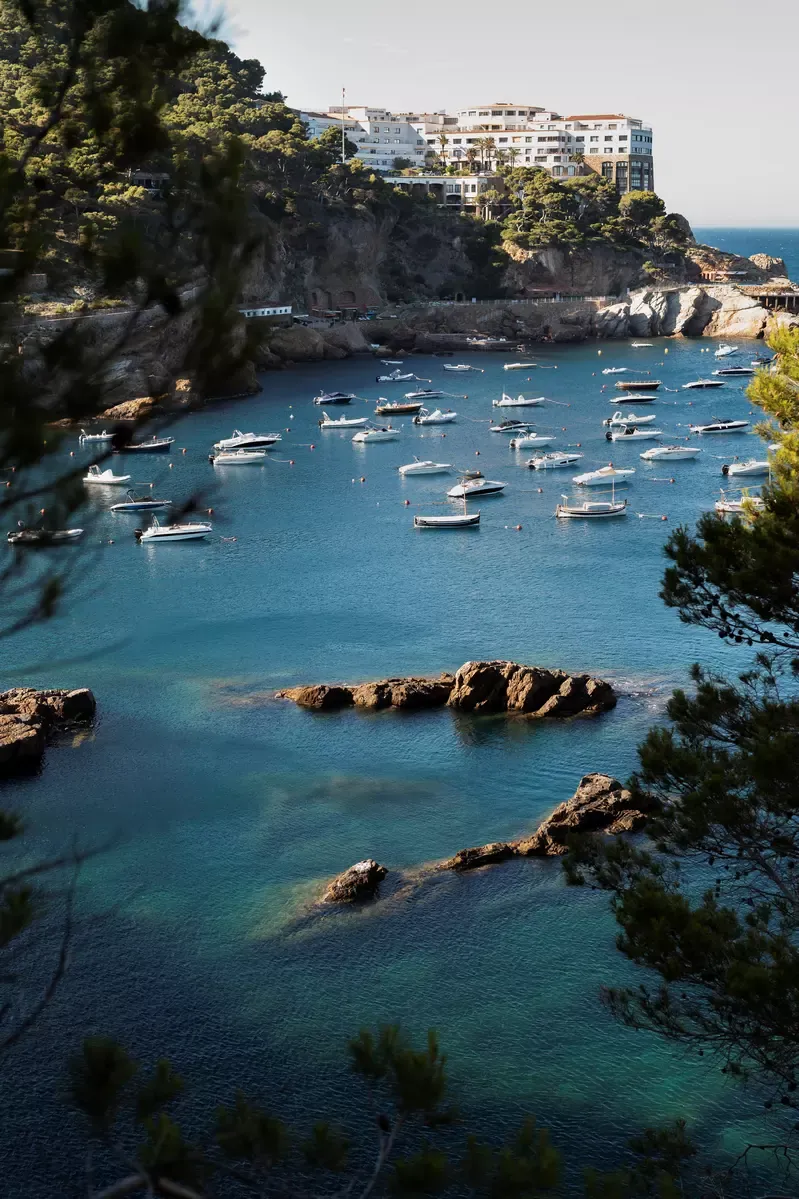
On the open northern side of the Formentor peninsula, Cala Figuera de Formentor is a small pebble cove with transparent water at the end of a track from the road. Go on a calm day or with a southerly. The road towards the lighthouse is restricted for private cars at busy times in summer, so check the current arrangements.
Near Palma, Cala Comtesa, by Illetes, is a short strip of sand under pines, loved by locals for an after-work swim; parking is tight and the bus from the city is easier. Portals Vells, towards the southern tip of the Calvià coast, has small sandy coves and old sandstone quarries cut into the cliffs. Both face into the Bay of Palma, calm in a north or west wind, though the afternoon embat ruffles them in summer.
Cala Pi, on the south coast in the municipality of Llucmajor, is a long, narrow inlet ending in a small sandy beach, reached by steps from the clifftop and watched over by an old defence tower on the headland. Its narrowness shelters it from most winds except a strong southerly. Arrive in the morning, before the sand at the head of the inlet is spoken for.
How the wind decides
The most useful habit on a Mallorcan beach holiday is to read the wind forecast before choosing a cove. The rule is simple: the coast facing the wind gets the waves, and the coast with its back to the wind gets flat water. A Tramuntana or a Mestral roughens the north and the mountain coast and leaves the south-east and the Bay of Palma glassy. A Llevant turns that around, and the Tramuntana coves become the calm ones, while in a Gregal the southwest and the Bay of Palma are the safest bet. A Migjorn or a Garbí piles waves onto the southern beaches while the north lies still.
Swell also lingers after the wind drops, so a cove can stay rough for a day after a blow. Our wind beach finder does the matching for you: pick the wind and see which coast is calm. For how the winds behave through the year, see Mallorca's winds and weather, and for the quiet rules that apply in every cove, our guide to Posidonia and beach etiquette.
Key points
- Calas are torrent mouths: sandy inlets in the south-east, pebble coves under the mountains, open dune bays in the north-east.
- Caló des Moro is tiny and crowded in summer; go at first light or out of season, or choose Cala s'Almunia next door.
- The coast with its back to the wind is the calm one, so check the forecast before you pick a cove.
- Undeveloped coves such as Cala Varques and Cala Torta have no services: bring water, shade and a bag for rubbish.
- Mornings suit the south-east and the east; afternoons suit the Tramuntana coves, as the sun swings round to the west.
Questions
What is the difference between a cala and a platja?
A platja is a beach in general, often long and open. A cala is a cove, usually a narrow inlet cut by a seasonal torrent, with sand or pebbles at its head and rock on either side. A caló is a smaller cove still, as the name of Caló des Moro suggests.
Is Caló des Moro worth visiting?
In the right conditions, yes: the water and the rock are remarkable. But it is very small, has no services and is crowded from mid-morning in summer. Go at first light or outside July and August, and if it is full, take the short path to Cala s'Almunia instead.
Which calas are best for children?
Choose sandy coves that shelve gently and are easy to reach: Cala Mondragó and Cala Llombards in the south-east, and Cala Agulla near Cala Ratjada on a day without a northerly wind. Avoid the pebble coves of the Tramuntana, which drop away quickly, and remote coves with a long walk and no shade.
Can I reach the calas by public transport?
Some, yes. Coves close to towns, such as Cala Comtesa near Palma or Cala Agulla near Cala Ratjada, are served by buses or within walking distance. Remote coves such as Cala Varques, Cala Torta or Cala Tuent effectively need a car or a boat. Check the current timetable before you rely on a bus.
Official sources
- Consell de Mallorca
- Govern de les Illes Balears
- AEMET
Published 19 October 2026 by the editors of island mallorca. Facts were checked in autumn 2026; rules, timetables and access can change.