Formentor, Alcúdia and the beaches of the north
The north of Mallorca is built around two great bays, Pollença and Alcúdia, divided by the Victòria peninsula and guarded by the long ridge of Formentor. Inside the bays the water is shallow and sheltered, and the beaches are long, sandy and made for families. Outside them the coast turns wild, with small coves under cliffs and surf rolling in from the open sea. Which side you choose depends largely on the wind, and in the north the winds that matter most are the Tramuntana and the Gregal.

Platja de Formentor
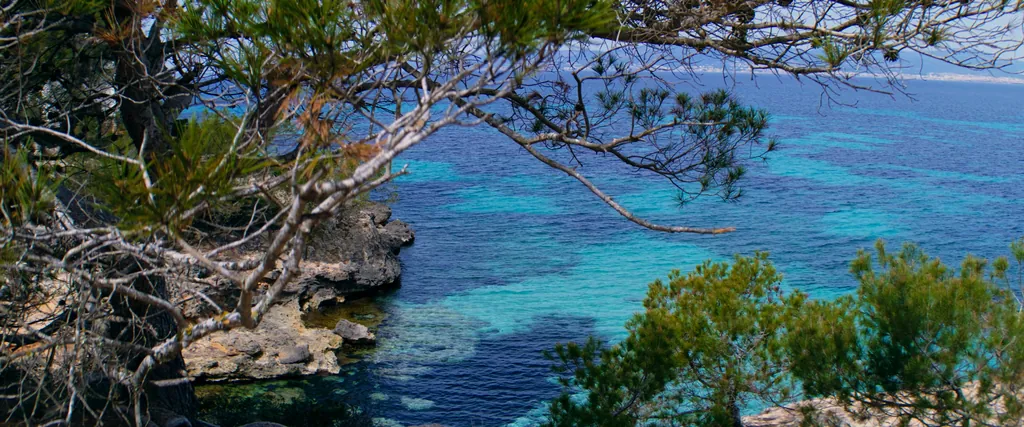
Platja de Formentor lies on the sheltered side of the Formentor peninsula, looking across the Bay of Pollença. It is a narrow strip of fine sand under a fringe of pines that reach almost to the water, with a small islet offshore and startlingly clear water over sand and Posidonia. Shade under the trees is the great luxury here, and it is taken early.
The road onto the peninsula is narrow and winding, and at busy times in summer the last stretch towards the lighthouse is restricted for private cars; check the current arrangements before you go. In summer a boat crosses from Port de Pollença, which is the most pleasant way to arrive. Because the beach faces into the bay, it often stays calm in a northerly wind that makes the open coast unswimmable. Out of season, when the road is quiet, the drive along the peninsula is one of the finest on the island, with viewpoints over high cliffs and the open sea.
Cala Sant Vicenç
Cala Sant Vicenç, a few minutes' drive from Pollença, is a small resort of villas and low buildings around four little coves: Cala Barques, Cala Clara, Cala Molins and Cala Carbó. The setting is the draw, with the jagged ridge of the Cavall Bernat rising above the bay and water that turns deep blue within a few metres of the shore.
The coves open to the north and north-east, which makes them among the first on this coast to feel a Tramuntana or a Gregal. On a calm day they are lovely for snorkelling along the rocks; on a rough one the swell runs straight in and the red flags go up. The small patches of sand fill quickly in summer, so mornings are best.
Port de Pollença
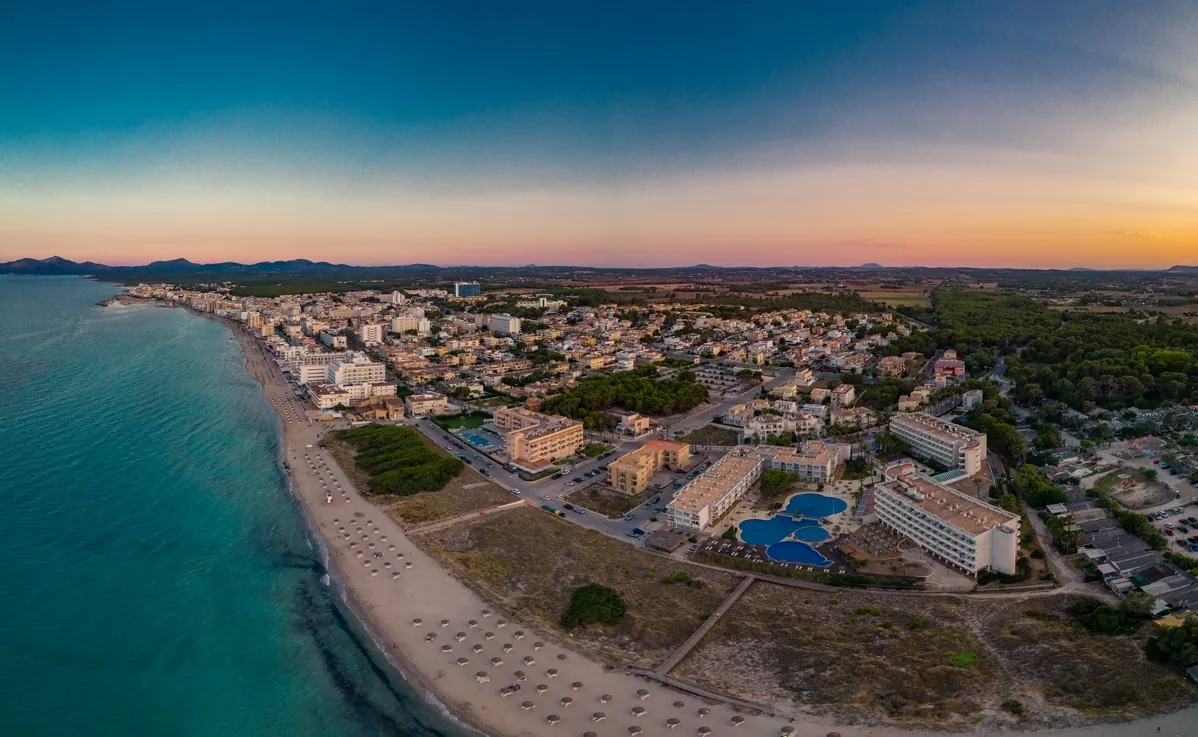
Port de Pollença has a long, narrow town beach, and along part of it runs the Pine Walk, a shaded promenade that follows the shore past old villas and small jetties. The water is shallow and the bay sheltered, so in summer it is a safe place for small children and first attempts at paddleboarding. Further round towards Alcúdia the shore opens out, and the bay becomes a favourite of windsurfers and kitesurfers when the afternoon breeze fills in.
Because the bay opens to the north-east, the Gregal is the wind to watch: it sends chop straight up the bay. A Tramuntana, blowing over the land, usually leaves the water close to shore flatter, though gusty. The Wednesday market is a good reason to come in the morning and swim afterwards.
The long bays of Alcúdia and Muro
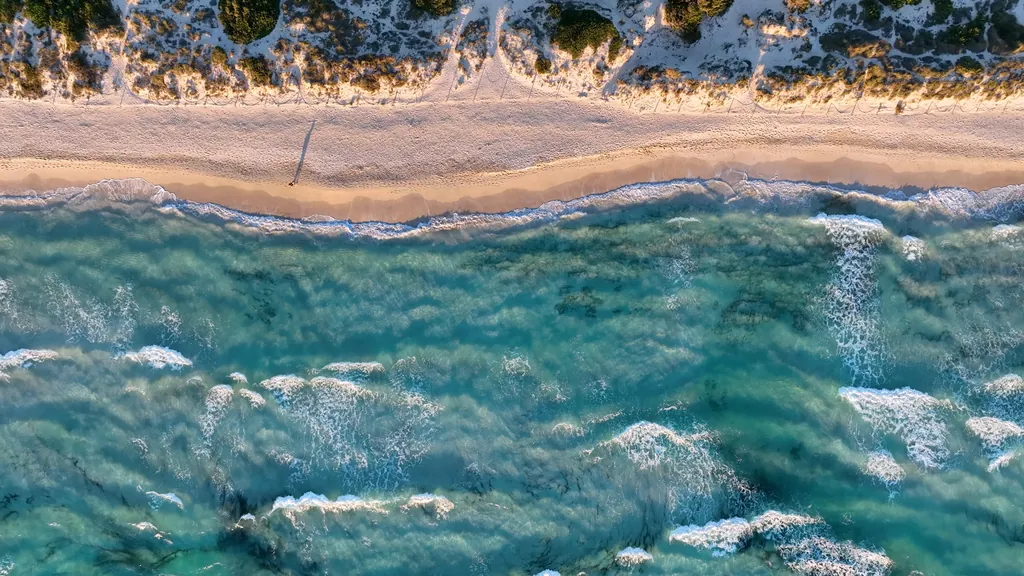
South of the old walled town of Alcúdia, the Bay of Alcúdia curves for kilometres of continuous sand, from the port towards Can Picafort. The northern part, Platja d'Alcúdia, is backed by a promenade and holiday buildings. Further south, Platja de Muro runs past dunes and pinewoods, protected land on the edge of s'Albufera, the great wetland and natural park behind the coast.
This is the most reliable family coast on the island. The sand shelves gently, the water stays shallow far out, and there is room to spread out even in August if you walk away from the access points. The dunes and pines of Muro are the quieter half. Mornings are calm and clear, and in summer a sea breeze usually builds through the afternoon.
The bay faces east and north-east, so a Gregal or a Llevant brings waves and cloudy water, while a westerly wind leaves it flat. Early risers can combine a swim with the birds of s'Albufera, at their liveliest at the start of the day. On a cloudy or windy morning, the walls of the old town and the Roman remains of Pollentia make a good alternative to the sand.
Coll Baix
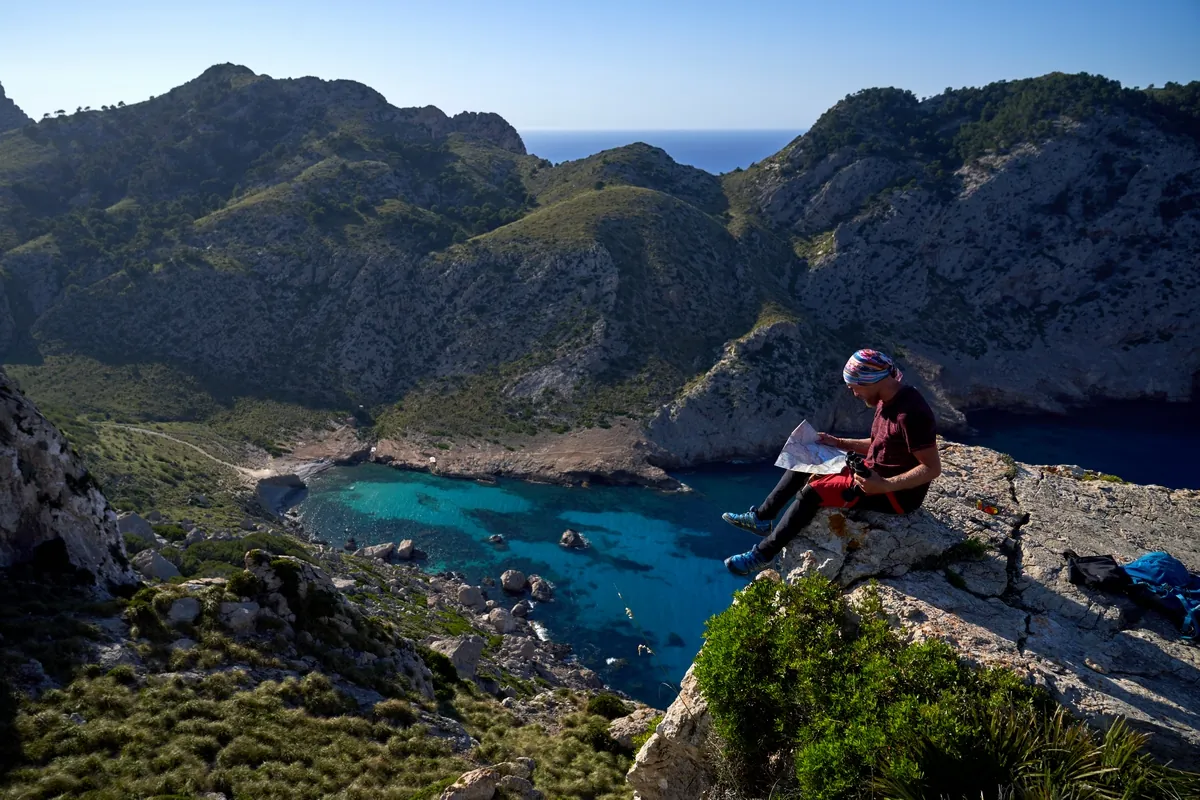
On the Victòria peninsula, north-east of Alcúdia, Coll Baix is one of the wildest beaches in the north that you can still reach without a boat. A rough track through the pines ends at a parking area, and from there a path leads down, steep and rocky at the end. Below, a pebble beach lies under high cliffs, with water so clear that the bottom seems close long after it has dropped away.
There are no services and no water, so bring sturdy shoes, plenty to drink and everything you will need. The climb back up is the price of the swim; leave enough energy and daylight for it. Go in settled weather, and leave it alone when the sea is running.
Cala Torta and Cala Mesquida
East of the bays, beyond the hills of Artà, the coast faces the open sea. Cala Torta is reached by a winding road from Artà and is almost undeveloped: a wide bay of sand between low headlands, with bare hills behind. Cala Mesquida, closer to Capdepera, has a long beach backed by a protected dune system, with a small resort at one end.
Both face north and north-east, and both take the full force of the Tramuntana and the Gregal. On those days the surf is real and the currents are dangerous; a red flag means no swimming, and it means it. With a southerly or a westerly the same beaches are calm, quiet in the morning and lit beautifully in the late afternoon. Keep to the paths through the dunes, and take everything home with you.
How the Tramuntana and the Gregal decide your day
In the north, check the direction of the wind before anything else. A Tramuntana from the north hits Cala Sant Vicenç, Cala Torta and Cala Mesquida head on, but it reaches the inner Bays of Pollença and Alcúdia across the land, so Platja de Formentor, the Pine Walk and the long beaches of Alcúdia usually stay swimmable, if gusty. A Gregal from the north-east is a different matter: it drives waves deep into both bays and onto the north-east coves alike, and on those days the calm water is on the south and south-west coasts.
A Mestral from the north-west mostly troubles the mountain coast and Cala Sant Vicenç. Southerly and westerly winds bring the north its best days, with flat water from Formentor to Mesquida. Remember too that swell outlasts the wind: after a day or two of Tramuntana, the open coves can stay rough for a while even when the air is still. Our wind beach finder matches the wind to the calm coast for you, and our guide to the calas worth the walk covers the coves of the rest of the island.
Key points
- Inside the Bays of Pollença and Alcúdia the water is shallow and sheltered; outside them, the coves face the open sea.
- Platja de Formentor faces into the bay, has pine shade and can be reached by a summer boat from Port de Pollença.
- Alcúdia and Muro form the island's most reliable family coast: gentle sand, shallow water and room away from the crowd.
- Cala Torta and Cala Mesquida take the full force of the Tramuntana and the Gregal: respect the flags.
- In a Tramuntana, head for the inner bays; in a Gregal, the calm water is on the south and south-west coasts.
Questions
Which north coast beach is best for small children?
The long bays of Alcúdia and Muro are hard to beat: soft sand, a very gentle slope and shallow water far out. The town beach at Port de Pollença is similar and has shade along the Pine Walk. Choose a day without a Gregal, when both bays stay calm.
Can I drive to the Formentor peninsula in summer?
You can drive onto the peninsula, but at busy times in summer the last stretch of road to the lighthouse is restricted for private cars, and the arrangements change from year to year. Check the current rules before you set out. For the beach, the summer boat from Port de Pollença is the most relaxed way to arrive.
Is it safe to swim at Cala Torta?
On a calm day, yes, but it is an exposed and almost undeveloped beach, open to the north and north-east. With a Tramuntana or a Gregal the surf builds and strong currents form. Always check the flag, since red means no swimming, and on those days choose a sheltered beach on the south coast instead.
When are the north coast beaches at their best?
Late May, June, September and early October bring warm water, long days and space on the sand. In July and August the bays are busy, so come early or late. Pick days with a southerly or westerly wind for the open coves, and use the inner bays when the Tramuntana blows.
Official sources
- Govern de les Illes Balears
- Consell de Mallorca
- AEMET
Published 19 October 2026 by the editors of island mallorca. Facts were checked in autumn 2026; rules, timetables and access can change.