Es Trenc and the beaches of the south
The south of Mallorca is flat, dry and bright, and its coast holds the island's great run of open sand. Es Trenc is the heart of it: a long, low beach backed by dunes and salt flats, with no promenade, no tower blocks and water so shallow and clear that it looks tropical on a still morning. It is also exposed, shadeless and busy in high summer. Knowing when to come, where to park and how to treat the dunes makes all the difference.

The long dune beach of Es Trenc
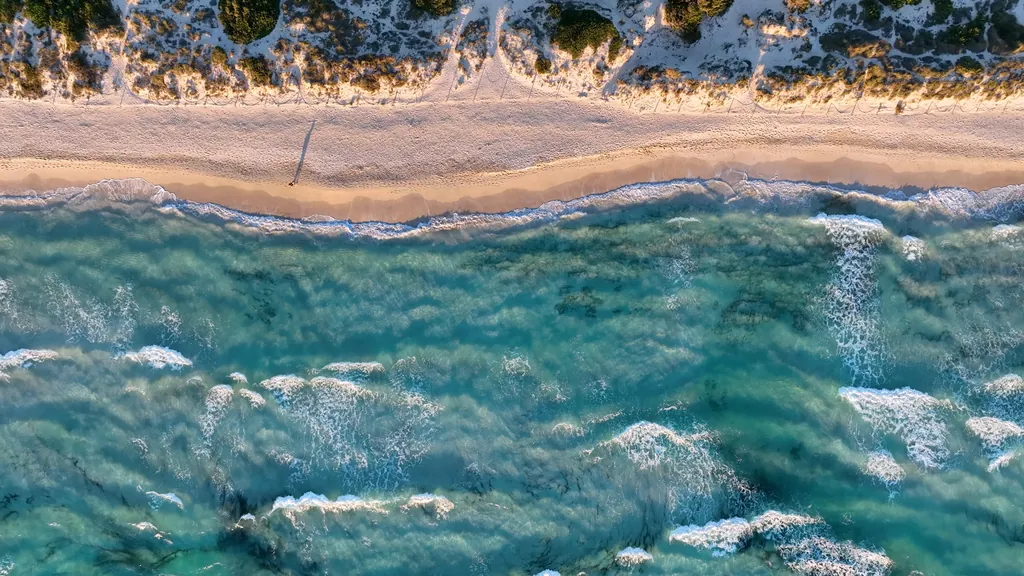
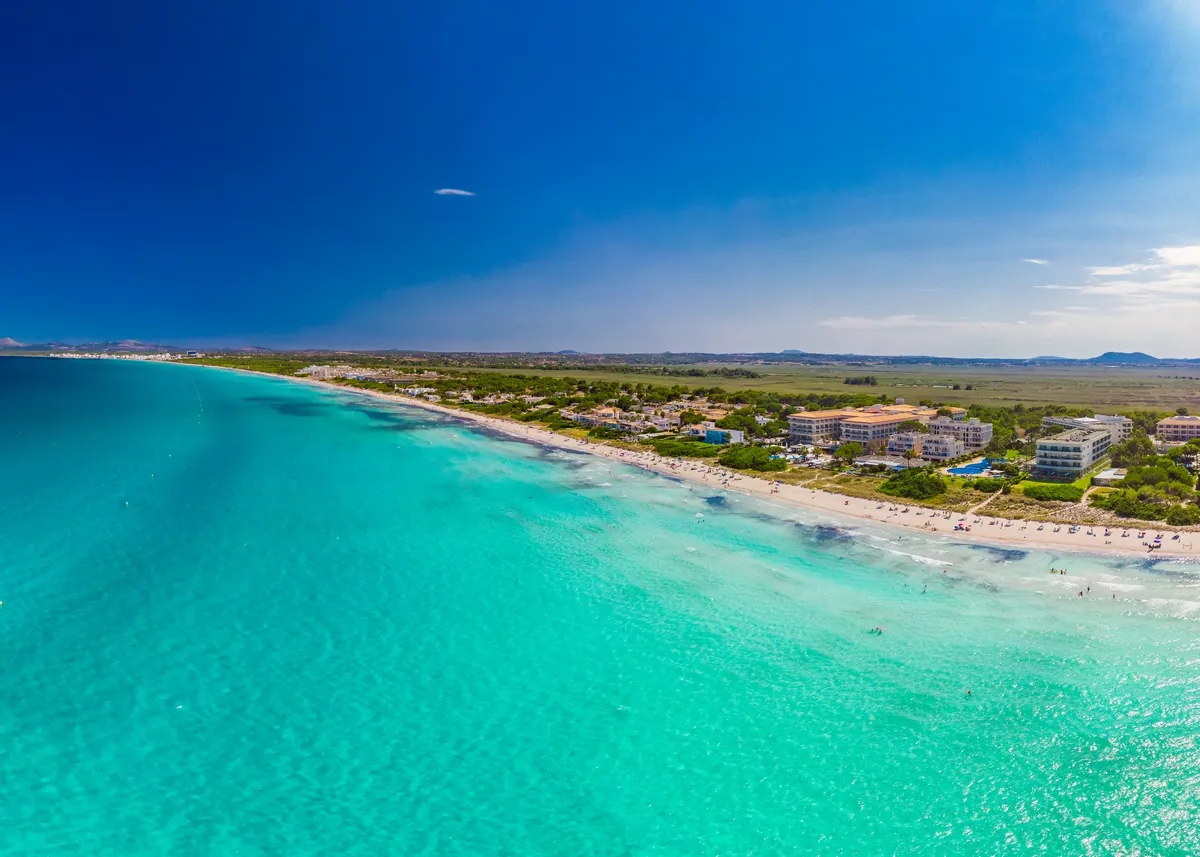
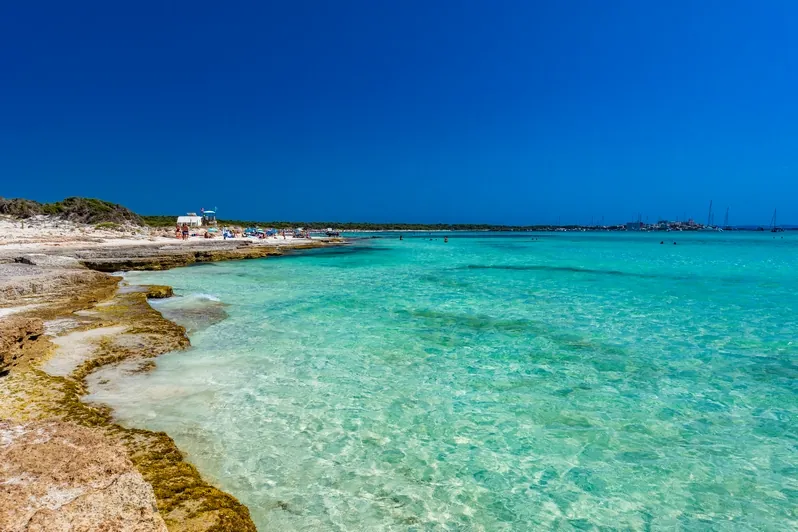
Es Trenc runs along the coast between Ses Covetes and Colònia de Sant Jordi, a long stretch of pale sand with low dunes behind it and scattered pines further back. Almost nothing is built along it, which is rare on a Mediterranean island and the reason people love it. The beach faces south-west, so in the late afternoon the light comes in low across the water and the dunes turn gold.
The sea floor shelves very gently over sand, with meadows of Posidonia further out, and on a calm day the water close to shore is transparent and faintly green. That makes it one of the best beaches on the island for children and hesitant swimmers, though the shallows warm quickly and the wind can change the picture within an hour. Parts of the beach also have a long tradition of naturism, accepted quietly by everyone.
Ses Covetes and Sa Ràpita
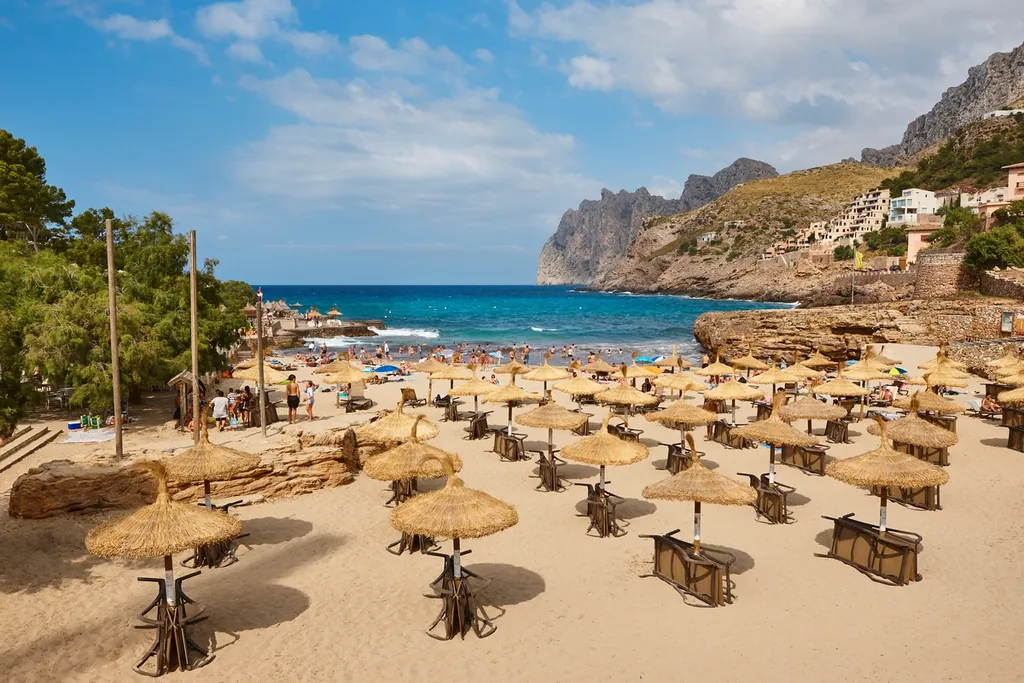
At the north-western end of Es Trenc lies Ses Covetes, a small cluster of houses in the municipality of Campos with paths down to the sand. It is the usual way in for people coming from Palma, and the beach here is at its busiest. Walk south-east along the shore and the crowd thins with every few hundred metres.
Beyond Ses Covetes the coast continues west to Sa Ràpita, a quiet village with a small harbour and its own beach, more local in feel. The shoreline here is low and sandy, good for a long walk at the water's edge, and in the evening the light is long and soft. Our sunset spots tool shows where the sun meets the sea on a given date.
The natural park and the Salobrar de Campos
Since 2017 Es Trenc and the Salobrar de Campos have been protected together as a natural park that reaches from the land into the sea. The Salobrar is the wide, flat salt marsh behind the beach, a patchwork of shallow lagoons and salt pans that have been worked for sea salt for generations. In summer the pans take on a pinkish tinge, and white heaps of salt stand drying at their edges.
It is one of the island's important wetlands for birds. Black-winged stilts and other waders feed in the shallows, and flamingos appear in some seasons. Bring binoculars, keep to the public tracks and the roadside, and remember that the pans are working land, not a path. Dawn and dusk are the best times, for the birds and for the light.
Platja des Caragol and Cap de ses Salines
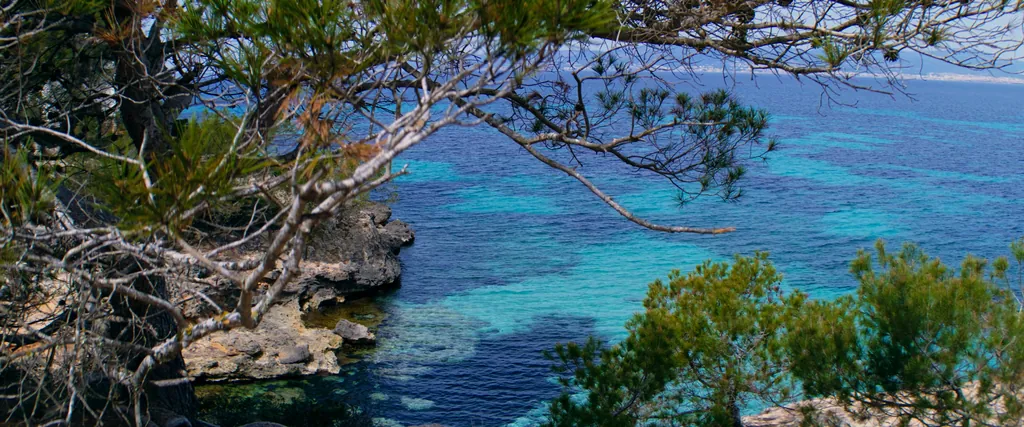
South-east of Colònia de Sant Jordi, the coast runs down to Cap de ses Salines, the southernmost point of Mallorca, marked by its lighthouse. From near the lighthouse a walk along the rocky shore leads west to Platja des Caragol, a beach of fine sand with no buildings, no services and no road to the sand. Allow a good half hour each way, and more in the heat.
The walk is easy but exposed, over rock and sand with no shade at all, so bring water, a hat and something to shelter under. The reward is a beach that feels genuinely remote, with banks of Posidonia at its edges and the low outline of Cabrera on the horizon. As on parts of Es Trenc, naturism is common here and nobody remarks on it. Leave it alone when a southerly wind is blowing: the beach takes the waves full on and the walk is no pleasure.
For a base on this stretch of coast, Santanyí and Colònia de Sant Jordi are the natural choices: a market town inland and a harbour village on the sea, each within easy reach of the beaches and the cape.
The boat to Cabrera
From the harbour of Colònia de Sant Jordi, boats cross to the Cabrera archipelago, a national park of small, dry islands with a castle above its harbour and remarkably clear water all around. It is the best day out on this coast when the sea is calm.
Visits are regulated to protect the islands and the sea around them, so numbers are limited and private boats need a permit to moor. Day trips usually include time ashore near the harbour and, on some boats, a stop at a sea cave known for the blue light inside it. Check the current timetable, book ahead in summer, and expect crossings to be cancelled in rough weather.
Shade, timing and parking
The south coast has almost no natural shade on the sand. The dunes are low, the pines stand well behind them, and in July and August the sun is fierce from late morning to late afternoon. Bring a parasol or a light shelter, more water than you think you need, and a shirt and hat for the middle of the day. Better still, do not be there in the middle of the day.
Early mornings and the last hours of daylight are the best times on Es Trenc, when the sand is cool, the water is at its most glassy and the car parks have space. The main car parks lie inland behind the dunes, and in high summer they fill by mid-morning. Parking on verges and farm tracks blocks access for farmers and emergency vehicles and can be fined. Outside July and August the beach is a different place, spacious and quiet.
The wind matters too. This coast faces south and south-west, so a Migjorn or a Garbí brings waves and cloudy water, while a Tramuntana from the north leaves it flat and clear. The wind beach finder shows which way the day is going.
Respect for the dunes
The dunes are what keep Es Trenc a beach. They store the sand that winter storms take away and later give back, and their grasses and low shrubs hold them in place. Walking over them, sitting in their hollows or taking a shortcut through a fenced area breaks the plants and lets the wind carry the sand off. Use the marked paths and boardwalks, and treat rope fences as walls.
The banks of dead Posidonia at the edge of the sand belong here too: they protect the beach from erosion and are left in place on purpose. Take every scrap of rubbish home, cigarette ends included, and leave shells and stones where they are. The reasons are set out in our guide to Posidonia and beach etiquette, and for the rocky coves further east, see the calas worth the walk.
Key points
- Es Trenc is a long, undeveloped dune beach with very shallow, clear water, protected with the Salobrar de Campos since 2017.
- There is almost no shade: come early or late, and bring a parasol, plenty of water and a hat.
- The main car parks sit inland and fill by mid-morning in summer; never park on verges or farm tracks.
- Platja des Caragol, a walk along the shore from the Cap de ses Salines lighthouse, is the remote alternative.
- Keep off the dunes and leave the Posidonia banks in place: both hold the beach together.
Questions
Is Es Trenc good for children?
Yes, on a calm day it is one of the best beaches on the island: the sand shelves very gently and the water stays shallow a long way out. The catch is the lack of shade, so bring a parasol, come early or late, and avoid days with a strong southerly wind, when the water turns choppy.
Is Es Trenc a naturist beach?
Parts of Es Trenc have a long tradition of naturism, and clothed and unclothed bathers share the beach without fuss. The custom is simple: be discreet, do not stare and never photograph other people. Platja des Caragol near Cap de ses Salines has a similar tradition.
Can I reach Es Trenc without a car?
Public transport to the beach itself is limited, and most visitors drive. Buses serve Campos, Ses Salines and Colònia de Sant Jordi, and from Colònia you can walk north-west along the coast towards Es Trenc. Check the current timetable before planning around a bus, especially outside the summer season.
When is the best time to visit Es Trenc?
May, June, September and early October give warm water without the summer crowds. In July and August, come before mid-morning or in the last hours of daylight, when the sand is cooler and the car parks have space. A day with a northerly wind leaves this south-facing coast at its flattest and clearest.
Official sources
- Govern de les Illes Balears
- Ajuntament de Campos
- Ajuntament de ses Salines
Published 19 October 2026 by the editors of island mallorca. Facts were checked in autumn 2026; rules, timetables and access can change.