- Home
- Essentials
- Getting around Mallorca
Getting around Mallorca
Mallorca is compact, and most of it lies within an hour of Palma, but the way you travel shapes a stay more than the map suggests. A hire car opens up the coves and the mountain villages; trains and buses make a car-free stay in Palma, Sóller or the north entirely possible. In summer the busiest roads, car parks and coastal spots fill early, and a little thought about how and when to move saves hours.
Arriving: the airport
Palma's airport, Son Sant Joan, lies just east of the city, about 15 minutes from the centre by car outside peak traffic. It is the island's only commercial airport and in summer one of the busiest in Spain, so allow time for queues at passport control, the baggage belts and the car hire desks. The arrivals hall is clearly signed for car hire, taxis and buses.
Taxis wait at the official rank outside arrivals, and city buses run to the centre of Palma and its Intermodal station, where trains and island buses depart. In season, direct buses also link the airport with several resort areas; check the current timetable, especially for late arrivals. Pre-booked transfers suit families with luggage and anyone heading to a rural house down an unmarked lane. For most of the island, the drive from the airport takes under an hour.
Hiring a car
A car is the simplest way to reach the coves, the mountain villages and the rural houses of Es Pla. Book well ahead for summer and choose a small model: village streets are narrow, car parks are tight and the mountain roads leave little room to pass. Driving is on the right, roundabouts are everywhere and speed cameras are frequent on the main roads. Roads down to the coves often narrow to a single track at the end, and the last kilometre can be the slowest of the day.
Some hire firms have desks in the terminal, others a short shuttle ride away. Read what the insurance covers before you sign, photograph the car at pick-up, and note that petrol stations are scarce on the mountain road, so fill up before heading into the Tramuntana. Many visitors hire a car for a few days of exploring rather than for the whole stay.

The main roads
The road network radiates from Palma, and the Ma-20 ring road around the city links the main routes. Weekday rush hours can slow the ring road and the motorways into the city, but outside peak traffic the main routes, listed below, are quick and well signed.
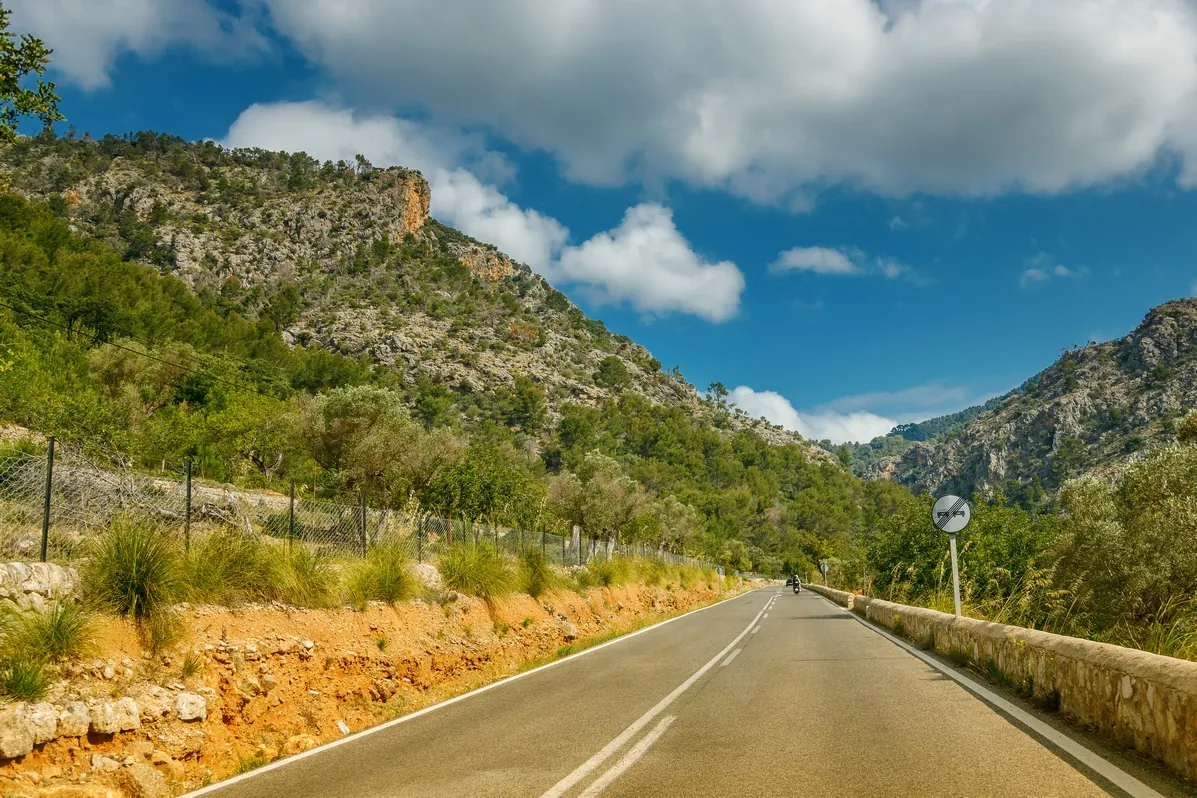
The Ma-10 is one of the great drives of the Mediterranean and the slowest road on the island: hairpins, sheer drops, coaches meeting on bends and, in spring, long lines of cyclists. The side road down to Sa Calobra, with its famous looping bridge, is tighter still. Allow more time than you think, avoid the middle of the day in summer, and use the drive times tool to see realistic times between places.
- Ma-13: the motorway north-east to Inca and on towards Alcúdia, the fastest way to the north.
- Ma-19: from Palma along the bay past the airport to Llucmajor, and on towards the south.
- Ma-15: east across the plain to Manacor and on towards Artà.
- Ma-1: the motorway west through Calvià towards Andratx.
- Ma-11: north to Sóller through the tunnel under the mountains.
- Ma-10: the mountain road through the Serra de Tramuntana, from Andratx to Pollença.
Parking in towns and at the coast
In towns, blue zones (zona blava) allow paid parking for a limited time: check the signs for the hours and maximum stay, pay at the machine or by app, and display the ticket where required. Yellow lines mean no parking, and illegally parked cars in Palma are towed. Parts of Palma's old centre are restricted to residents and authorised vehicles and watched by cameras, so use the public car parks around its edge and walk in.
In the mountain villages, leave the car at the car park on the edge of town; Valldemossa, Deià and Fornalutx have little space in their centres. On market days streets close early in the morning. At popular coves in summer, car parks fill by mid-morning and parking on verges where it is forbidden brings fines, so arrive early or go by bus or boat.
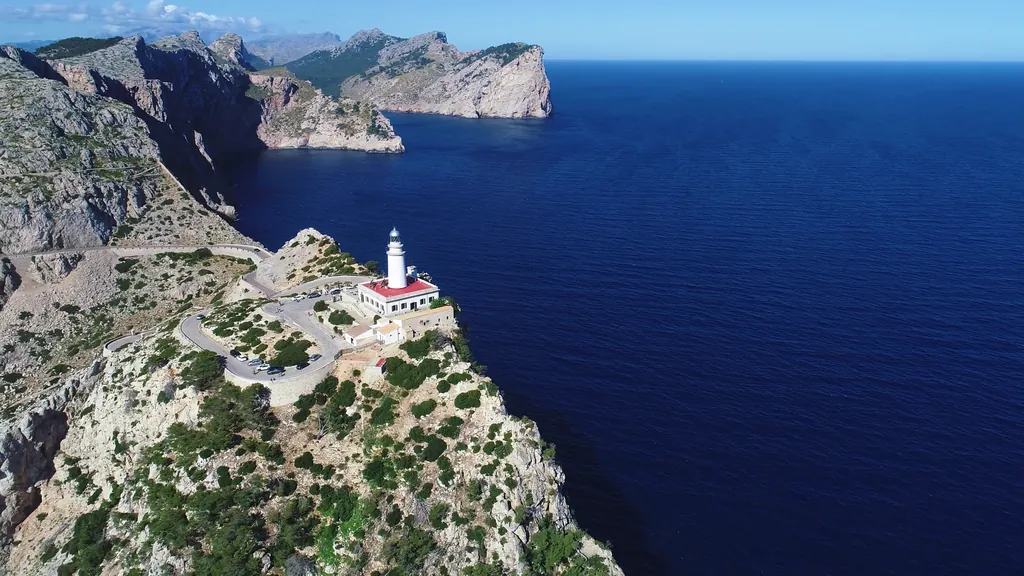
One rule catches many visitors. On the Formentor peninsula, the last stretch of road to the lighthouse is restricted for private cars at busy times in summer, when a seasonal bus runs from Port de Pollença instead. Check the current dates before you go; our guide to Formentor suggests the best times of day.
Trains and the Sóller railway
The island's modern rail network starts at the Intermodal station beneath Plaça d'Espanya in Palma. Trains run across the plain to Inca, beyond which the line divides: one branch continues to Sa Pobla, near the Bay of Alcúdia, the other runs east to Manacor, stopping at Sineu and Petra. They are quick and comfortable, and ideal for market days in Inca or Sineu without the parking.
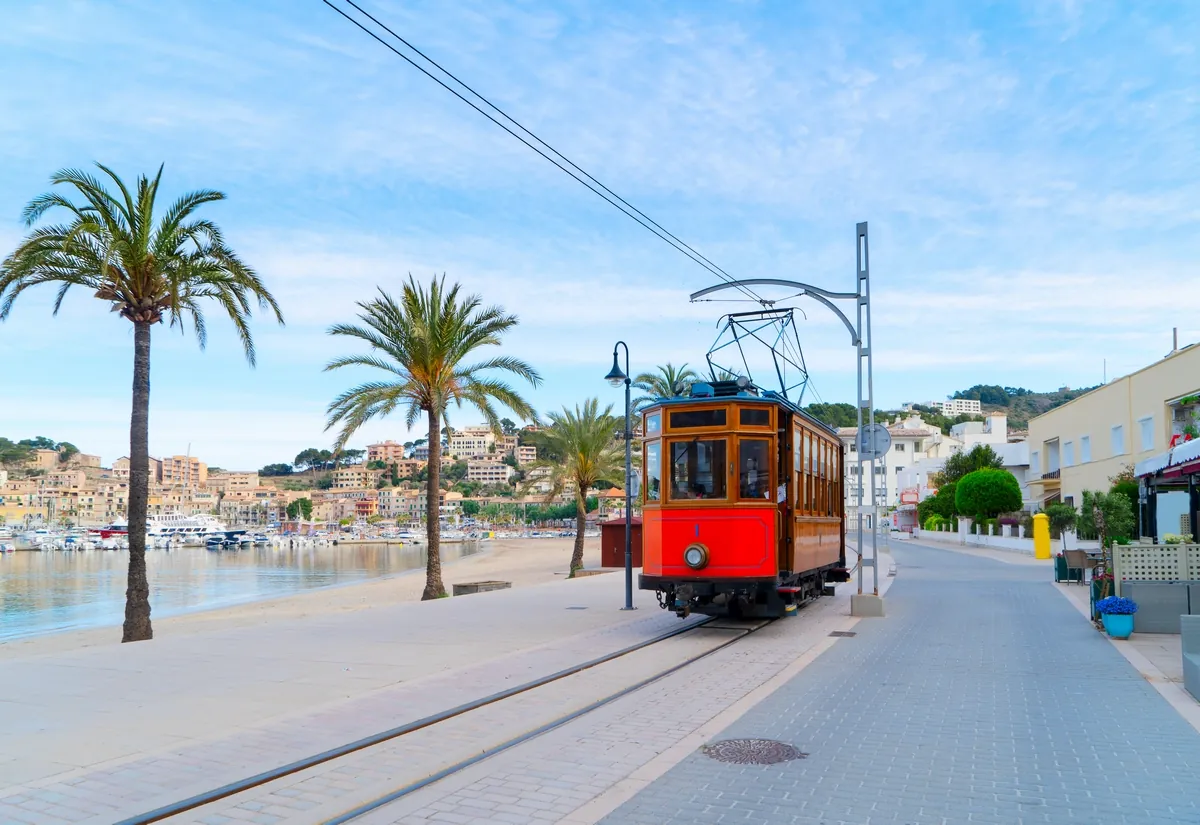
The Sóller railway is another world. Opened in 1912, it still runs wooden carriages from its own station beside Plaça d'Espanya, climbing through orchards and tunnels over the mountains to Sóller, a journey of about an hour. From Sóller a tram, running since 1913, rattles down through the orange groves to Port de Sóller. Both are heritage lines and very popular in summer, so check the current timetable and travel early in the day.
Buses and taxis
The island's public buses, run under the TIB name, connect Palma's Intermodal station with almost every town and many beaches. Main routes are frequent; services to small villages are sparse, and in winter and on Sundays many timetables shrink. In Palma, the city's own buses cover the centre, the bay and the airport. With a little planning, Valldemossa, Deià, Sóller, Pollença and Alcúdia are all easy to reach without a car, and our guide to choosing a base shows which towns work best that way.
Taxis are plentiful in Palma and the main resorts and wait at official ranks; fares are regulated. Use only licensed taxis with a meter, from a rank or booked by phone through your accommodation. In villages there may be only one or two, so book ahead, especially for a return from the end of a walk or a late dinner.
Cycling and coastal boats
Mallorca is one of Europe's favourite road cycling destinations, and in spring the mountain roads and the lanes of the plain fill with riders. Drivers must leave at least 1.5 metres when overtaking a cyclist and may cross a solid line to do so when it is safe; cyclists must wear a helmet on roads outside towns. Bike hire is easy to find in Palma and the main cycling bases, and our cycling guide covers routes and seasons.
In summer, boats run between harbours along the coast, weather permitting: from Port de Sóller to Sa Calobra, from Port de Pollença to the beach at Formentor, from Sant Elm to Sa Dragonera and from Colònia de Sant Jordi to the Cabrera archipelago. They are a relaxed way to see the cliffs and avoid the worst roads, but services stop in rough seas, so check the current timetable on the day.
Key points
- Most places lie within an hour of the airport outside peak traffic; mountain roads are much slower than they look.
- Trains run from Palma to Inca, Sa Pobla and Manacor; the historic Sóller railway is a separate line.
- TIB buses reach almost every town from Palma's Intermodal station, though services thin out in winter.
- Park at the edge of villages and walk in; blue zones are time-limited and Palma's old centre is restricted.
- In summer the last stretch of road to Cap de Formentor is closed to private cars at busy times.
Questions
Do I need a car in Mallorca?
Not if you stay in Palma, Sóller, Pollença or Alcúdia and are happy with buses, trains and the odd taxi. A car makes sense for remote coves, rural houses in Es Pla and mountain villages off the bus routes, and for early starts before the crowds. Many visitors hire one for a few days rather than the whole stay.
Is driving in Mallorca difficult?
Motorways and main roads are good and well signed. The challenge is the Ma-10 and its side roads to Sa Calobra and Formentor: narrow and winding, with coaches and cyclists on the bends. Village streets are tight and parking is limited, so a small car and patience help far more than speed.
How do I get from Palma airport to the city?
The airport lies just east of Palma, about 15 minutes by car outside peak traffic. City buses run to the centre and the Intermodal station, taxis wait at the official rank outside arrivals, and hire cars are collected at or near the terminal. For late arrivals, check the current bus timetable before you fly.
Can I drive to the Formentor lighthouse?
Outside the summer peak, yes. At busy times in summer the last stretch of road to the lighthouse is restricted for private cars, and a seasonal bus runs from Port de Pollença instead. The rules and dates can change, so check the current restrictions before setting off, and go early or late in the day.
Official sources
- Consell de Mallorca
- Serveis Ferroviaris de Mallorca
- Consorci de Transports de Mallorca
- Aena
Published 19 October 2026 by the editors of island mallorca. Facts were checked in autumn 2026; rules, timetables and access can change.